History before a dynastic calendar
Prehistory does not mean people had no history. It means the reconstruction of their lives cannot rely mainly on continuous contemporary written records. Houses, tools, plant remains, burials and archaeological layers provide evidence of work and social organisation. Dating supplies ranges; context connects objects with places and activities.
An object displayed alone cannot answer the same questions as one studied in its excavated setting. Understanding early societies begins with those relationships, not with assigning every discovery to a legendary ruler.
Farming and settlement took different paths
Environments, food resources and settlement traditions varied by region. Farming, more settled life and specialised crafts did not emerge in a single year along one universal path. Storage and shared activities illuminate cooperation; differences in housing or burial raise questions about access to resources.
Sites associated with Yangshao culture offer important evidence for Neolithic life in the Yellow River region. Pottery alone does not establish a state, and a limited burial pattern cannot by itself determine an entire society’s marriage or inheritance system.
Large projects and the Liangzhu landscape
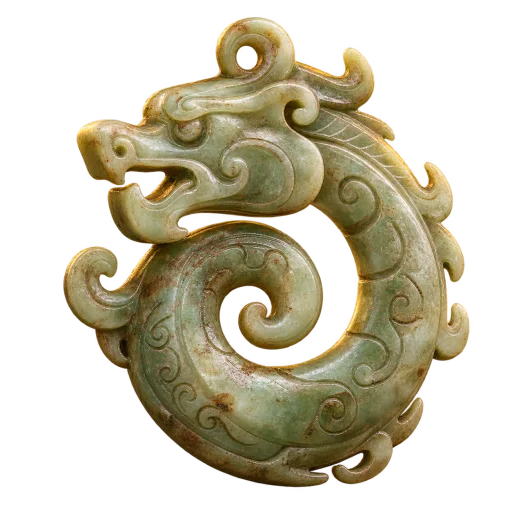
Liangzhu in the lower Yangtze, dating approximately to 3300–2300 BCE, connects planned space, water management and differentiated burials. Together they raise questions about organising labour and the relationship between ritual and power. Jade is important, but it is only one part of the evidence.
A beautiful object can distract from the people who produced it and the society that supported its users. Farming, craft work and water management belong to the same story. Early civilisation cannot be understood through a single Yellow River route.
Several centres, not one inevitable succession
Taosi and Shimao widen the geographical comparison. Walls, burials, technologies and regional relationships differ; the sites should not be arranged as a simple queue in which one centre inevitably replaces another. People and techniques circulated while local traditions persisted.
Scale may reveal political organisation without identifying a ruler by name. Proposed connections to legendary rulers remain interpretations and do not establish the identities of the sites’ rulers. Comparing several centres makes the world before the dynasties more varied, not less intelligible.
Towards Erlitou and contemporary written evidence
Moving forward to Erlitou and Yinxu changes the kinds of evidence available. Erlitou’s urban remains and workshops illuminate early states, while its identification with the traditional Xia dynasty requires care. Late Shang inscriptions make particular dates, people and activities accessible in another way.
Legends also matter as records of later ideas about origins, order and ideals. Archaeology and storytelling can be read alongside each other without becoming interchangeable. Keeping their roles distinct preserves both the imagination of the stories and the power of material evidence to revise historical understanding.