Expand a topic to see its reading sequence, or choose an era in the library below.
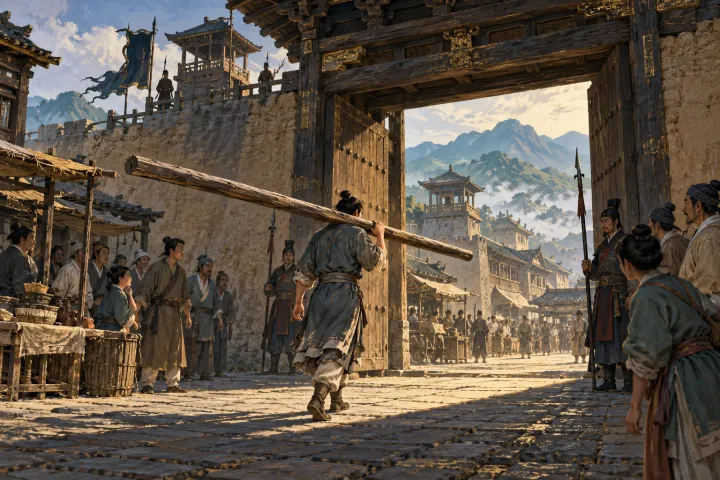
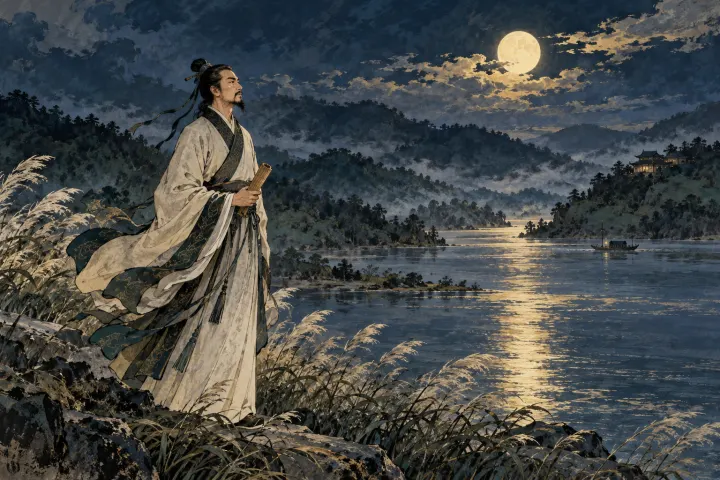
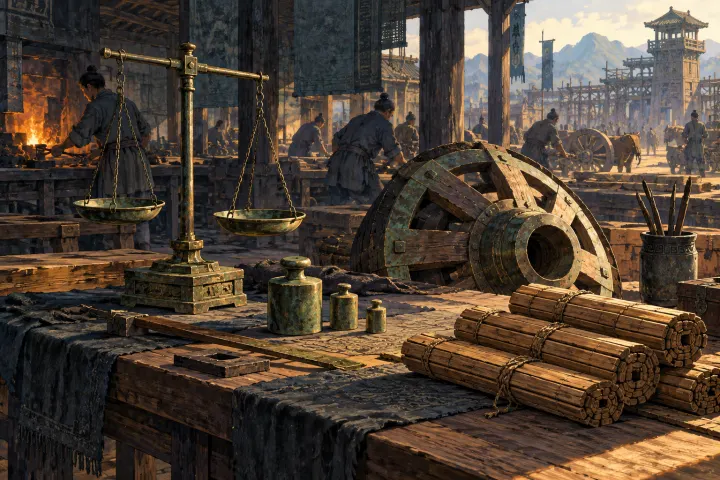
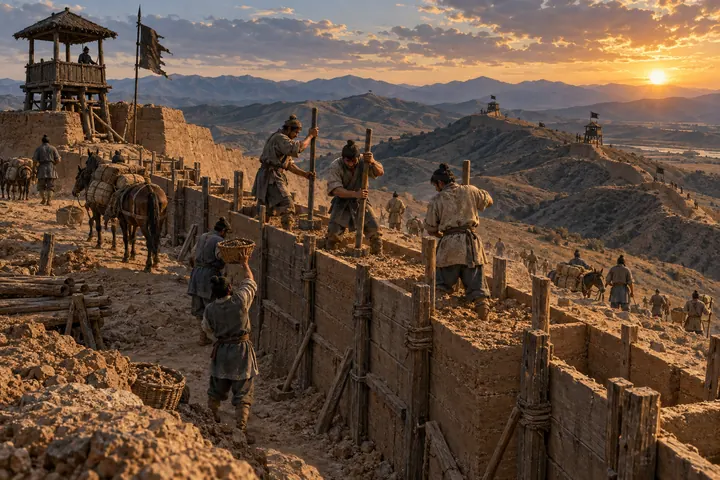
Qin: an order, a wall and a story3 stories
READING PATH3 perspectives · about 9 min
Qin: an order, a wall and a story
Read Qin through administration, engineering and folklore: how offices worked, how walls belong to different periods, and how later stories express separation.
Finish with abdication and changes at the court in 1912.
95 stories
Follow the eras in order and continue into the next period at the end of each story. Legends follow their narrative sequence; topics spanning several eras appear under their main period.
Begin with a house foundation, a millet grain and a painted bowl. Explore settlement, storage and shared life through the people who built and worked, rather than a list of kings.
Earthen enclosures, stone walls, ritual objects and monumental platforms reveal different ways of organizing power. These centers were connected, but one was not simply a copy of the other.
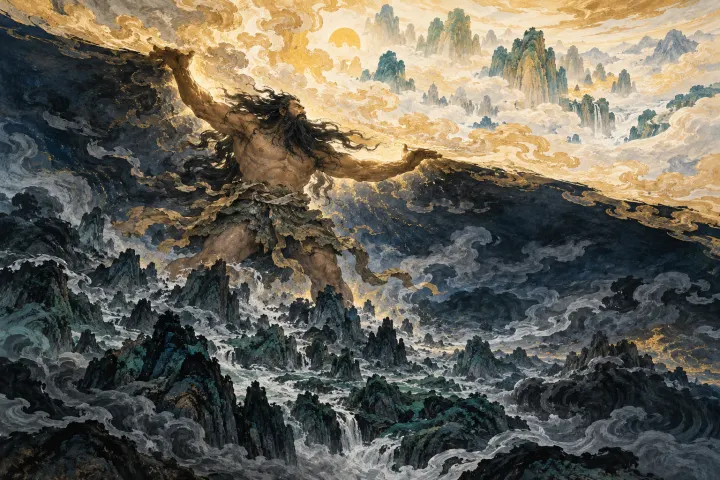
His father dammed for nine years and died for it; the son guided for thirteen and became king: China’s greatest water story is also a lesson in where power comes from.
Palaces, roads, bronze casting and turquoise objects make Erlitou central to early-state research. Explore what is visible, and why its relationship to Xia remains a historical question.
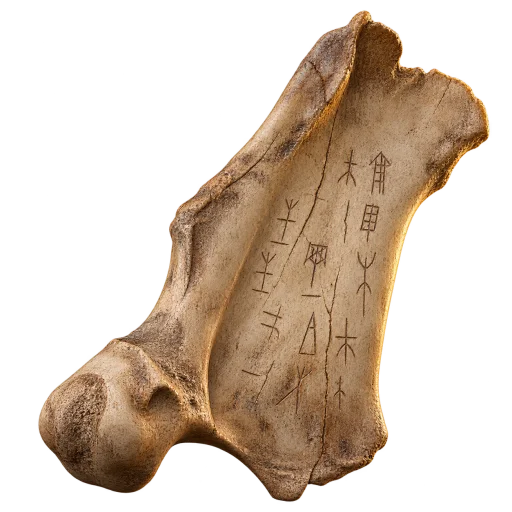
Read warfare, harvests and royal families through divination records. Yinxu brings Shang people beyond later legend, while the inscriptions retain their own perspective and silences.
Fu Hao was a consort of the Shang king Wu Ding, associated with military and ritual activity. Explore her name in inscriptions and the finds from her tomb.
After victory came the harder task of maintaining relationships across distance. Follow appointments and bronze inscriptions into Western Zhou political order.
Seven days starving, still playing and singing; called a homeless dog, laughing with delight: fourteen years bought no office — they bought the trunk of a civilization.
Follow surrender at Kuaiji, the northern meeting at Huangchi and the fall of Wu. Resources, alliances and timing mattered alongside the resolve of individual kings.
Confucian, Mohist, Daoist and administrative arguments were more than slogans. Explore their different responses to warfare, political ambition and the problem of living together.
A brick rampart does not take you straight into Qin times. Read terrain, materials and infrastructure to distinguish the periods within “the Great Wall.”
Granaries, regional kingdoms, frontiers and coinage shaped the Western Han together. Follow the accumulation of resources and the costs of turning them into imperial power.
Read the diplomatic goal, assistance along the way, and the difference between firsthand knowledge and reports—not a tale of one man creating the Silk Roads.
The fall of Western Han, Xin reforms, competing claimants and Eastern Han reconstruction were distinct stages. Follow the turning points of 9, 23, 25 and 36 CE.
Chang’an, in present-day Xi’an, was a major Silk Roads hub. Explore Han diplomacy, Tang cultural exchange and the sites that connect this history with Xi’an today.
Five characters in the annals hold a whole partnership: a warlord of forty-seven calling thrice on a recluse of twenty-seven — and buying twenty years.
Three imperial claims appeared in 220, 221 and 229. Three different endings followed in 263, 265 and 280. These six dates connect Red Cliffs to Western Jin.
Unification did not create unlimited resources. Follow the logistics of the Goguryeo campaigns, repeated labour demands and rebellion behind the Sui collapse.
Taizong took the throne in 626; the Zhenguan era began in 627. Follow the succession crisis, famine relief and government debate behind early Tang recovery.
Military governors were not all rebels, and suppressing rebellion did not necessarily restore the court. Trace the shifting power behind the Tang ending in 907.
Look beyond one famous banquet to military command, appointments, examinations and books: how did early Song redistribute authority, and what remained unequal?
Peace required more than an agreement. Follow the campaign of 1004 into embassies, border markets and annual payments, then the disruption caused by the rise of Jin.
Why accept a paper note, how did a book reach more readers, and how could a ceramic vessel travel overseas? Follow the connections behind Song commerce.
Naming the Yuan dynasty, taking Lin’an and ending the Southern Song were separate events. Follow Khubilai and two capitals through an overlapping transition.
Why would a water route take a detour? Follow springs, terrain and shadows to explore Guo Shoujing’s work on Dadu’s waterways and the Shoushi calendar.
Snow in June, blood on white silk, three years of drought: Dou E summoned heaven and earth to the dock seven hundred years ago — the case is still open.
Zhu Yuanzhang proclaimed the Ming in Nanjing before his armies took Dadu. Founding a dynasty also meant deciding who controlled soldiers, taxes and local officials.
Defeat at Tumu did not settle Beijing’s fate. Yu Qian, a reconstituted court and the capital’s defenders faced problems of command, supply and political authority.
Combining obligations and converting payments into silver linked taxation to land, markets and state power. Why could an order from the court not complete the reform by itself?
Ricci established himself in Beijing in 1601; a world map appeared in 1602, and six books of Euclid in Chinese in 1607. Each achievement depended on Chinese collaborators and readers.
The dynasties did not exchange power in a single ceremony. Rebellion, the Shanhai Pass campaign, a new capital and Southern Ming resistance formed a much longer transition.
From recruitment in Hunan to warfare and reconstruction along the Yangtze, Zeng’s career shows how the Qing survived through regional power—and changed in the process.
From Korea to the Yellow Sea, Weihai and the Shimonoseki negotiations, follow a conflict that reshaped East Asia and intensified debate about Qing reform.
Education, newspapers and administrative change were also arguments about who could direct the state. Follow reform from public debate into a divided court.
How did conflict in north China become an international war? Follow the consequences for Chinese Christians, other residents and the post-war state as well as the court.
Schools, new armies, constitutional preparation and railways were intended to strengthen the dynasty. They also changed expectations and the organisation of political power.