Yu and the floods
His father dammed for nine years and died for it; the son guided for thirteen and became king: China’s greatest water story is also a lesson in where power comes from.
A flood that lasted and lasted
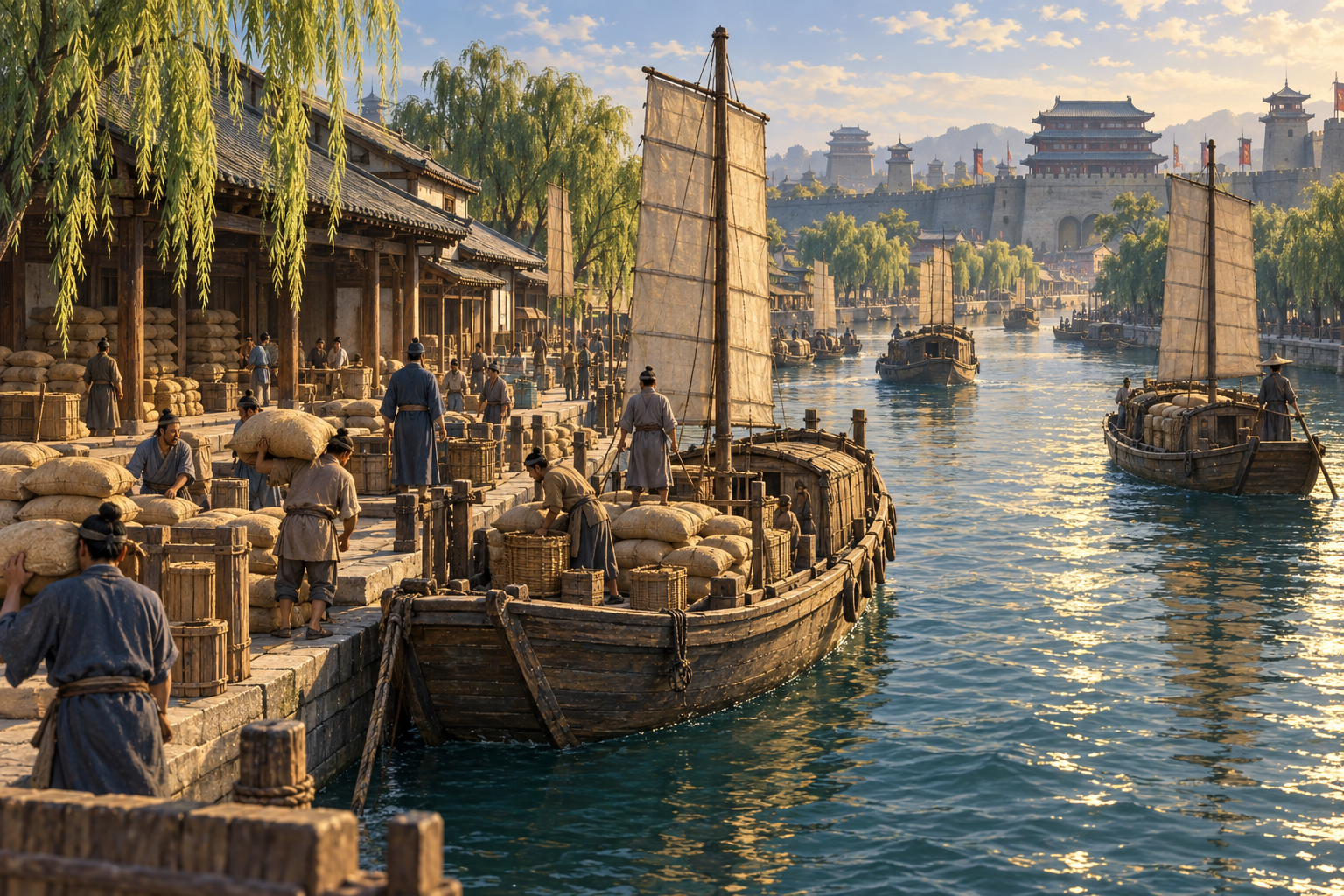
In Yao’s time, great waters covered the world. The flood surged around the high mountains and over the hills, and people on the plain could only flee to huts on the mountainsides to live.
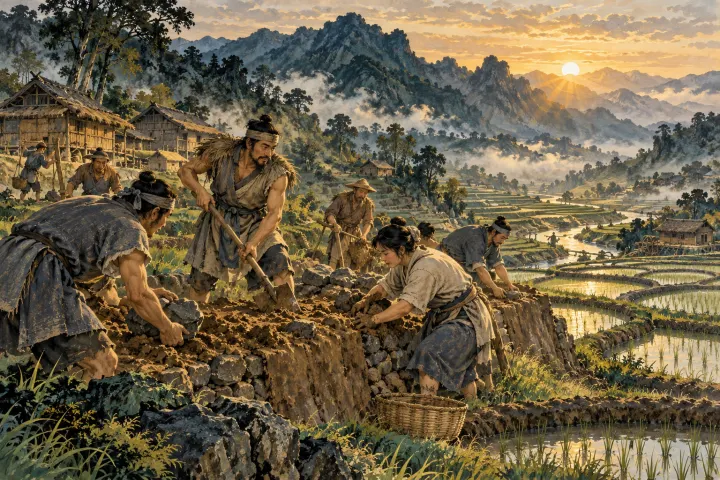
Yao first sent Gun to control it. Gun’s method was one word: block. Wherever the water came, he built dikes; when they burst, he built them again. Nine years passed, and the flood not only failed to recede but grew worse. When Shun took over as regent, he executed the failed Gun at Yushan — then made a bold decision: Gun’s son Yu would carry on the work.
A different idea: not blocking but guiding
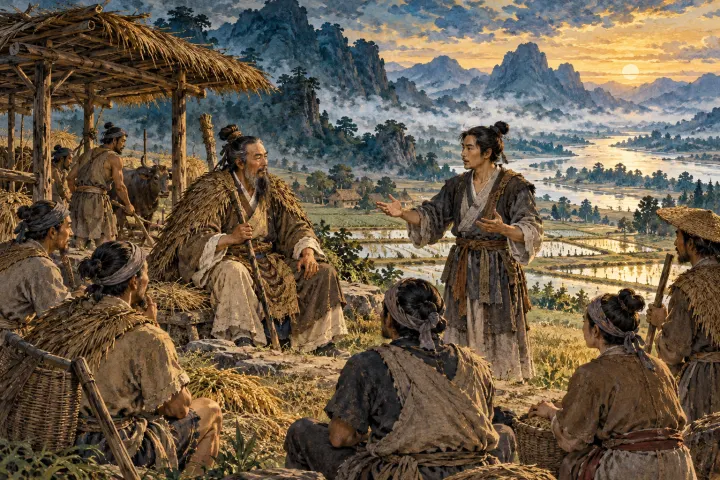
Yu did not protest his father’s fate, nor follow his father’s old method. Carrying his measuring tools — in legend, “the level and cord in his left hand, compasses and square in his right” — he walked the mountains and rivers, first establishing where the water came from and where it wanted to go. His conclusion: water cannot be blocked; it can only be given a way out.
So he dredged: opened silted channels, led high waters to low, low waters into the rivers, the rivers into the sea. Tradition says he worked thirteen years, passed his own home’s gate several times, and heard an infant crying inside — and did not go in.
Governing more than water
Read closely, and Yu did far more than dig channels. While controlling the flood he also marked out the Nine Provinces, surveyed the lands everywhere, and graded the tribute owed by each according to the quality of its soil — when the flood receded, a whole order appeared with it.
So the second half of this story is not the history of engineering but the history of politics: the man who can organize the labor of millions against a natural disaster is naturally the one most entitled to be their chief. Shun’s yield of the seat to Yu followed as night follows day.
What the legend illuminates
The story of Yu taming the waters has been told in China for thousands of years; nearly every later water official has been measured against him. Keep clear what it is: traditional ancient history, not an engineering dossier — the “Nine Provinces” Yu mapped are not a Xia-era map, and no single flood drowned all the world in one year.
But the story holds a real lesson: water control must follow water’s own nature downhill — and regimes capable of organizing mass cooperation arose from just such work. The early state capacity shown at Erlitou and other sites rhymes with this story’s “spiritual core” — the spirit matches; the dates do not.
Follow the connections