Yao, Shun and Yu: a narrative of ideal rule
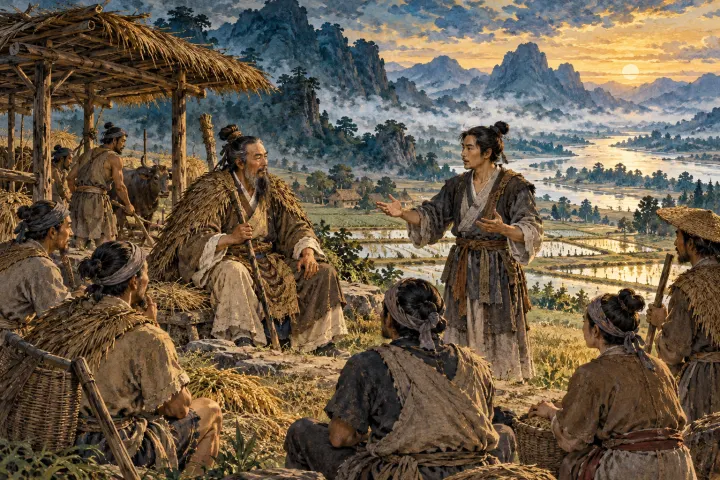
Yao choosing Shun, Shun choosing Yu, Yu mastering the floods — this cycle forms a complete system in the Shangshu and the Shiji’s Annals of the Five Emperors. On the surface it tells of succession; underneath it states a political ideal: the seat belongs to the tested; the people’s hearts make the ruler; public duty outweighs family life (Yu passing his own gate three times without entering).
Note the standpoint of the narrative: these texts were arranged by historians of Eastern Zhou and later, who wrote the legendary figures with genealogies and dialogue — later ages imagining ideal rule.
Floods and early power
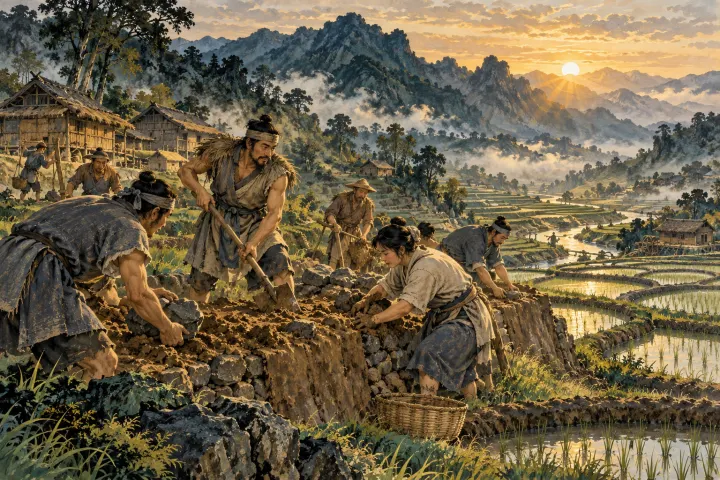
Why does Yu’s flood control matter so much? Because it ties the organization of water control to the origin of kingship: great hydraulic works demand cooperation, logistics and authority across groups — the one who can organize people against disaster is the one entitled to rule.
Later discussions of early state formation often start here. The logic has an archaeological shadow: vast public works require complex social organization. But for Yu himself, the story’s value lies in how it explains where authority comes from — not in whether it happened.
What the legends illuminate
Yao, Shun and Yu sit between legend and documented history. Archaeology cannot identify matching remains; the texts were written more than a thousand years after their subject.
Yet the cycle genuinely shaped China: abdication became the highest vocabulary for transferring power — Wang Mang’s and Cao Pi’s “abdication” ceremonies imitated it — and “whoever wins the people’s hearts wins the realm” became the universal argument of legitimacy. Read the sage kings as the living spring of Chinese political thought — and watch every later age return to that well to draw water.