Begin with a question: where does the world come from
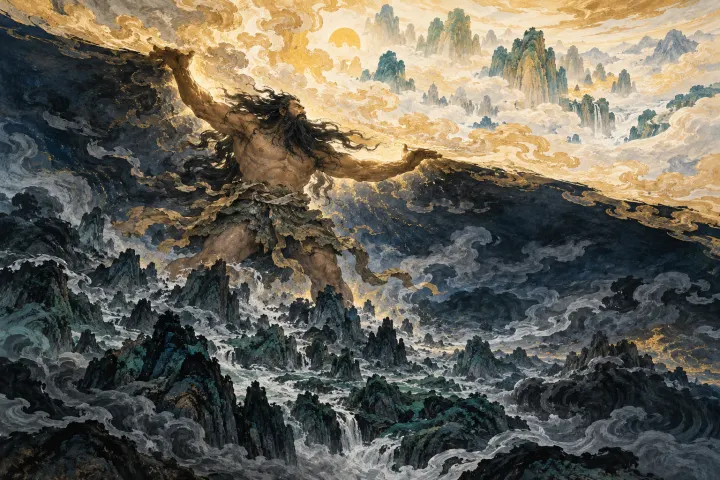
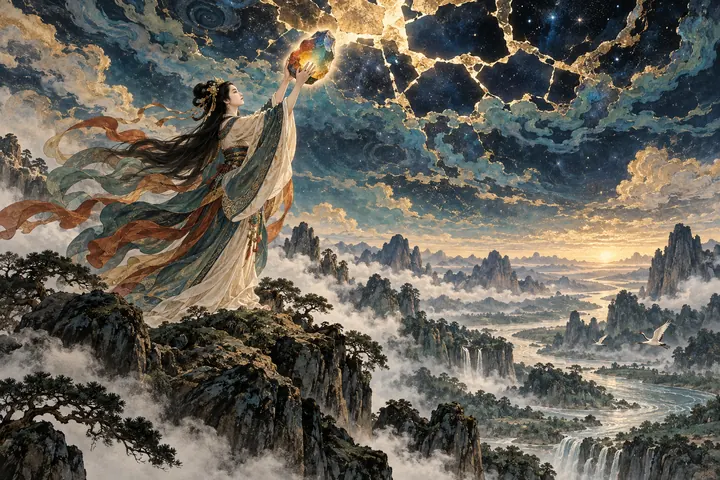
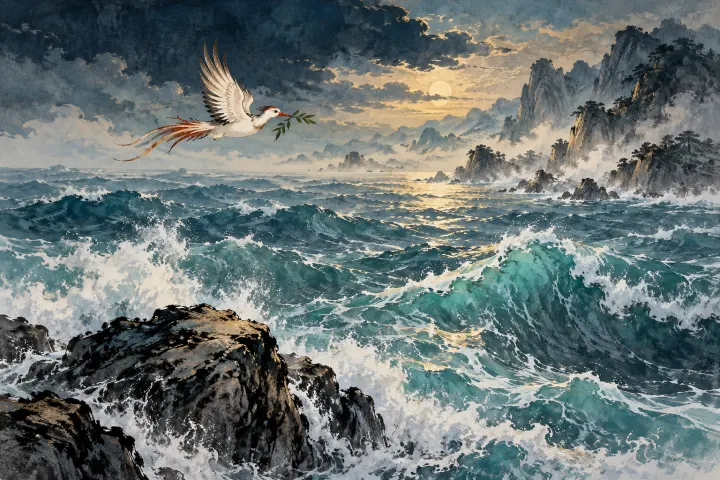
The legends panel opens with Pangu — not because his tale is the oldest, but because it answers the oldest question. Pangu opening the sky, Nüwa repairing heaven, Jingwei filling the sea: read together, the three stories are ancient attempts at three questions: where does the world come from? How is broken order mended? How does the weak face fate?
Note that all these texts were set down very late — Pangu first in the Three Kingdoms era, Nüwa’s repair in the Western Han Huainanzi, Jingwei in the Shanhaijing. The stories are set in prehistory; the pens that wrote them belong to Qin–Han and after.
Layers upon layers of texts
The same motif differs from text to text: sky repair in the Huainanzi; the creation of humans joined to Nüwa only in later sources; Jingwei in the Shanhaijing just a stone-carrying bird, with the filled-sea outcome added by tellers.
Comparing versions comes closer to the truth than hunting an “original” — every age’s storytellers packed their own concerns into old shells. That is myth’s vitality: not a fossil but living water.
Legends and archaeology: two ways to read
Stories of Pangu, Nüwa and Jingwei preserve later ideas about the world, order and life. Their imagined settings are not dates that can be inserted directly into an archaeological calendar. Early settlements and social change are studied through sites, objects, environmental evidence and dating.
The materials answer different questions. Legends reveal how stories were told and understood; archaeology investigates particular communities and their lives. Both deserve attention, but an ancient site does not become the home of a legendary person simply because it is old.