Nüwa repairs the sky
The sky has fallen. Nüwa smelts stones, props the pillars, slays the dragon, dams the floods.
The sky falls down
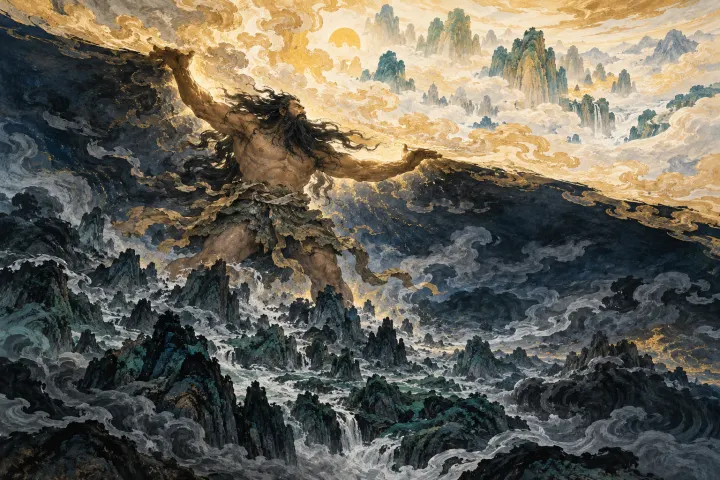
This is another story of a world that “nearly ended.” The water god Gonggong, the tale goes, fought Zhuanxu for the throne of heaven, and in defeat slammed his head against Mount Buzhou — the pillar that held up the sky. The pillar snapped; the earth split into deep crevasses. The sky tilted toward the northwest, which is why the sun, moon and stars all slide that way; the earth sank in the southeast, which is why the rivers all run that way.
Worse followed: fires spread and would not die; floods raged without end; fierce beasts seized the old and the children; savage birds snatched the sick and the frail. The world was coming apart at the seams.
Five-colored stones and four turtle legs
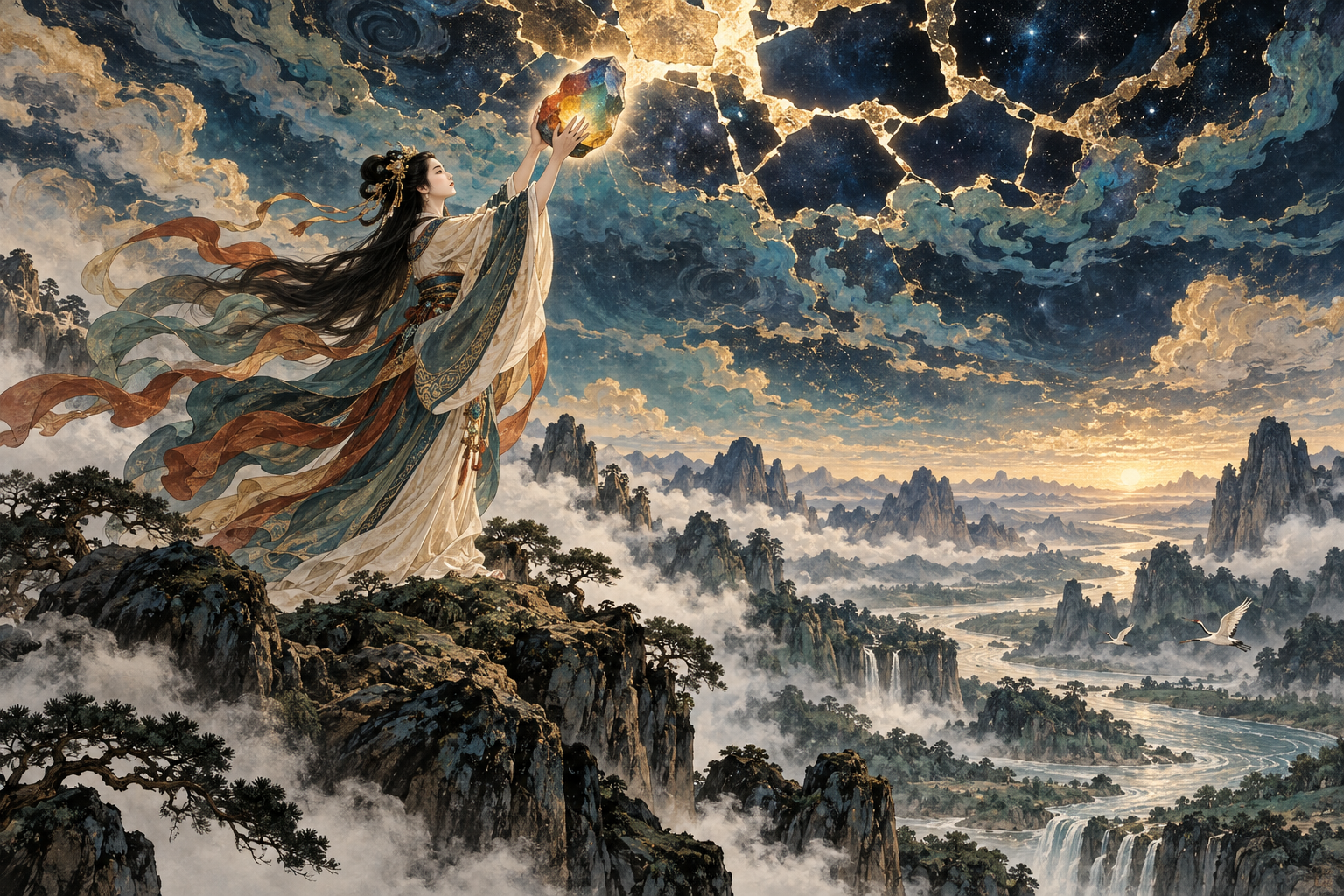
Then Nüwa stepped forward. She gathered five-colored stones from the great rivers and seas, smelted them over fire, and mended the torn sky bit by bit, like someone patching a garment. The sky was mended, but the pillar was still broken — so she cut off the four legs of a giant turtle and planted them at the four corners of the earth, holding the sky steady again.
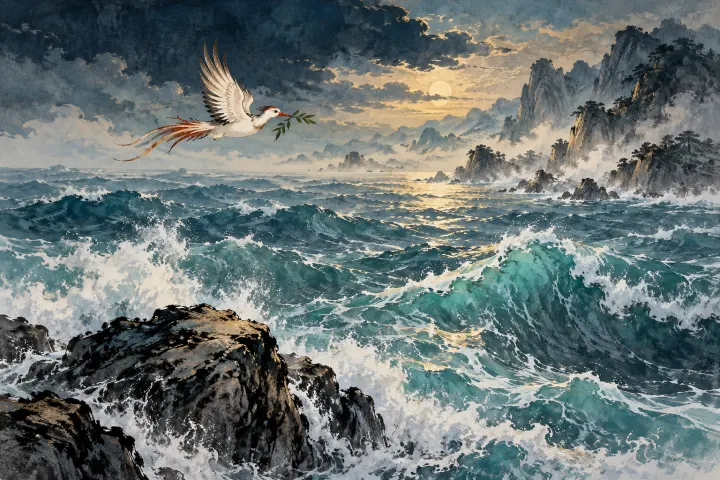
Next she killed the black dragon that stirred up storms, saving the people of the central lands; then she burned reeds into ash and piled it up to dam the raging floods. Four deeds in one continuous motion: mend the sky, prop up the earth, slay the harm, stop the water.
People live well again
The disaster passed and heaven and earth took their places. Spring came warm, summer hot, autumn crisp, winter cold, each in its season; the carcasses of the fierce beasts were buried, and the vipers no longer raised their heads. Nüwa claimed no credit for any of it. She quieted down, bearing all things on her back like an unboasting mat — the story says people could hardly sense her presence; they only knew that life had become livable again.
In another strand of tradition, Nüwa is also the mother who molded human beings from clay. Creator and rescuer in one person: that is what makes her the warmest figure in Chinese mythology. On Han dynasty stone reliefs she and Fuxi stand facing each other, human heads on serpent bodies, compass and square in hand — as if measuring out the whole of heaven and earth.
A myth about order
This story first appears complete in the Huainanzi’s Lanming chapter of the Western Han. What it really tells is not a natural disaster but an idea of order: when the rules holding up the world are snapped, everything falls into disorder — and repair requires someone willing to stand up and bear it.
As for who snapped the pillar, versions differ (Gonggong’s crash is only the most widespread), and the details of the repair vary too. Reading these versions as a family of related storytelling traditions is more interesting than hunting for a “standard answer.”
Follow the connections