
Xia in the texts
The Shiji’s Xia annals record the dynasty’s lineage: Yu, Qi, Taikang, Shaokang… down to Jie — fourteen generations, seventeen rulers. Sima Qian writes with assurance, but remember: he composed in the first century BCE, more than fifteen hundred years after his subject.
What the texts preserve is historical memory continually revised since the Zhou — the Zhou needed to explain how Shang toppled Xia and how it toppled Shang in turn; Xia, as the “first dynasty to fall through lost virtue,” performs essential work in that narrative.
Erlitou: the archaeological answer
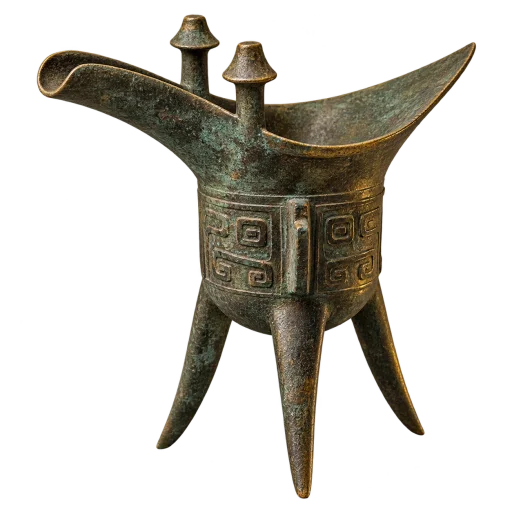
Archaeology gave the discussion substance: at Erlitou in Yanshi, Henan stand East Asia’s earliest palace city, the earliest urban road network, the earliest bronze ritual assemblage — a complex society existed beyond doubt.
But is it “Xia”? Scholars still debate: Erlitou’s dates broadly match the later Xia of the texts, yet an archaeological culture cannot announce its own name. Erlitou remains illuminate early cities and social organization, while texts preserve the dynastic narrative of Xia. Their relationship remains a subject of research.
How to read an early state
Whatever title the age bore, what deserves attention are hard indicators: settlement hierarchy (great centers over lesser ones), craft specialization (bronze workshops demanding skilled hands and management), long-distance resources (turquoise and copper from far from the capital).
Reading Xia’s stories, treat the textual narrative as a checklist and verify each item against excavation — this “paired reading” is worth more than memorizing a king list.