Oracle bones changed everything
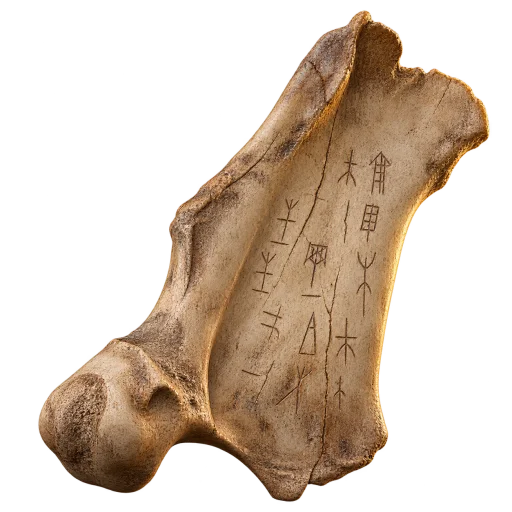
Before 1899, Shang seemed as textual a dynasty as Xia. That year the antiquarian Wang Yirong noticed carved signs on “dragon bone” medicine, and oracle-bone script came back to light.
The hundred-thousand-plus bones from Yinxu record royal divination and sacrifice: wars, harvests, childbirth, weather. Wang Guowei used the bones to check the Shiji’s Shang king list — broadly matching. Shang thereby became the earliest Chinese dynasty researchable through its own contemporary writing: a milestone in Chinese historiography.
Bronze and ritual politics
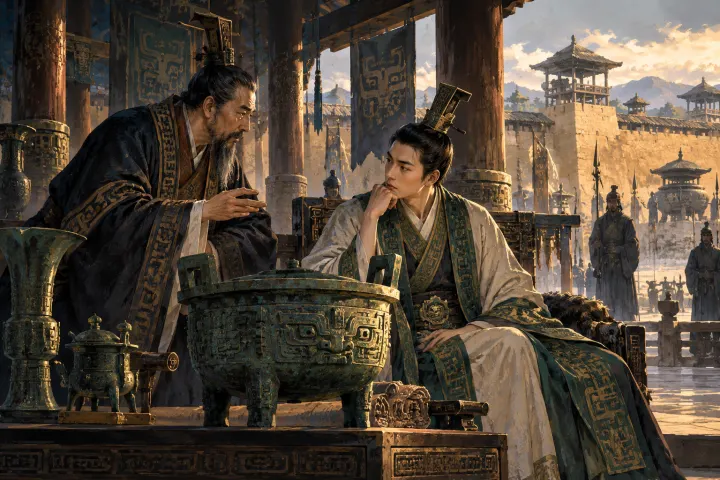
Shang bronzes were not household goods but the core equipment of politics and religion: ancestor sacrifice required bronze ritual vessels, and owning bronzes meant owning access to the divine.
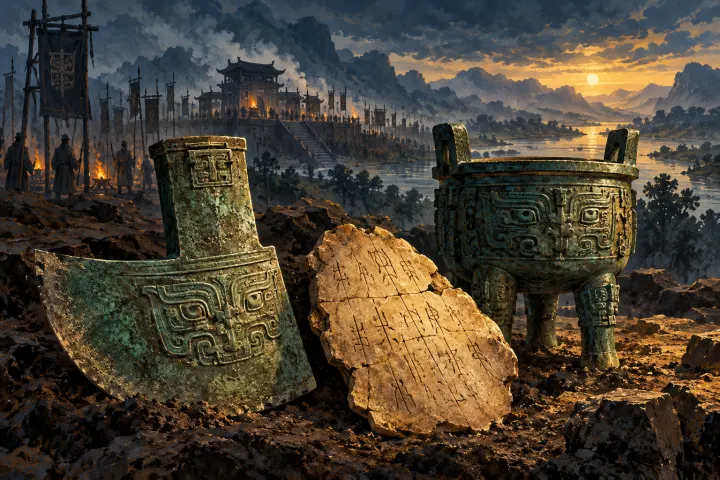
The intact excavation of Fu Hao’s tomb at Yinxu (1976) let later people see, for the first time, a Shang aristocrat’s complete assemblage: more than four hundred bronzes, nearly six hundred jades, and two great yue axes of military command. The occupant Fu Hao — consort of King Wu Ding and a generaline frequent in the oracle records — shows that gender and power three thousand years ago were more complicated than assumed.
The capital and its regions
Shang moved its capital repeatedly: the chronological sequence of Zhengzhou, Yanshi and Anyang records the shifts of political weight. Yinxu at Anyang, settled after Pan Geng’s move, served for over two hundred and seventy years.
The copper and tin for bronzes came through long-distance exchange — how ore from the middle Yangtze reached Anyang is itself a major research question. Put the capital back into that resource network, and Shang becomes not one city but a precisely organized early state.