Investiture and ritual order
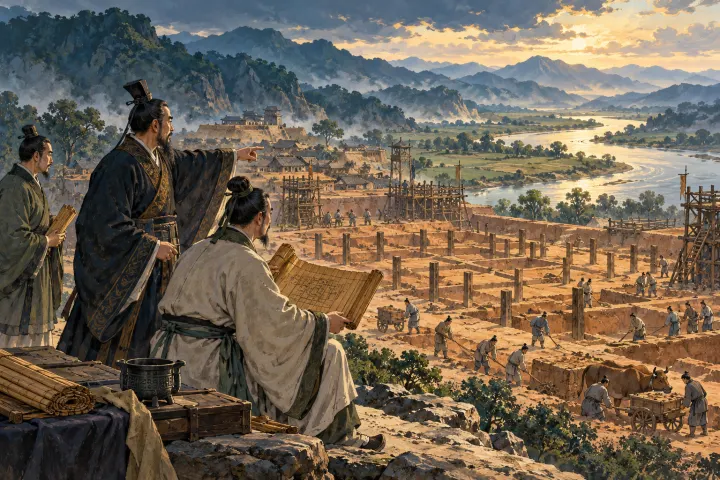
After the battle of Muye, Zhou faced an unprecedented problem of rule: how to govern a dynasty older and larger than itself? The answer was called fengjian — enfeoffment: kinsmen and allies planted across the realm as vassal states, the dynasty’s living screen.
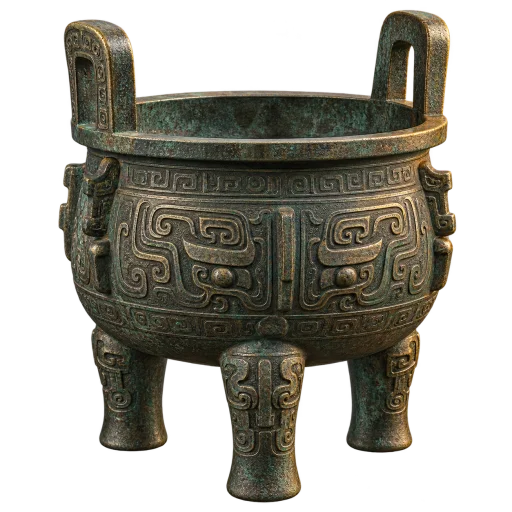
With enfeoffment came ritual: nobles of different ranks used vessels and music of different grades. Ritual was order made visible — the ding-count system (nine tripods for the Son of Heaven, seven for lords) was a political hierarchy written in the language of objects.
Inscriptions as archives
Half a Western Zhou bronze’s value lies in its inscription. The He zun records the building of Chengzhou and “dwelling in Zhongguo” (the earliest use of the word “China”); the Da Yu ding records appointment and reward; the Mao gong ding carries nearly five hundred characters, the longest bronze inscription extant.
These inscriptions are textual archives left at the time — appointments, lawsuits, land transactions, family honor. Read them together with the patron’s identity and the findspot, and Western Zhou’s political operations come into focus far better than the words alone allow.
From Western to Eastern Zhou
Western Zhou’s decline is narrated around King You (the beacon-fire tale is dubious; the real crisis was the succession war over deposing the rightful heir). In 771 BCE the Quanrong took Haojing, King Ping moved east to Luoyi, and the Western Zhou ended.
The move east is the watershed: the royal house’s direct lands and people shrank sharply as the lords rose. The Son of Heaven became more ritual symbol than working monarch — the age when “ritual, music and war issued from the lords” had begun. The Western Zhou’s legacy ran just as deep: lineage law, ritual civilization, the bronze-script tradition — three thousand years and unbroken.