How Western Zhou connected its realm: appointments, ritual and Heaven
After victory came the harder task of maintaining relationships across distance. Follow appointments and bronze inscriptions into Western Zhou political order.
Victory at Muye created a new problem
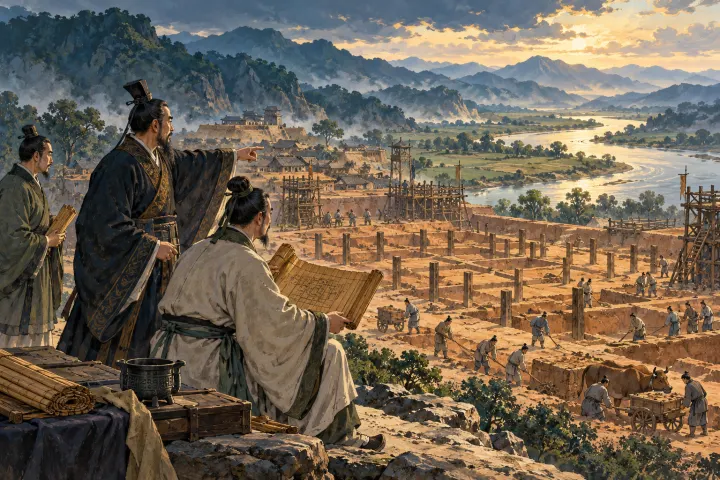
Defeating the Shang ruling house did not make distant territories, communities and existing relationships obey one command automatically. The Zhou needed arrangements for defense and local government, a place for former Shang populations, and responsibilities for relatives and allies. Maintaining a regional order was a longer task than winning a battle.
Early Zhou politics therefore involved warfare alongside migration, appointments and construction. Luoyi became important to the management of the eastern region. Stories of King Wu’s victory and the Duke of Zhou’s regency are starting points, not a substitute for understanding the relationships built afterward.
Regional grants were not uniform administrative boxes
The term fengjian commonly describes Zhou grants of territory, people and responsibilities to relatives and allies. Recipients established regional centers and maintained tributary, military and ceremonial relationships with the royal house. Kinship strengthened some ties, but not every political partner belonged to the same lineage.
Local circumstances and degrees of control varied. These centers were not equivalent to modern provinces with uniform administration and sharply fixed boundaries. Nor should “feudal” import every feature of medieval Europe without explanation. The arrangements linked specific people and communities to the court, extending royal influence while also giving regional powers room to develop.
Why record an appointment in bronze?
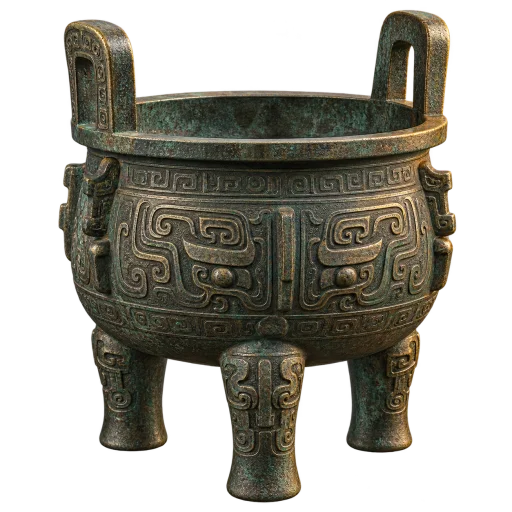
The Da Yu ding records royal admonition, appointment and rewards; the Da Ke ding likewise preserves an account of investiture and gifts. Used within ancestral ritual and family memory, a bronze made a political grant something that could be displayed and remembered across generations.
Pay attention to relationships in the inscription: who commands whom, what is awarded and what duties are expected. Size and ornament are striking, but these relationships explain why an object was commissioned. A ding was both a crafted vessel and a medium through which a lineage narrated its position.
Why could the Mandate of Heaven change hands?
Zhou rulers had to explain why they could replace a Shang house that also claimed ancestral and sacred authority. Early Zhou inscriptions place the achievements of Kings Wen and Wu alongside accounts of Shang failure, connecting political fortune with the conduct of rulers. Heaven’s mandate was not presented simply as one family’s permanent property.
The idea justified conquest while warning successors that authority carried obligations. Yet it remained a language of dynastic legitimacy, not an electoral or civic accountability system. Its force lies in both directions: it could demand restraint from rulers while helping a new ruling house explain its victory.
Ritual organized relationships as well as ceremonies
Ancestral offerings, banquets, audiences and the use of ritual vessels repeatedly displayed people’s positions within a relationship. Objects, actions and sequences expressed standing and acknowledged obligations. Ritual order was not merely a matter of correct dress: it made political relationships visible and repeatable.
Practices nevertheless varied across places and changed during the Western Zhou centuries. Later ritual texts cannot be treated as an unchanged manual followed every day from the dynasty’s foundation. Comparing early inscriptions with excavated assemblages reveals practices being used, modified and interpreted rather than a timeless set of rules.
How did a royal network become a stage for regional powers?
Regional centers accumulated resources, marriage connections and interests of their own. The royal court could not always coordinate them with equal strength. Late Western Zhou conflicts and crises altered political centers and relationships, creating the setting in which Spring and Autumn rivalries developed.
The transition from regional grants to competing hegemons was not simply a new cast of characters. It redistributed strength within an existing network. Continue with Guan Zhong and Qi or Chong’er and Jin: when a Zhou king still existed but could no longer organize the realm alone, who convened alliances and claimed the authority to lead?
From settlements to inscriptions
Follow settlements, water management, cities and writing to understand what different kinds of evidence reveal.
- Yangshao and Banpo: how did everyday life become village life? →
Begin with homes, food and everyday craft work.
- Liangzhu and early cities: organizing life before the dynasties →
Connect large projects with social organisation.
- Taosi and Shimao: why did major centers rise across the Yellow River region? →
Compare early centres in different regions.
- Erlitou and Xia: what can a city without royal names tell us? →
Distinguish archaeological evidence from a dynastic identification.
- Yinxu oracle bones: how royal questions became historical evidence →
Introduce contemporary written records.
- How Western Zhou connected its realm: appointments, ritual and HeavenYou are here
Continue into ritual, land and political relationships.
Follow the connections