Chong’er’s exile and return
From hunted prince to hegemon: nineteen years, eight courts, a clod of earth — suffering plus waiting is what counts as capital.
Flight begins
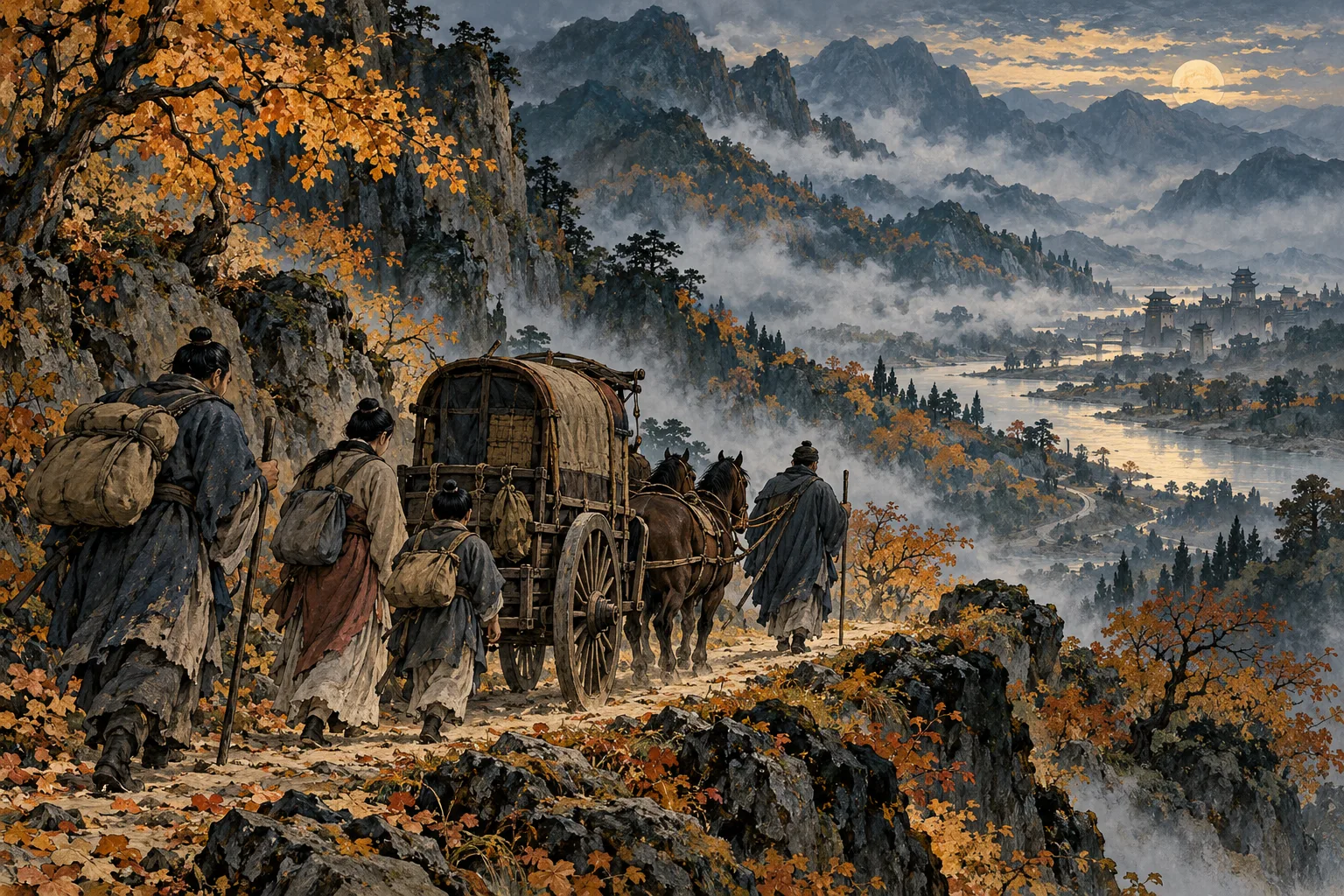
Chong’er, son of Duke Xian of Jin, might have lived out a safe princely life. The plot came from Li Ji: the duke’s late-life favorite schemed to make her own son heir, drove the crown prince Shensheng to suicide, and turned on the other two sons.
Chong’er, forty-three, scrambled over a wall as pursuers cut off his sleeve. The flight lasted nineteen years.
With him went men who would later be very famous: his uncle Hu Yan, Zhao Cui, Jie Zitui — an exile’s cabinet that would one day stock Jin’s leadership.
Warmth and cold across eight states
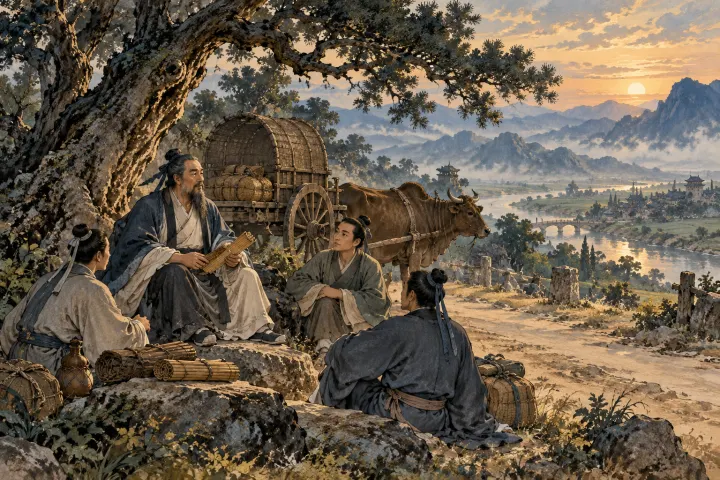
First stop: the Di, his mother’s people, twelve years, a wife, children. Then Wei, whose duke refused him entry; passing Wulu they begged food from a farmer, who handed Chong’er a clod of earth. Chong’er raged to strike the man; Hu Yan said: this is Heaven granting you land — bow and accept. He bowed.
In Qi, Duke Huan treated him well, gave him a clanswoman, Lady Jiang; Chong’er settled into comfort: life is for living — who thinks beyond it? Lady Jiang and Hu Yan drugged him and smuggled him out by night; waking, Chong’er grabbed a spear and hunted his uncle through the fields.
In Cao the duke spied on him bathing (to gawk at his fused ribs); Duke Xiang of Song gave him eighty horses; Zheng left him out in the cold. In Chu, King Cheng hosted him as an equal and asked over wine: when you return to Jin, how will you repay me? Sons and daughters, jade and silk, your Majesty has in plenty — but if our armies ever must meet, I will withdraw three stages, ninety li, for your sake.
Last came Qin. Duke Mu married him to five women of the Qin house. In 636 BCE Qin escorted Chong’er across the Yellow River. At sixty-two, he was going home.
Four roads home, and Chengpu
The sitting Jin ruler, Duke Huai, had lost every heart. Chong’er entered; supporters flocked; Huai fled and was killed. Chong’er took the throne as Duke Wen.
The exile’s value showed at once: rewards graded to the last merit, factions calmed, trade and farming freed, the worthy advanced — Jin recovered with startling speed. When the Zhou house split in Prince Dai’s rebellion, Wen escorted King Xiang home and banked the political capital of honoring the king. In 632 BCE Chu besieged Song; Jin marched to its aid and met the Chu army at Chengpu — and honored the nineteen-year-old promise, withdrawing three stages first: repaying King Cheng’s hospitality while luring Chu onto ground Jin had chosen. Then it broke the Chu army. At the covenant of Jiantu that year, Duke Wen stood as the Spring and Autumn’s second hegemon.
Exile as capital
What had nineteen years bought? Knowledge of every state’s manners and men; a cabinet tested on the road; and judgment sanded by humiliation — he knew bitterness from inside, so he knew what the people needed.
One episode rewards thought: Jie Zitui, who once cut flesh from his thigh to feed his starving lord, claimed no reward and withdrew to Mount Mian with his mother. The duke burned the mountain to force him out; Jie embraced a tree and died. In remorse, Wen ordered fire banned on that day — the origin, by later legend, of the Cold Food Festival (a later attachment). Reward and refusal, grace and the scholar’s spine: the episode gives the shining hegemony one stroke of moral shadow.
The Zuozhuan and Shiji tell it all vividly, with rhetorical dialogues not to be read as minutes. But the nineteen-year frame is credible, and its lesson clear: suffering alone is worth nothing; suffering plus learning plus waiting is called capital.
Follow the connections