Guan Zhong and Bao Shuya
More coin meant a poor mother at home; the arrow in his belt became a chancellor: understood this thoroughly, friendship becomes legend.
Friends in business
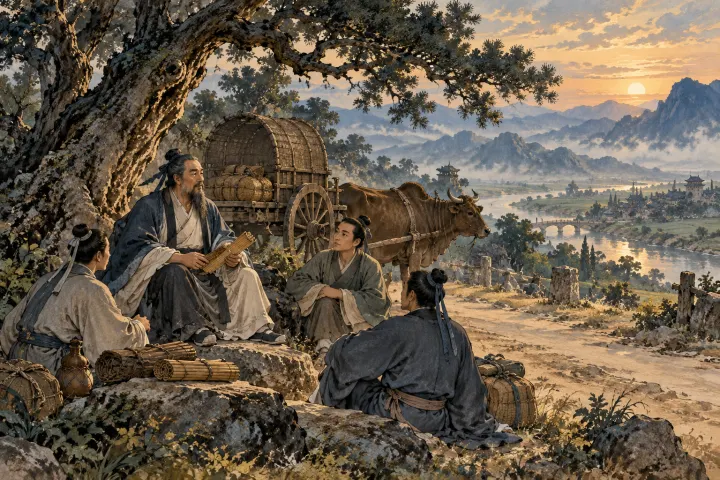
Guan Zhong and Bao Shuya were friends young, partners in trade. At the split of profits Guan always took more; people called him greedy, and Bao answered: he is not greedy — his family is poor.
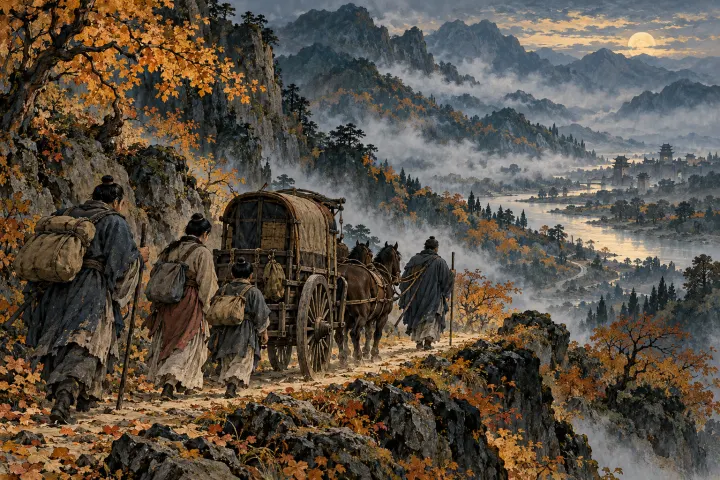
At war, Guan fled the field three times in three battles. People called him coward, and Bao answered: he is not afraid to die — he has an old mother to feed.
In time Guan Zhong served Prince Jiu while Bao served Xiaobai, the future Duke Huan. Guan even nearly killed Xiaobai — an arrow struck his belt-hook. Xiaobai played dead, raced home first, and took the throne.
What made the friendship famous
Here is exactly why the friendship is remembered: for each of Guan’s “flaws,” Bao had an explanation that only a friend could give. Sima Qian strings five parallels — Bao did not take me for greed, knowing my poverty… — pressing the matter of being understood to its limit. Guan himself sighed: my parents gave me life; Bao is the one who knows me.
The chancellorship declined
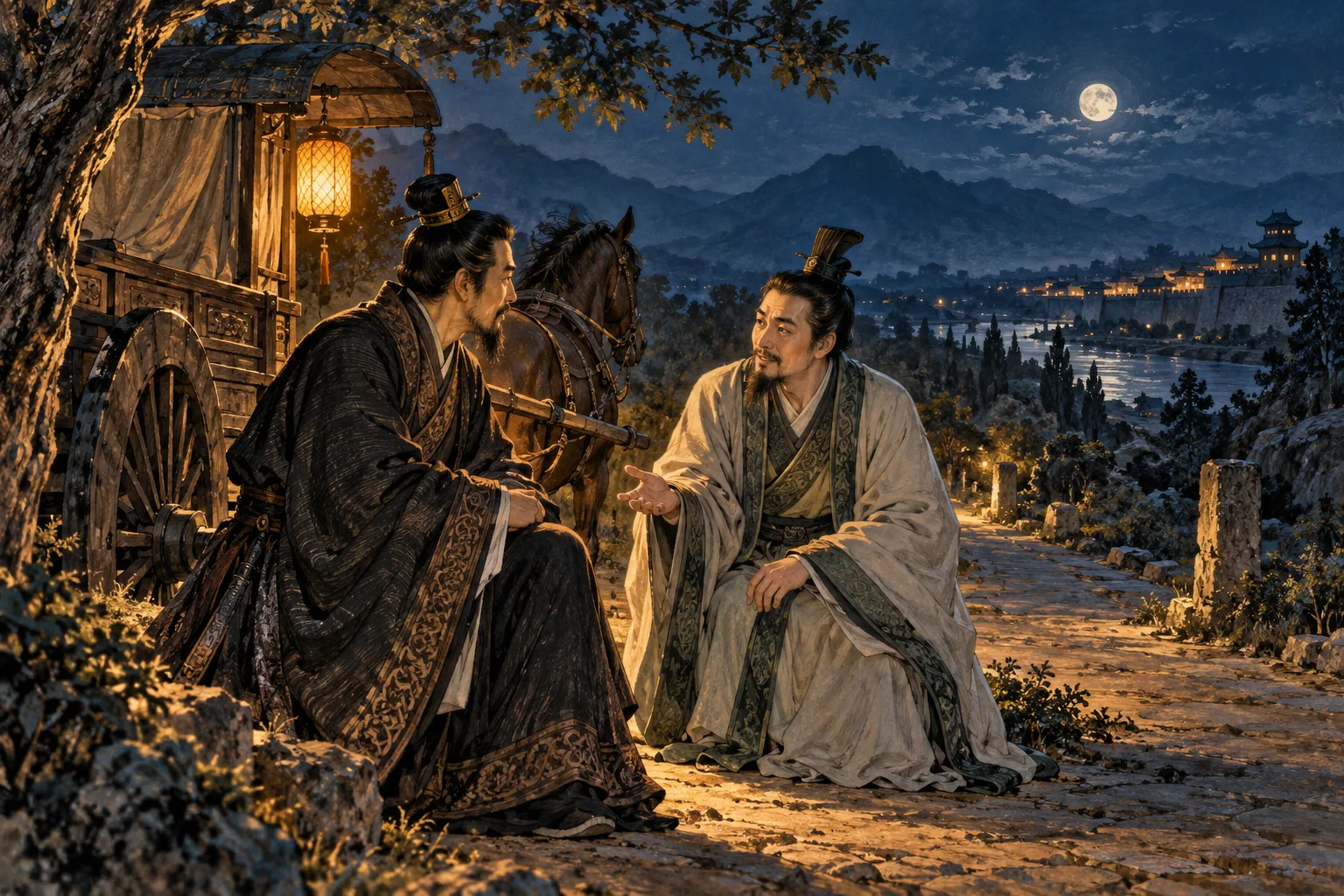
When the succession struggle settled, Duke Huan meant to make Bao Shuya chancellor. Bao refused, and pressed one name instead: Guan Zhong.
The duke blazed: the man nearly shot me dead! Bao’s answer became the eternal text on employing men: I am your servant, lord. If you mean only to govern Qi well, Bao Shuya and Gao Xi suffice. If you mean to lead all under heaven, you cannot do without Guan Zhong — whichever state holds him will prosper.
The duke swallowed the arrow. He ransomed Guan from Lu with full honors, purified himself three days, met him in the suburbs, installed him as chancellor, and addressed him as Uncle Zhong.
Guan Zhong’s Qi
Forty years of Guan Zhong’s chancellorship delivered one line: circulate goods, store wealth, enrich the state, strengthen the army. Salt and iron offices brought their profits to the treasury; taxation graded by land quality (“tax by the land, tapering”); the army hidden inside the civil registers. Abroad he raised the banner of honoring the king and repelling the barbarians, convened the lords nine times, and mostly without war.
The Analects records disciples objecting that Guan had once served the duke’s rival. Confucius’ reply: but for Guan Zhong, we should wear our hair loose and fold our robes to the left — crediting him with saving central civilization, a rare high mark.
The proverb When the granaries are full, people know propriety; when food and clothing suffice, they know honor comes from the Guanzi compiled under his name — Warring States to Han, not all his own words, but proof that Guan Zhong stood for practical statecraft itself.
Why it lasted 2,600 years
The friendship became a set phrase because it holds three things that rarely coexist: a person wholly understood; a man who recommends his superior to replace himself; a ruler who employs the man who tried to kill him.
Bao remained below Guan for life, and his descendants drew stipends from Qi for generations. Sima Qian, who spoke up for Li Ling and was mutilated with no one to speak for him, wrote their lives with special care — no one knew better the worth of being understood.
Follow the connections