A fading court and hegemonic order
After the move east, the Zhou king directly controlled only the region around Luoyi. Qi rose in the east: Duke Huan, employing Guan Zhong’s domestic reforms, raised the banner of “honor the king, repel the barbarians” — nominally upholding the Son of Heaven, in practice convening the lords and judging disputes himself.
This was “hegemony”: order maintained by a strongman where no strong sovereign existed. After Duke Huan came Duke Wen of Jin, King Zhuang of Chu and others in turn — the Spring and Autumn’s main line is power draining from the royal house to the strong states.
States and the brewing of thought
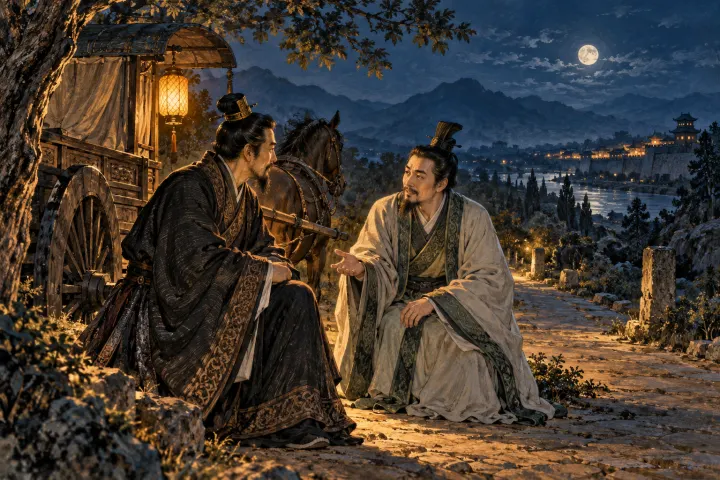
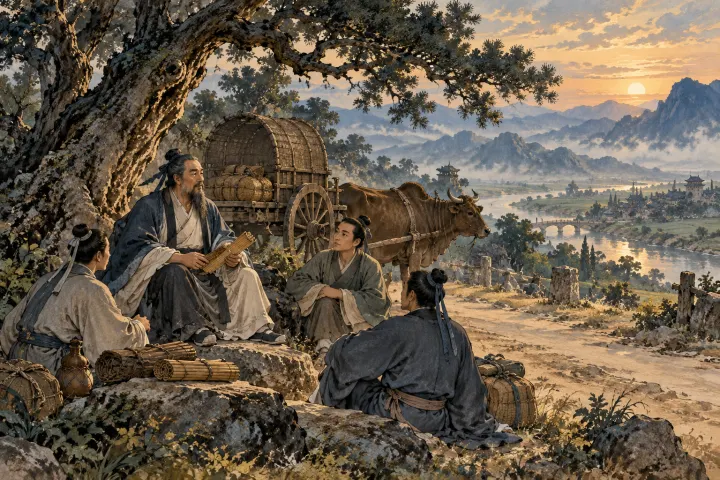
The Spring and Autumn is the raw-material store of the masters’ thought: Confucius edited texts and gathered students in Lu, then carried his ideals on the road for fourteen years; Laozi (if he lived) kept the Zhou archives; Guan Zhong’s statecraft was gathered into the Guanzi.
Scholars began circulating among the courts — “serving Qin at dusk after Chu at dawn” was not disgrace but normalcy. That circulation prepared the talent network for the Warring States’ explosion: the seeds of the Hundred Schools were already in the ground in Spring and Autumn.
Between war and ritual
Spring and Autumn warfare kept its own etiquette: form ranks and wait for the enemy to form theirs; pursue only so far; take no white-haired prisoners. Before the battle of Chengpu, Duke Wen of Jin “withdrew three stages” — repaying a promise of gratitude and performing politics at once.
The Warring States abandoned all of it: war turned from an aristocratic honor game into total war of annihilation. Grasp that shift and you understand why Spring and Autumn and Warring States must be two separate eras.