
Follow history into the city
Begin with historical context, then choose the museums and sites you want to explore. Use the themes below to plan your visit, leaving time to look closely, read and rest.
Luoyang Museum
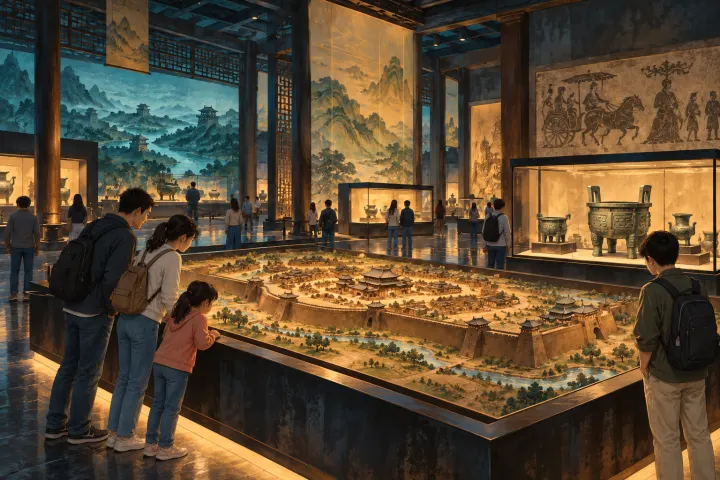
Start with objects and maps to distinguish the successive capitals before setting out. The Eastern Zhou chariot hall and the capitals’ relief model make the right first stop, building the “five capitals along the Luo” spatial picture.
Longmen Grottoes
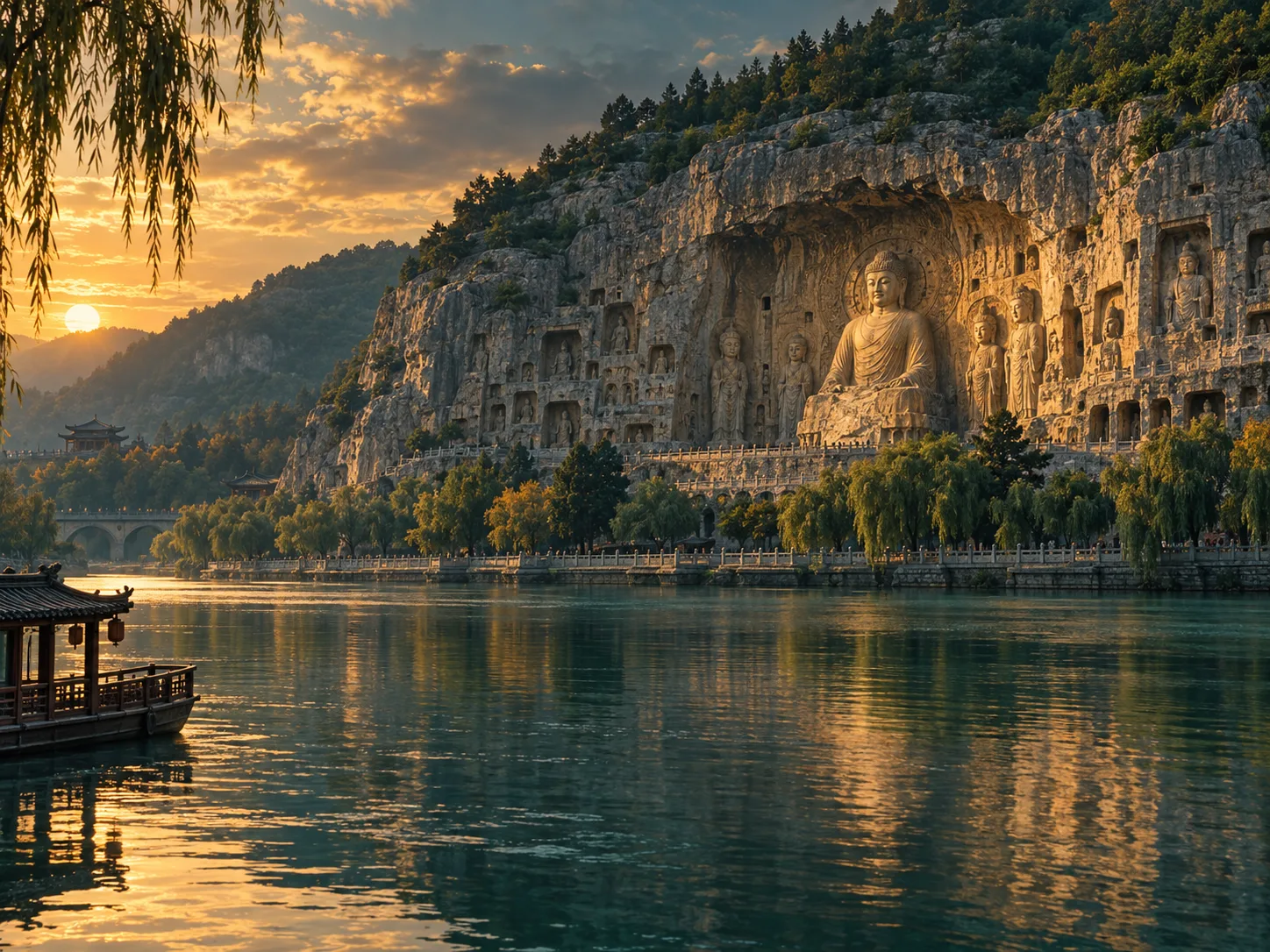
Compare Northern Wei and Tang figures — posture, drapery, cave layout — and budget real walking time; do not credit every great Buddha to one emperor. West Hill and East Hill belong to different eras’ centers: finish the Wei caves on the west bank before crossing.
Han–Wei and Sui–Tang sites
Choose one site for focused reading: the Han–Wei city for early capital scale, the Sui–Tang sites for eastern-capital planning — and separate modern interpretation from ancient remains. Both areas are vaster than expected; use site shuttle or fixed stops instead of trying to walk them.
Understand the places before you go
Luoyang Museum
- Who Was Fu Hao? Shang Commander, Inscriptions and Tomb →
Fu Hao was a consort of the Shang king Wu Ding, associated with military and ritual activity. Explore her name in inscriptions and the finds from her tomb.
Longmen Grottoes
- Reading Longmen across dynasties →
Northern Wei and Tang works share a landscape but not a single historical moment.
Han–Wei and Sui–Tang sites
- Xiaowen moves to Luoyang: what changes when a capital moves? →
A capital move is more than a new palace. Compare the political center, urban life and Longmen to see how change leaves different kinds of evidence.
- Wu Zetian and Luoyang →
From Ganye temple’s nun to Luoyang’s empress: she proved the system could open the summit to a woman.
Before you go
Allow for walking between Longmen’s two hills and steps along parts of the route. Prepare suitable walking gear and rest stops. Check current notices for open routes, reservations and accessibility.