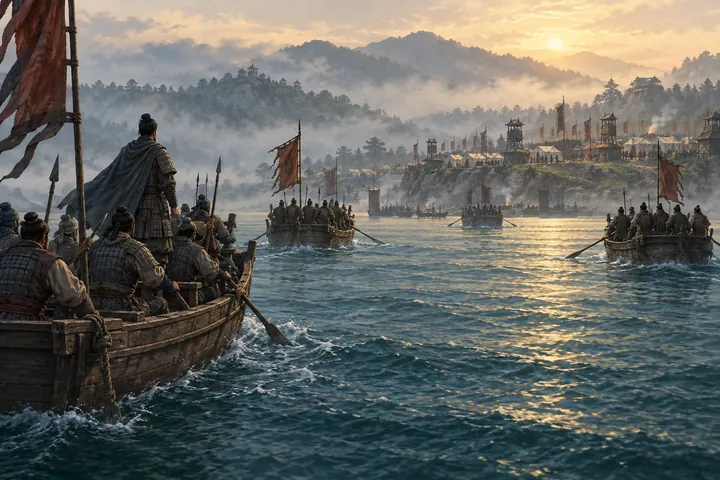
Wu Zetian and Luoyang
From Ganye temple’s nun to Luoyang’s empress: she proved the system could open the summit to a woman.
From concubine to empress
Wu Zetian entered the palace at fourteen as Taizong’s consort, styled “Mei.” When Taizong died she was, by custom, sent to Ganye temple as a nun — by script, her story ended there.
The turn came through Gaozong. As crown prince he had already known her; Empress Wang, battling the favored Consort Xiao, herself urged the emperor to bring Wu back into the palace. Once returned, Wu bore children one after another and rose like a rocket; in 655 Gaozong deposed Empress Wang and installed Wu. The histories accuse her of smothering her own infant daughter to frame Wang — a charge argued for a thousand years — but the cruelty of the accession fight is certain.
Gaozong, chronically ill (possibly hypertensive headaches), gradually let Wu administer the state; the court called them the Two Sages. When Gaozong died in 683 she deposed first Zhongzong then Ruizong, and in 690, at sixty-six, Wu Zetian formally took the throne, renamed the dynasty Zhou, and fixed her capital at the Divine City of Luoyang — the only recognized female emperor in Chinese history.
Her political toolbox
Wu’s instruments form a coherent system worth reading as institutional history.
First, expanded examinations and palace testing — she questioned candidates herself, founded the military exam, promoted commoner officials in bulk, breaking the Guanlong aristocracy’s lock on office; her Register of Surnames ranked houses by official grade, not pedigree. Second, the informer system and the crooked judges — bronze petition boxes set up; Lai Junchen and Zhou Xing wove accusations wholesale, the Luozhi jing their dark manual. The idiom “invite you into the vat” comes from this era: asked how to make a prisoner talk, Zhou Xing described a vat over burning coals; Lai Junchen said, someone has accused you — please step in. Third, Buddhist ideology — she sponsored the Dayun jing’s translation, with its prophecy of a woman turning sovereign, doctrine for a female on the throne.
The open entrance and the terrible exit were two ends of one machine.
Luoyang: her stage
Wu nailed the capital to Luoyang — the power base she had cultivated for years, far from the Guanlong old guard. There she built the Mingtang hall and the Tiantang pagoda, over a hundred chi tall — ritual architecture and power declaration at once.
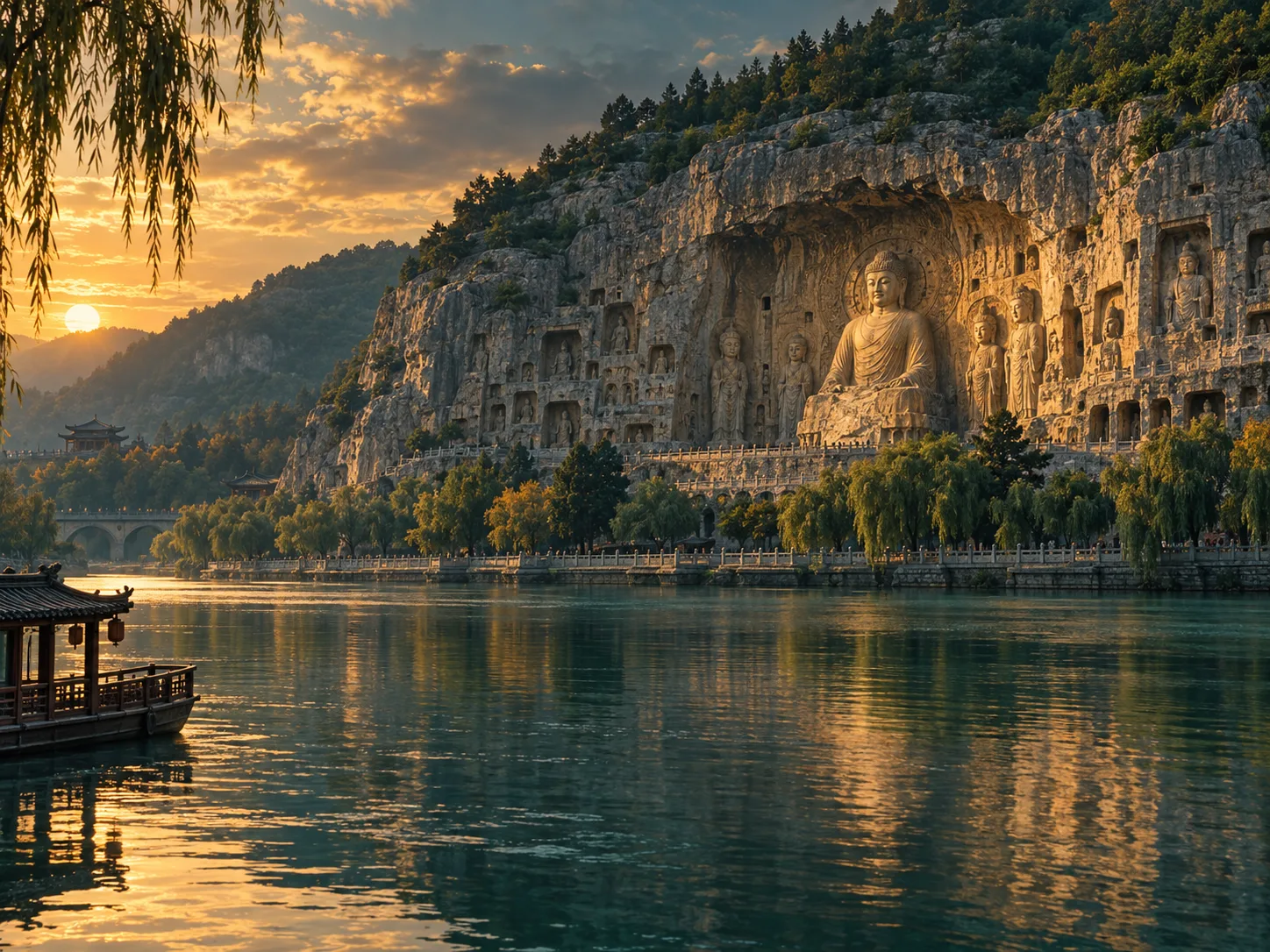
Her deepest mark is at Longmen: the great Vairocana of the Fengxian Temple grotto, finished in 675, standing more than seventeen meters tall, said by tradition to be modeled on her face (disputed by scholars — though her donation of twenty thousand strings of cosmetics money to the carving is documented). Standing beneath that Buddha, its solemnity and confidence are this era’s portrait in stone.
Her rule was not only terror: the economy grew under even taxation, population rose, and her examinations stocked the coming Kaiyuan age with men like Yao Chong and Song Jing.
The wordless stone
In 705 Zhang Jianzhi’s coup ended her reign; the eighty-two-year-old Wu Zetian died the same year, buried with Gaozong at Qianling under a wordless stone — merits and faults left for posterity to write.
Verdicts have swung ever since: official histories after the Southern Song dwelt on her crooked judges and favorites; modern historians reassessed her institution-building and her eye for talent. Perhaps the fairest view: as an emperor (not as a woman), her record stands above the Tang median; she proved that in ancient China the system could allow a woman to hold supreme power — the question was never ability, but whether the gates were open.
Read Wu Zetian with the gender narrative and the institutional analysis held apart, and her political substance comes into focus.
Follow the connections