After An Lushan: the long road to the end of Tang
Military governors were not all rebels, and suppressing rebellion did not necessarily restore the court. Trace the shifting power behind the Tang ending in 907.
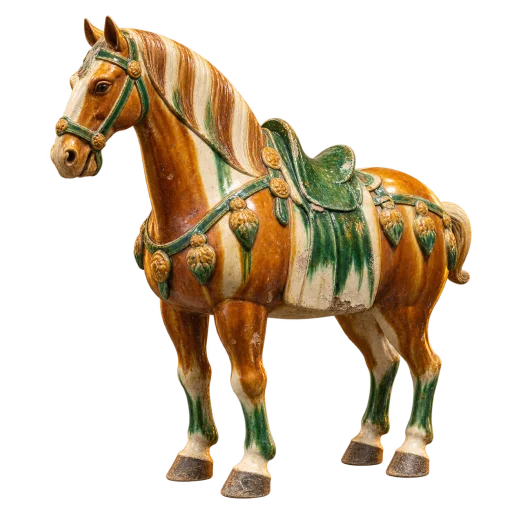
The Tang did not end in 763
The An Lushan rebellion ended in 763, but the Tang survived until 907. The intervening century and more was not an empty epilogue. The court continued to collect revenue, appoint officials and wage campaigns, while literature and urban activity developed. What changed was the relationship between central and regional power, together with the arrangements needed to finance and defend the state.
Some military governors gained considerable autonomy, but conditions varied. Certain commands resisted the court, others defended frontiers, and some regions continued to supply revenue. Treating every military governorship as an independent kingdom makes the dynasty’s long survival difficult to explain. The problem was not the instant disappearance of central power, but growing dependence on forces the court could not reliably control.
Who commanded the soldiers, and who paid them?
Regional and central armies alike required dependable supplies. Revenue and transport from areas such as the Yangtze–Huai region became increasingly important. When taxes reached the court, rulers retained resources for campaigns and the capital. Blocked routes or withheld revenue could leave commands without the means to enforce them. Fiscal and military relationships were inseparable.
There was also competition within the court. Eunuchs controlled important palace forces, while emperors, court officials and regional commanders alternately cooperated and struggled with them. Emperor Xianzong’s campaigns recovered authority over some commands, demonstrating that the period was not one uninterrupted decline. But a military success did not settle the underlying problem: those capable of mobilizing troops could still determine policy or succession in a later crisis.
Why did the capture of Chang’an not end the war?
In the late ninth century, social distress and local conflict fed large armed rebellions. Huang Chao’s forces campaigned across extensive areas and entered Chang’an in early 881, proclaiming a Great Qi regime as the Tang emperor fled. Possession of the prestigious capital was a major victory, but it did not ensure control of its food-producing hinterland or the obedience of other military powers.
Fighting around the city continued. Routes, provisions and alliances outside the walls determined how long its occupiers could hold it, while civilians suffered repeated destruction. Huang Chao withdrew in 883 and was defeated the following year. The Tang recovered its capital but depended more heavily on powerful commanders. Those who acquired troops, territory and prestige while suppressing rebellion did not necessarily surrender these gains afterward.
In 904, more than the emperor was moved
Zhu Wen had served under Huang Chao before joining the Tang and becoming a dominant military figure. In 904, he forced Emperor Zhaozong to move to Luoyang. This was not an ordinary royal journey. Residents were ordered eastward, and timber from dismantled buildings in Chang’an was transported for construction in the new capital. A change in political control entered directly into civilian lives.
Luoyang’s recovery was not beginning from nothing. Zhang Quanyi had spent years rebuilding production, population and urban facilities there, creating a basis for the court’s arrival. Zhu Wen’s military power then transformed the city’s political relationships. A capital was more than a palace: it depended on food, labour and local networks. Damage to Chang’an and construction at Luoyang were connected parts of the same redistribution of power.
Why did 907 lead to “Five Dynasties and Ten Kingdoms”?
In 907, Zhu Wen replaced the Tang with the Later Liang. The “Five Dynasties” were the successive northern regimes of Later Liang, Later Tang, Later Jin, Later Han and Later Zhou. “Ten Kingdoms” is the conventional collective name for a number of regional states, not ten countries founded simultaneously with unchanging borders. They did not all disappear when the Song began in 960.
Many regional power bases had already developed under the late Tang. A new dynastic title confirmed changes underway rather than starting every process afresh. The Qian rulers in Hangzhou and courts in Sichuan and the south pursued their own military, fiscal and cultural projects. Frequent northern successions therefore coexisted with periods of sustained regional government. Both patterns belong in the same chronology.
What survived the end of Tang?
The year 907 did not erase Tang writing, ritual, administrative experience or commercial connections. Successor states reused earlier institutions and political language to justify their rule, while officials, artisans and merchants continued to make their living. Yet warfare and migration did disrupt established families and capital-based networks, changing routes into political influence.
The connections become clearer through Qian Liu’s government of Hangzhou, Feng Dao’s printing project and the later Song reorganization of military power. Late Tang was more than the faded background to a golden age, and the Five Dynasties were not a blank space before Song. Armies, revenue and local society were being recombined. The problems and resources inherited by Song emerged from that prolonged transformation.
Follow the connections