Chang’an and the Silk Road: why start in Xi’an?
Chang’an, in present-day Xi’an, was a major Silk Roads hub. Explore Han diplomacy, Tang cultural exchange and the sites that connect this history with Xi’an today.
A lens for this story
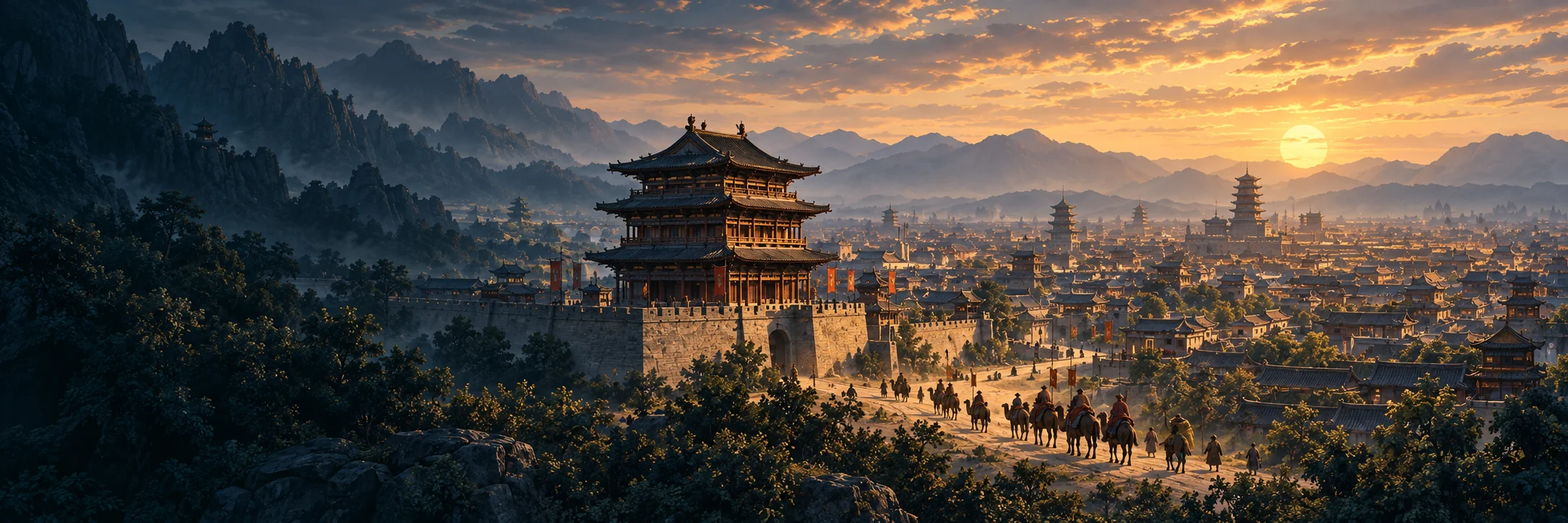
If silk could change hands many times before arriving far away, why begin the story in Chang’an? Look at the city, not just a line on a map.
- Connect capital, markets and transport nodes rather than look for one unchanging ancient highway.
- At a “Tang-style” attraction, ask whether you are seeing a surviving site, a museum object or a later reconstruction.
Is Chang’an the same as modern Xi’an?
The historical capital name Chang’an is associated with present-day Xi’an, but Han Chang’an, the Sui–Tang capital and the modern city did not share exactly the same footprint. Identify the period first, then connect a surviving site with the right historical layer.
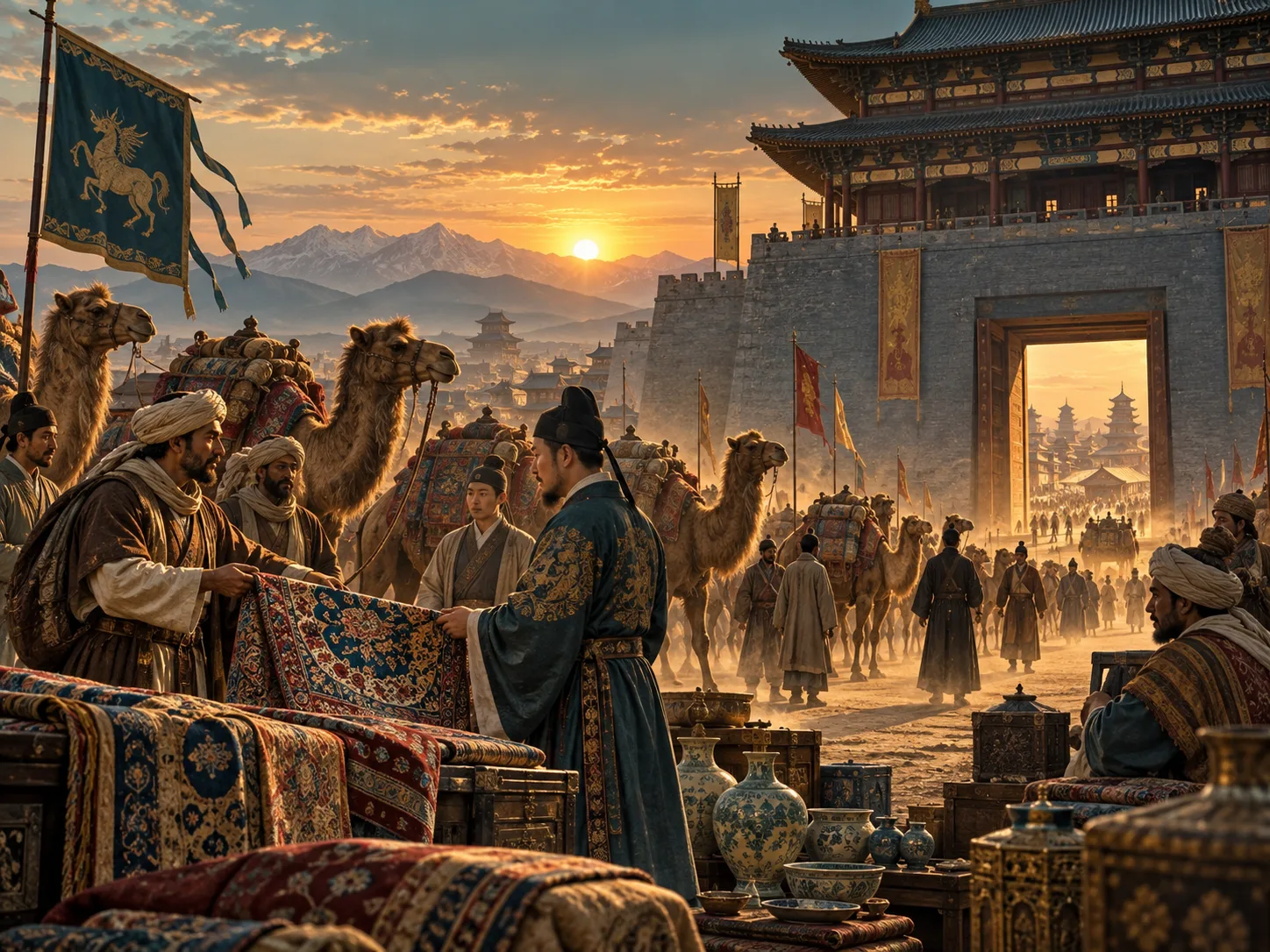
Chang’an mattered for more than departing caravans. A capital brought together political activity, demand for goods and cultural exchange, drawing objects, envoys and knowledge into one place. It was an important hub, not a single gate through which every journey had to pass.
What changed with Zhang Qian’s missions?
Under the Western Han, Zhang Qian traveled to the Western Regions on diplomatic missions, initially seeking a Yuezhi alliance against the Xiongnu. His journeys and later exchanges widened the Han court’s connections. Diplomacy and commerce interacted, but they were not the same activity.
Movement of people and goods did not begin from nothing with one mission. Communities along the routes already had connections of their own. Zhang Qian’s story helps explain the expansion of Han contacts, rather than the invention of the Silk Roads by a single individual.
How could goods travel farther than one merchant?
The Silk Roads included multiple land and sea routes, changing with environments, politics and demand. Long-distance goods could pass through many traders. A textile’s journey need not match the itinerary of any one merchant.
Cities along the way were therefore more than dots on a map. Water, food, accommodation, markets and translation affected whether travel could continue. Think of an oasis or market as a relay point, rather than assume a single caravan carried everything from end to end.
Silk was not the only thing moving. Religions, technologies, languages and artistic forms changed through contact, leaving traces in buildings, objects and urban life.
What traces did exchange leave in Tang Chang’an?
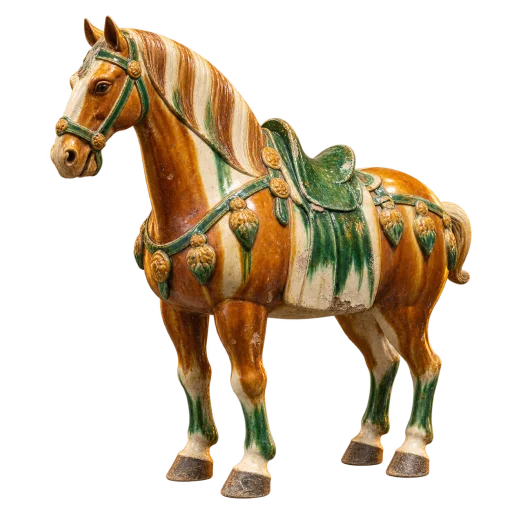
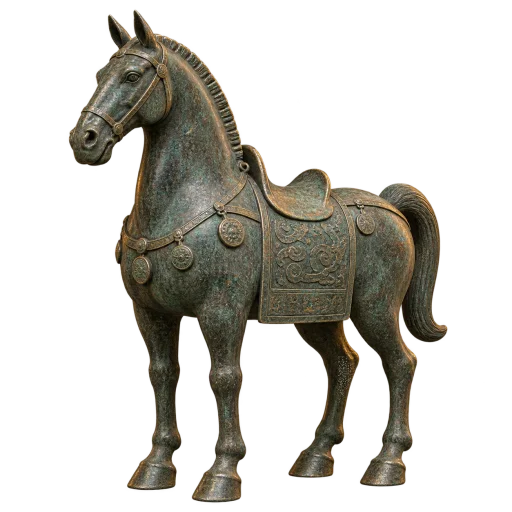
Tang Chang’an was an imperial capital with a diverse cultural life shaped by Buddhism, art and connections beyond the region. When looking at figures, metalwork or Buddhist sculpture, examine clothing, vessel forms and techniques alongside the object’s date and findspot.
Inscribed in 2014, the Chang’an–Tianshan Corridor World Heritage property includes 33 components across China, Kazakhstan and Kyrgyzstan. It represents one corridor, not every land and sea route associated with the Silk Roads.
Daming Palace remains and the Giant Wild Goose Pagoda offer different starting points in Xi’an. One invites questions about palace space, the other about religious architecture and the circulation of knowledge. They reveal different functions of a capital, not one interchangeable “Tang-style” attraction.
Follow the connections