When was the Tang dynasty?
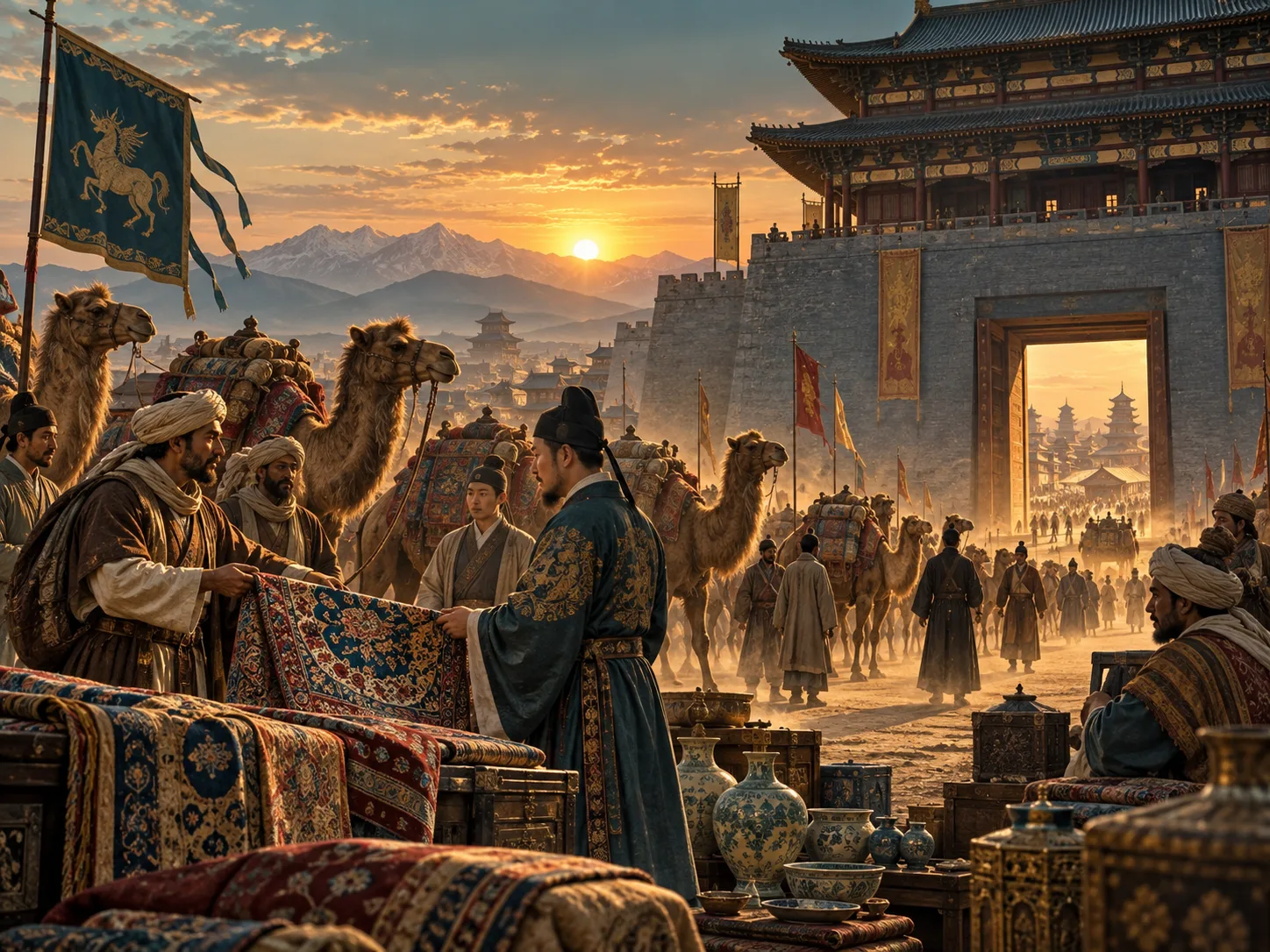
The Tang dynasty is conventionally dated 618–907 CE, following the Sui. Two important capitals offer a starting point: Chang’an, in present-day Xi’an, and Luoyang in today’s Henan province.
Court politics, frontiers and urban life changed across these centuries. Start with the dates, then place Xuanzang, Wu Zetian and the An Lushan rebellion within the sequence. People belong to different moments rather than one timeless scene.
Why were Chang’an and Luoyang important?
Chang’an combined government with networks of merchants, envoys and pilgrims. Luoyang also played a major role in imperial politics and religious life.
In Xi’an, Daming Palace remains introduce palace space, while the Giant Wild Goose Pagoda points toward Buddhist learning. Longmen’s caves near Luoyang offer another setting for royal patronage and religious art. Comparing a palace, a pagoda and a cave temple reveals different relationships between power and belief.
What is the Tang dynasty known for?
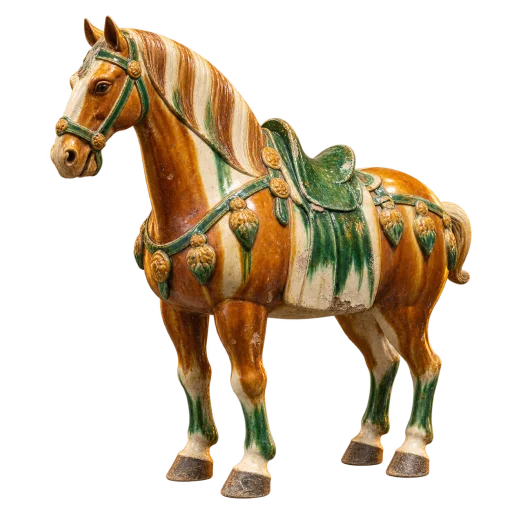
Poetry, ceramics, calligraphy, painting and Buddhist art are useful ways into Tang culture. Poets including Li Bai and Du Fu brought cities, journeys and war into literary memory. Sancai ceramics are recognizable for flowing glazes and subjects such as people, camels and horses.
The Diamond Sutra scroll printed in 868 offers a different encounter with the period. Its woodblock printing and dated colophon make it a concrete example of Buddhist book culture. A poem, a ceramic figure and a printed scroll reveal different ways of communicating experience.
Did Tang end with the An Lushan rebellion?
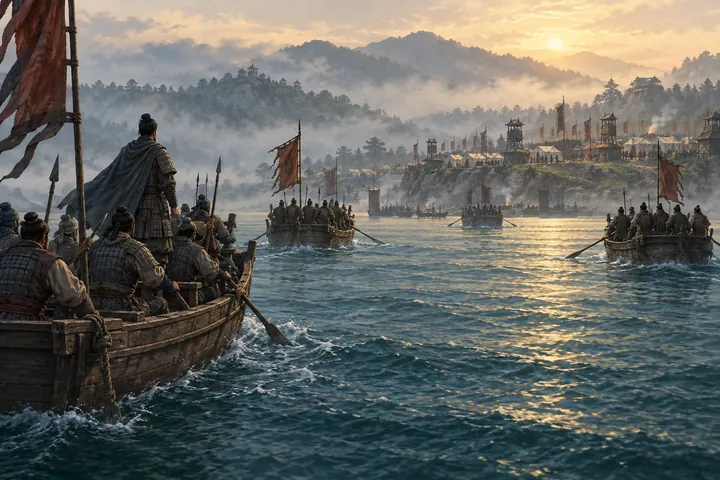
No. The rebellion that began in 755 severely weakened the court, but Tang rule continued until 907. Warfare changed the relationship between central authority and regional military power, while literary, religious and economic activity continued.
Tang cultural history extends beyond its celebrated early and high periods. Read the rebellion as a political turning point, then look at later works and places to see how life continued within a changed dynasty.
What came after the Tang dynasty?
The Five Dynasties and Ten Kingdoms period followed Tang’s fall in 907; Song began in 960. Northern dynastic succession and the histories of regional states overlapped, rather than every region changing rulers together.
Wuyue’s history in Hangzhou provides one continuation. Moving from Chang’an and Luoyang to a different landscape shows how regional building and cultural patronage carried on after the Tang.