Reunification
Yang Jian founded the Sui in 581 and conquered Chen in 589, ending the main division between north and south. Drawing on Northern Zhou and other earlier arrangements, the Sui reorganized central and local government and absorbed administrative experience from different regions. Unification required new coordination of registration, revenue and transport.
The Kaihuang Code, administrative adjustments and capital construction influenced the later Tang. The Sui is conventionally dated 581–618. Although the dynasty was short-lived, some institutions and infrastructure continued to function after adaptation by its successors. Their lasting influence and the dynasty’s immediate political fortunes are different questions.
The Grand Canal and connectivity
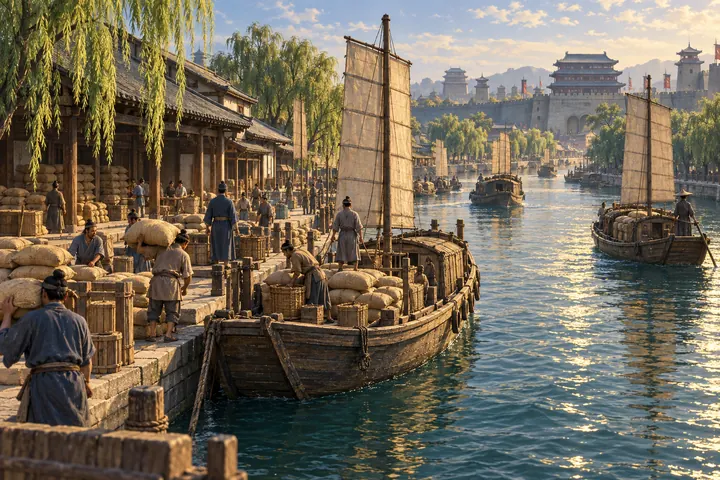
The Sui enlarged and connected existing waterways, tightening transport links among Jiangnan, Luoyang and northern military destinations. Canal construction supported towns along the routes and later north–south connections. The growth of Yangzhou and Hangzhou also depended on local production, trade and successive generations of investment.
Excavation, maintenance, shipbuilding and transport demanded substantial labour. Combined with other projects and military mobilization, these demands placed heavy pressure on society. The canals’ long-term logistical value and the immediate burdens on households must both be considered; neither cancels the other.
Where the examinations began
The development of the civil service examination system is conventionally traced to the Sui and continued under the Tang and Song. Examinations gradually changed routes into office, but did not instantly replace family influence with test results. Recommendation, hereditary privilege and other forms of recruitment continued alongside them.
Under the Song, examinations increased in scale and political importance. Household wealth, access to education and social connections still affected who could prepare. Following the changes across these dynasties shows both the gradual expansion of the system and the persistence of unequal opportunities.