Brief unity, long division
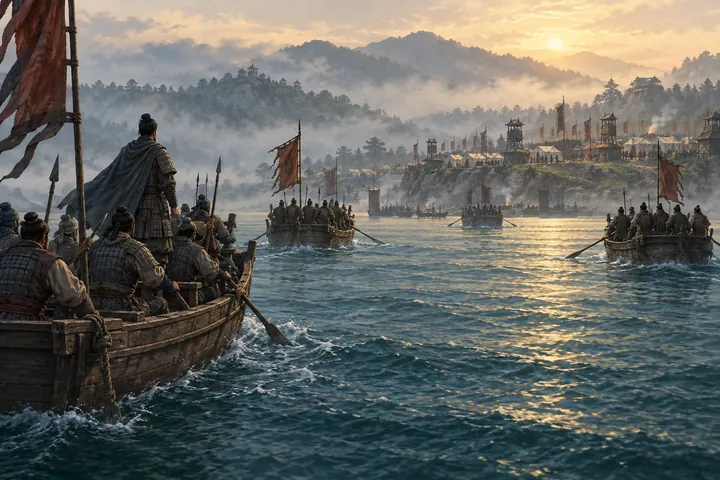
In 280, Western Jin conquered Wu and ended the main division of the Three Kingdoms. Conflicts among imperial princes and regional forces subsequently intensified. Luoyang fell in 311 and Chang’an in 316, ending Western Jin. Sima Rui became King of Jin in the south in 317 and emperor in 318 as Eastern Jin took shape.
The Sixteen Kingdoms period in the north is conventionally dated from 304 and overlapped Eastern Jin and the later Southern Dynasties. Northern Wei and its successors repeatedly changed the northern political landscape, while the south passed through Eastern Jin and the Song, Qi, Liang and Chen dynasties. The Sui conquest of Chen in 589 brought north and south under one dynasty again.
Migration and cultural contact
War and migration caused losses while moving people, skills and customs between regions. Northern migration contributed to Jiangnan’s development alongside established communities and sustained local investment. The southward shift of economic weight unfolded over centuries, not in one movement of population.
In 494, Northern Wei’s Emperor Xiaowen moved the capital to Luoyang and introduced reforms affecting court language, dress and officials’ surnames. Change was not uniform across regions and communities. Buddhist transmission, literary activity and northern developments in land and military institutions also contributed varied resources to the later Sui and Tang.
Grottoes, poetry and fusion
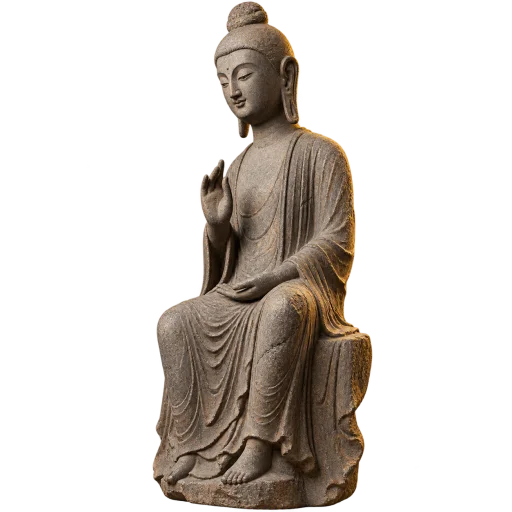
Yungang and Longmen reveal changes in Buddhist art across regions, periods and settings of patronage. Faces, clothing and sculptural arrangements reflect transmitted religious traditions as well as local workshops, courts and worshippers. The Tang works at Longmen’s Fengxian Temple belong to a later development; their complex style cannot be reduced to becoming “fully Chinese.”
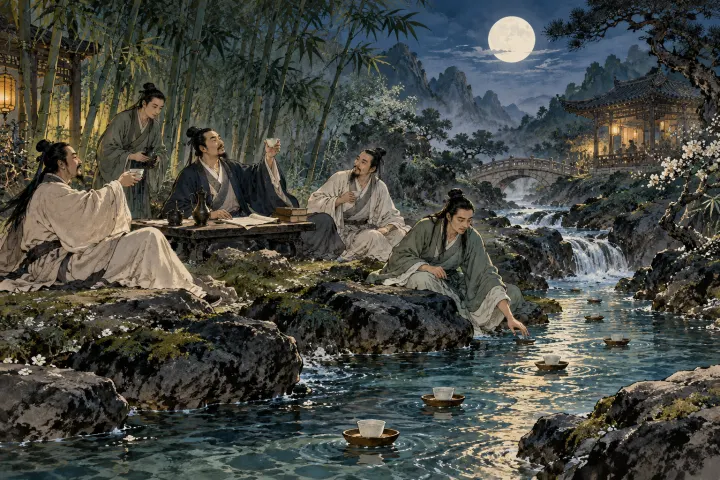
Poetry offers varied perspectives too. Tao Yuanming is especially associated with pastoral writing, while Xie Lingyun’s close attention to landscape had lasting influence, although their subjects overlap. Connecting individual works with authors’ experiences and environments reveals more than interpreting every poem as an exile’s homesickness.