Xiaowen moves to Luoyang: what changes when a capital moves?
A capital move is more than a new palace. Compare the political center, urban life and Longmen to see how change leaves different kinds of evidence.

A lens for this story
If the capital’s name changes but people, institutions and everyday connections do not move, is the relocation complete? That question opens urban history beyond a single date.
- Political decisions, city building and artistic change are related but distinct processes.
- Do not attribute later Tang sculptures to the Northern Wei relocation.
Start by separating Pingcheng and Luoyang
Datong’s official chronology connects Northern Wei’s capital at Pingcheng with present-day Datong and dates the move to Luoyang to 494. That gives two places and a chronological anchor, not a complete account of the relocation.
Ask at least three further questions: why does a decision-making center move, which people and institutions must be reorganized, and how does the new center connect with roads, settlements and political memory? Following decisions, people and space makes relocation more than a single entry in a chronology. Separating the dated event from questions requiring explanation prevents one imagined intention from replacing the whole process.
Why a capital is more than a palace
Think of a capital in three layers: places where decisions are made, connections that keep it functioning, and spaces that make authority visible. Palaces are one part; institutions, residents and material support are further questions essential to understanding a political center.
Different materials help build a picture of the city: chronology for sequence, archaeological sites for space, and relevant texts for institutions or lives. One dramatic migration total cannot substitute for those separate investigations.
From relocation to Longmen: not a single moment
Longmen supplies art and heritage evidence that can be examined alongside the story. UNESCO identifies late Northern Wei and Tang carving phases, with the most intensive work from the late fifth to mid-eighth centuries. That span matters: a political event and sustained construction cannot be collapsed into one moment.
Place the relocation date at one end of a page and individual inscriptions or documented cave dates after it. Different layers of time become visible. A work can inform questions about a capital and religious art, but its location at Luoyang does not establish that a particular emperor commissioned it or that every form originated in the move.
Compare two sculptures without guessing dates from faces
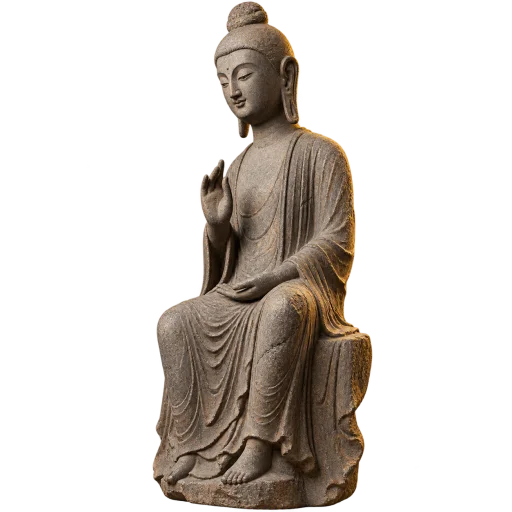
Choose two caves with reliable dating information. Record their names and periods before comparing dress, posture, proportions, grouping and viewing distance. Establish sequence first, then describe differences. Avoid the shortcut that a slender face must be Northern Wei and a fuller one Tang.
Use two columns: your own observations on the left, documented explanations on the right. They need not match one for one. Artistic change can involve subject, patronage, technique and restoration. One visual feature cannot reduce a period to a supposed collective character, or directly prove the effects of a particular political measure.
What question can you take to Luoyang today?
Read Luoyang’s urban history and Longmen’s sculptures as two connected exercises. One supplies the capital’s historical setting; the other invites comparison of dated works and materials. Modern city, archaeological site and later presentation are layers that can connect without replacing one another. Check current official access information before traveling.
Return to the opening question: what changes when a capital moves? A useful answer does not assign every change to one ruler. It states what kind of change is being discussed and which evidence supports it. Carry that method to Beijing’s Central Axis or Chang’an to distinguish continuity of political space from changes in buildings and everyday urban life.
Cities and connections: from a scroll to a journey
A thematic path, not chronological order: observe city life, consider the organization of a capital, then follow connections beyond it.
- Along the River at Qingming: how to read a Song city →
Observe how boat, bridge and street form a city scene.
- Xiaowen moves to Luoyang: what changes when a capital moves?You are here
Ask which spaces and connections a capital move changes.
- Zhang Qian’s western mission: why a failed alliance still mattered →
Distinguish experience and reports in knowledge of distant places.
Follow the connections