Building Daxing, predecessor of Tang Chang’an
Built in a year, a million people, a chessboard used for a thousand years: Tang Chang’an began as a Sui blueprint.
Why abandon Han Chang’an
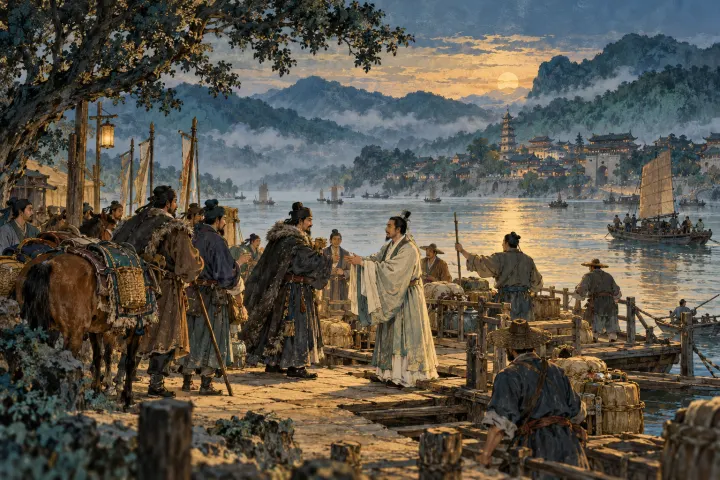
In 582, the second Kaihuang year, Emperor Wen resolved to leave the old Han city of Chang’an and build a new capital to its southeast. The reasons stand in the record: the city was nearly seven hundred years old, its groundwater turned brackish and foul, unfit for people; its palaces repeatedly war-burned; its plan cramped — no stage for a unified dynasty’s grandeur.
The designer was the young prodigy Yuwen Kai, then twenty-seven, already famed for building. The site lay on the southern skirts of the Longshou plateau, back to hills and facing water; the city was named Daxing — Great Flourishing — its palace Daxing dian, its temple Daxing’ensi: the emperor’s hopes in a word.
A city built in a year
By 583 Daxing stood essentially complete — under a year from plan to structure. The speed came from advanced organization: palace city first (the emperor needs a home), then the imperial city for the ministries, then the outer walls; Han Chang’an was cannibalized for materials; the crews ran like an assembly line.
Yuwen Kai’s design was uncannily modern: the whole city strung on the Vermilion Bird Avenue as axis (150–155 meters wide, nearly double Beijing’s Chang’an Avenue), symmetric east–west; palace and imperial cities centered north, the emperor seated facing south; the outer city gridded into 109 wards and two great markets — a chessboard, as Bai Juyi later wrote: a thousand homes like a go board; twelve streets like planted beds.
The skeleton of Tang Chang’an
Sui fell, Tang rose; Li Yuan returned the name Chang’an, but the skeleton remained Sui’s. Tang added the Daming and Xingqing palaces, and at its height the city passed a million people — the largest on earth.
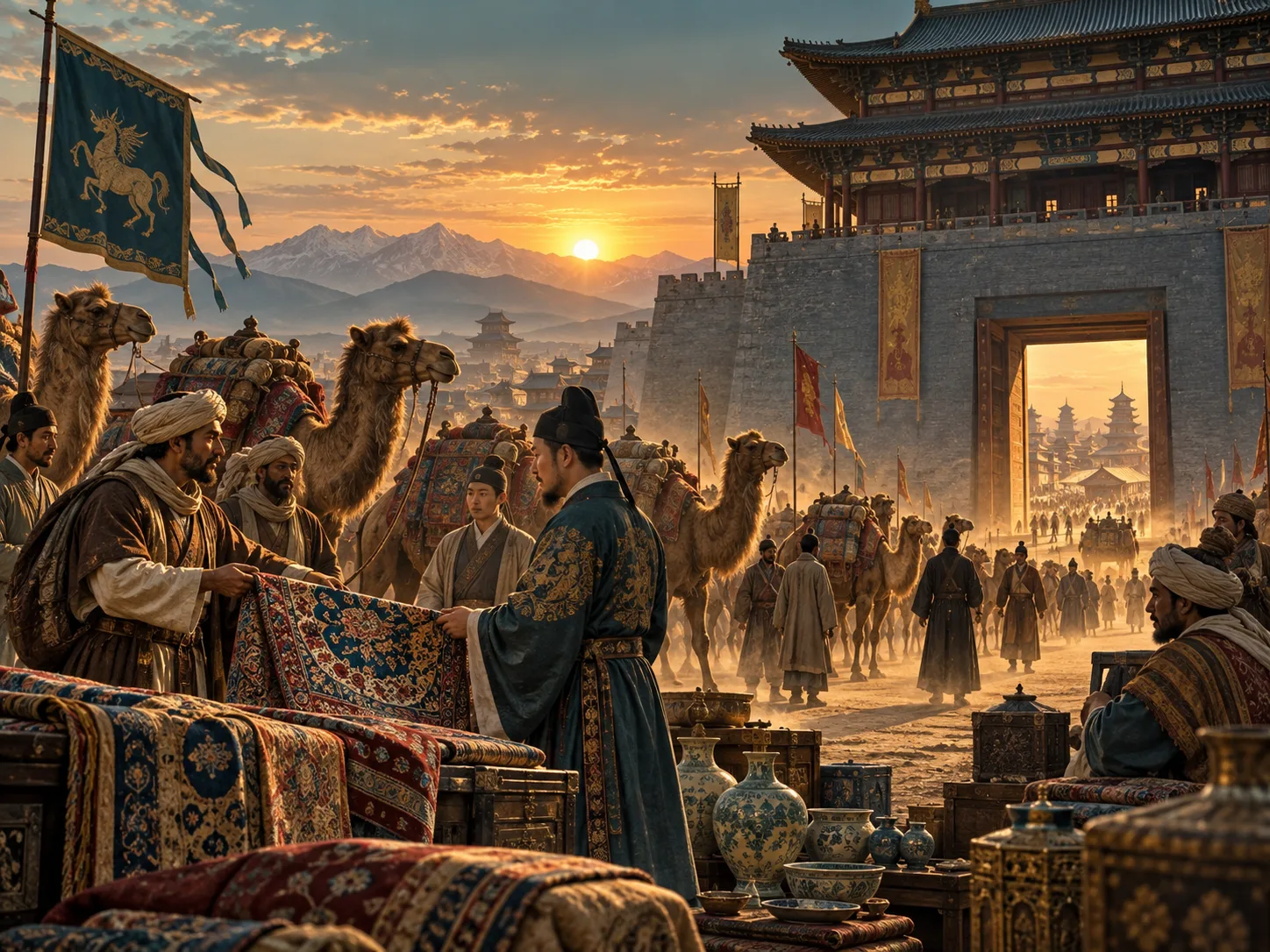
The ward system eased control (gated wards, curfew after drums); the Eastern and Western Markets were international trade hubs thick with Sogdian merchants. Japan’s envoys carried the plan home whole: Nara’s Heijo-kyo and Kyoto’s Heian-kyo are Chang’an in miniature — a Sui design became the template for every East Asian capital.
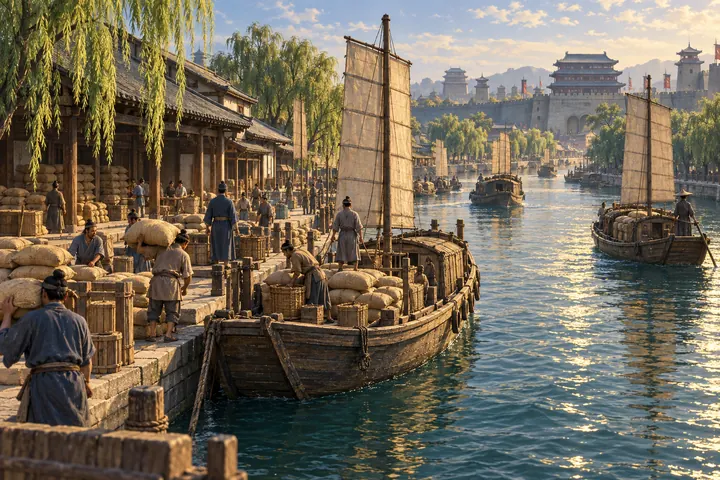
Yuwen Kai also cut the Guangtong canal, drawing the Wei into the Yellow River for grain transport: a city of a million needs a logistics net of the same scale.
Splendor and supply
Daxing was ancient planning at its apex — axial symmetry, functional zoning, imperial scale — and no later Chinese capital escaped its paradigm. But its other face deserves seeing: vast construction, then a population swelling past a million that the Guanzhong plain could not feed. The grain had to come by canal — and there lay the empire’s soft spot: again and again under Sui and Tang the emperor moved his court to Luoyang to eat.
Read Chang’an reading both its books at once — the beauty of the plan and the difficulty of the feeding: a great city always rests on enormous claims upon distant resources.
Follow the connections