From the Chu–Han contest to Wen and Jing
After Qin fell, Xiang Yu and Liu Bang fought four years for the realm; at Gaixia, Liu Bang won and founded Han — over a wrecked economy where “the Son of Heaven could not find four horses of a matching team, and ministers rode ox-carts.”
So came the Rule of Wen and Jing: light levies, low taxes, rest for the people, farm rent cut to one part in thirty. Decades of accumulation meant that when Emperor Wu took the throne, “the coins of the capital stacked into the millions of strings, their cords rotting; the grain in the granaries stacked upon stack.” A golden age is not seized — it is saved.
Han inherits Qin: how the empire ran
Han writers condemned Qin’s “harsh governance,” yet the commanderies, statutes, script and measures — Qin’s institutional frame — survived nearly whole. Early Han enfeoffment was transitional: Jing Emperor’s cuts provoked the Rebellion of the Seven States, and Wu Emperor’s “grace edict” subdivided the kingdoms until they no longer mattered — central power finally secure.
The recommendation system brought regional talent into the bureaucracy; the salt-and-iron monopolies and the transport-stabilization offices pulled economic levers back to the center. This governing art of “mingling the kingly and the coercive ways” became the basic operating system of imperial China for the next two thousand years.
The Silk Roads and Chang’an
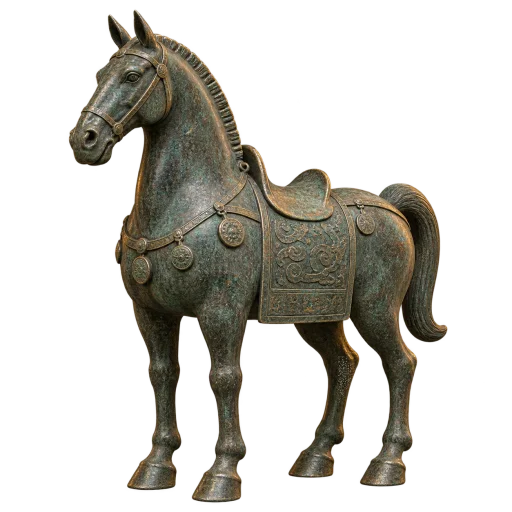
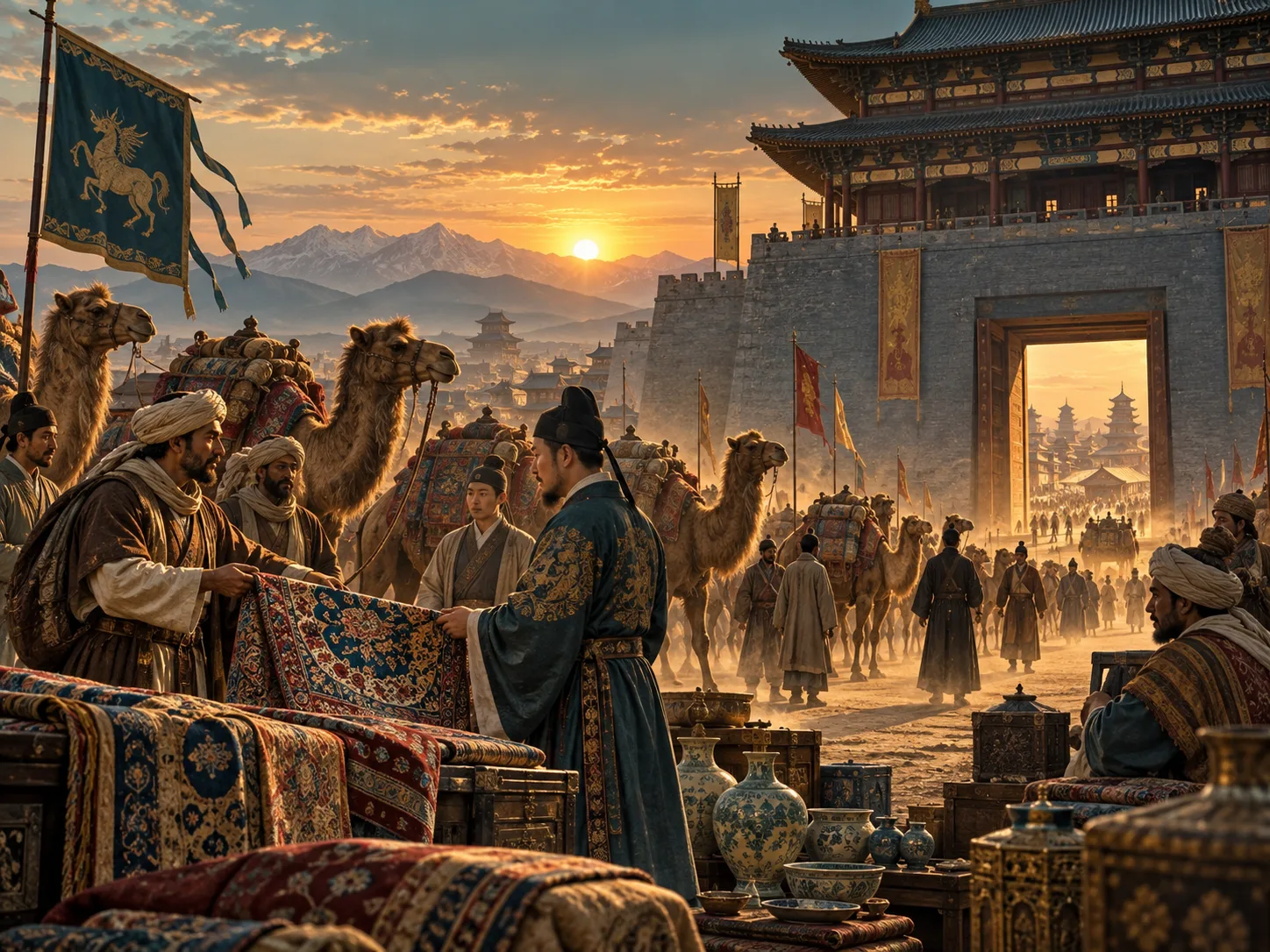
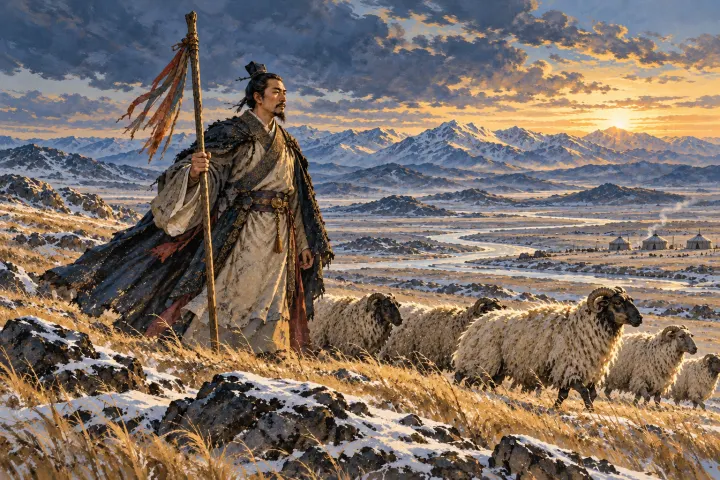
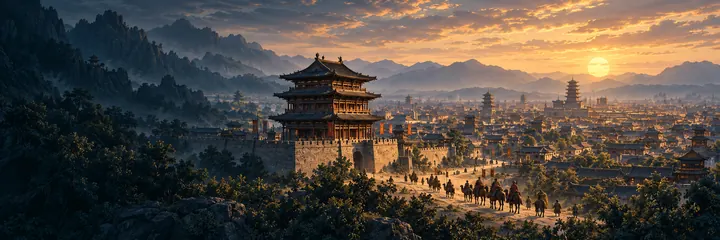
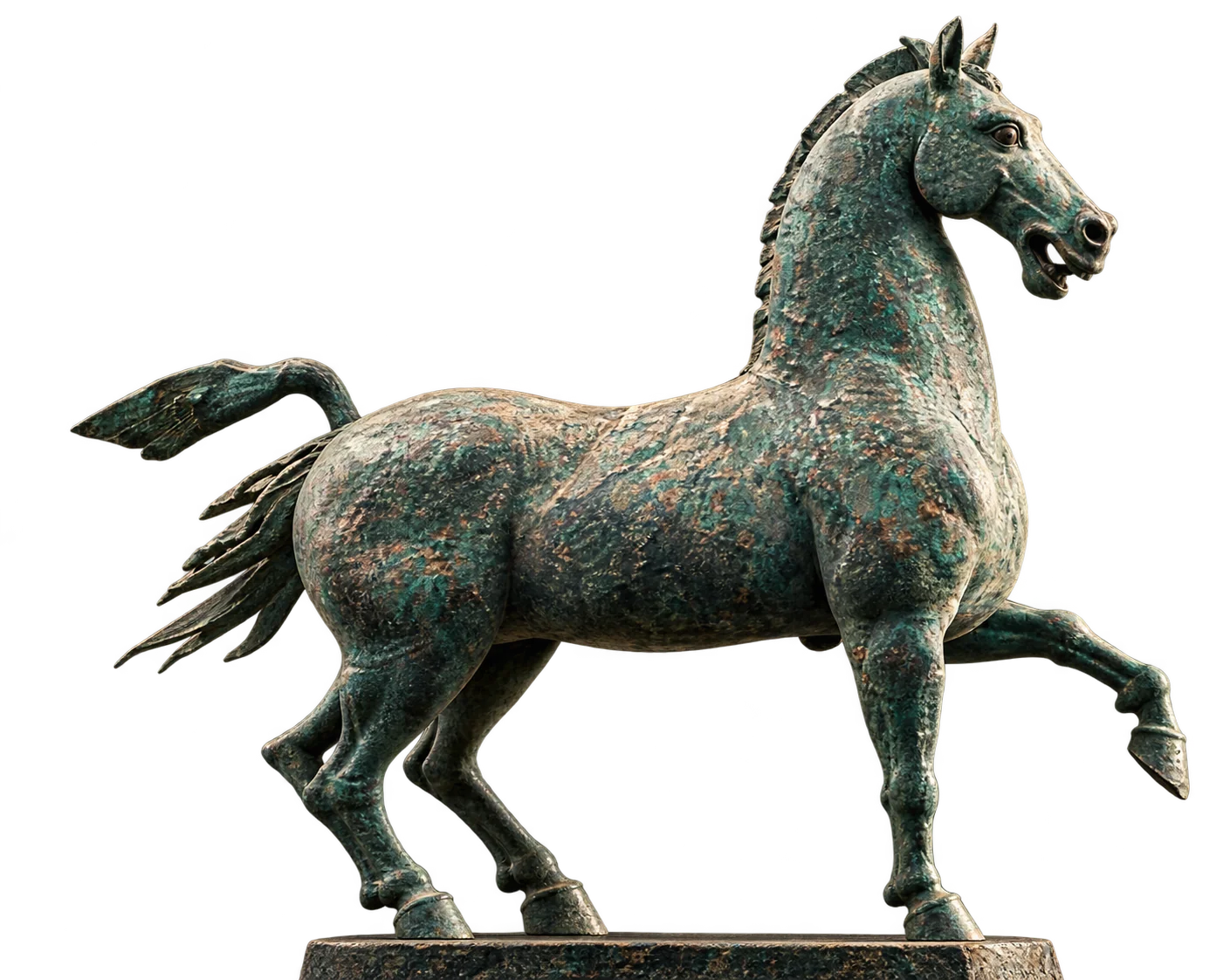
After Zhang Qian bored through to the Western Regions, Chang’an became the eastern anchor of a network spanning Eurasia. Envoys watched for each other on the roads; caravans relayed grapes, alfalfa and fine horses east, silk and lacquer west. Wu Emperor’s late-reign wars against the Xiongnu and the quest for heavenly horses began overdrawing the golden age — his Luntai edict in old age carries regret.
Today in Xi’an, the Han Chang’an ruins and the stone sculptures at Huo Qubing’s tomb at Maoling still carry that era’s breadth of spirit.
History, classics and a world of objects
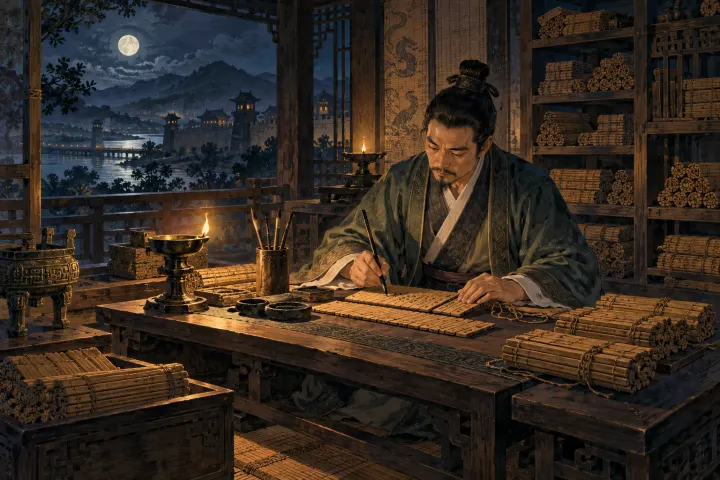
Han left two spiritual legacies: the biographical historiography pioneered by the Shiji, giving the Chinese a historical memory of “threading the changes of past and present”; and the classical learning that shaped the knowledge base of two millennia of officials.
The world of objects was just as vivid: the silk paintings and gauze gown of Mawangdui, the pottery towers and granaries of Han tombs, feasting and hunting carved in stone — an archive of Han daily life in things. Read Han with texts and artifacts side by side, and the era stands up in three dimensions.