The unification project
Qin’s unification was not one battle but a century-long project: Shang Yang’s laws laid the base, generations of Qin kings tilled, and Ying Zheng reaped — ten years to end the six states was harvest time.
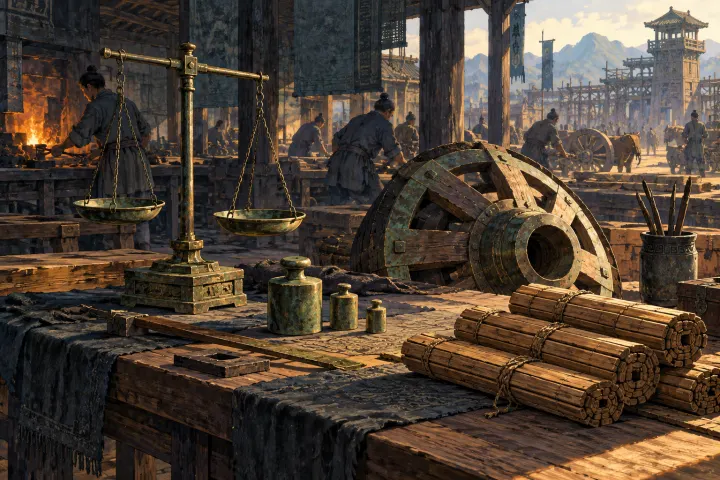
The core came after: thirty-six commanderies; one script, one axle width; unified measures and coinage. Deepest of all was script: speakers of every dialect now shared one written language — the cultural glue of China’s long pattern of division, then reunion.
The mausoleum and state organization
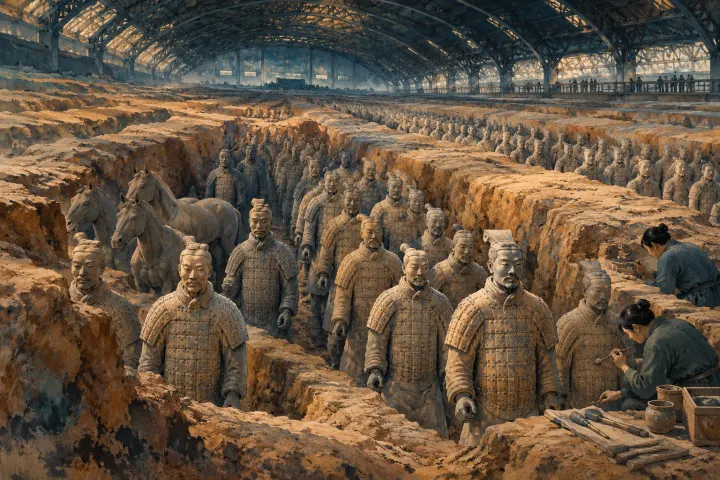
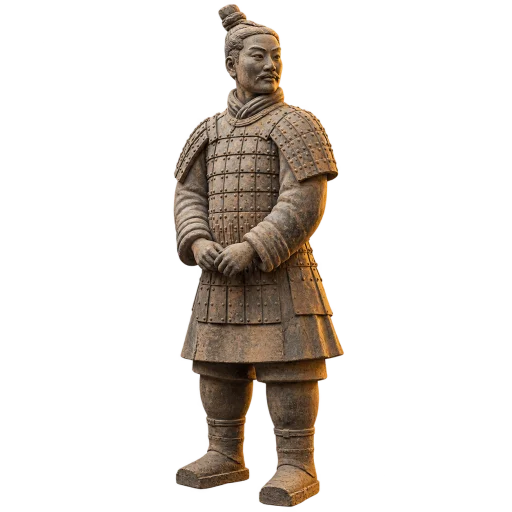
The First Emperor’s mausoleum is the empire in miniature: 700,000 laborers, decades of work, standardized figures stamped with their makers’ names. The terracotta army astonishes not by lifelikeness but by organization — the capacity to marshal resources, hands and technique into one colossal work.
At the site, place any single pit back into the mausoleum’s whole plan; when reading the dynasty, assess “collapse” and “institutions” separately — that is how to handle Qin’s double legacy.
A short reign, a long shadow
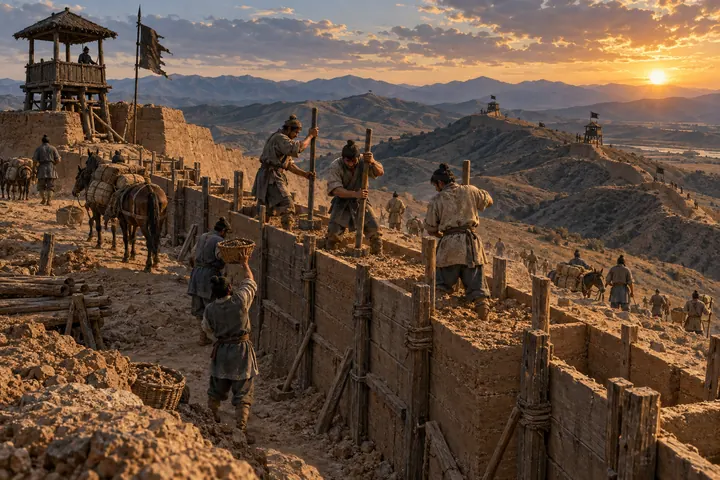
Qin fell at fifteen years; the Han verdict was the neglect of benevolence — crushing levies, harsh laws, the six states’反弹. The peasant rising’s trigger was literal: miss the deadline and die. Deadline culture at its extreme.
Yet unity became the default premise of Chinese politics: after Rome, no Rome, while China reunited again and again. Qin’s legacy is two things — an institutional kit (counties, statutes, script) and an idea (the realm must be one). Han inherited Qin’s institutions: understanding Han begins by admitting it.