Qin and Ming walls: one name, different historical sites
A brick rampart does not take you straight into Qin times. Read terrain, materials and infrastructure to distinguish the periods within “the Great Wall.”
A lens for this story
Cover the tourists, railings and signs in a photograph. Can you date the wall? Its name alone is not enough.
- A historical name, a site’s dating and its surviving fabric are different questions.
- Read walls alongside movement, passes and garrisoning.
Begin by setting the familiar photograph aside
The familiar image is a masonry rampart with battlements and towers on a ridge. It is recognizable, but not automatically evidence of Qin construction. UNESCO describes a long-lived defence system and distinguishes examples of Han rammed-earth remains and Ming masonry.
Ask which section, which period and which repairs you are seeing. Do not compress Qin, Han, Ming and modern presentation into one ancient moment. A photograph can evoke history powerfully without dating its subject.
Qin did not start with a blank page
The mausoleum museum’s chronology connects Qin frontier campaigning and construction with earlier walls of Qin, Zhao and Yan. A new regime inherited works as well as new defence concerns. Following the integration of earlier walls reveals how works from different political periods came together.
Imagine defending uneven terrain. The shortest line need not offer the best positions for watching, messages or supplies. These questions draw attention to the relationship between construction and terrain. It turns an abstract frontier into questions about height, passage and places people could hold.
Earth does not automatically mean Qin
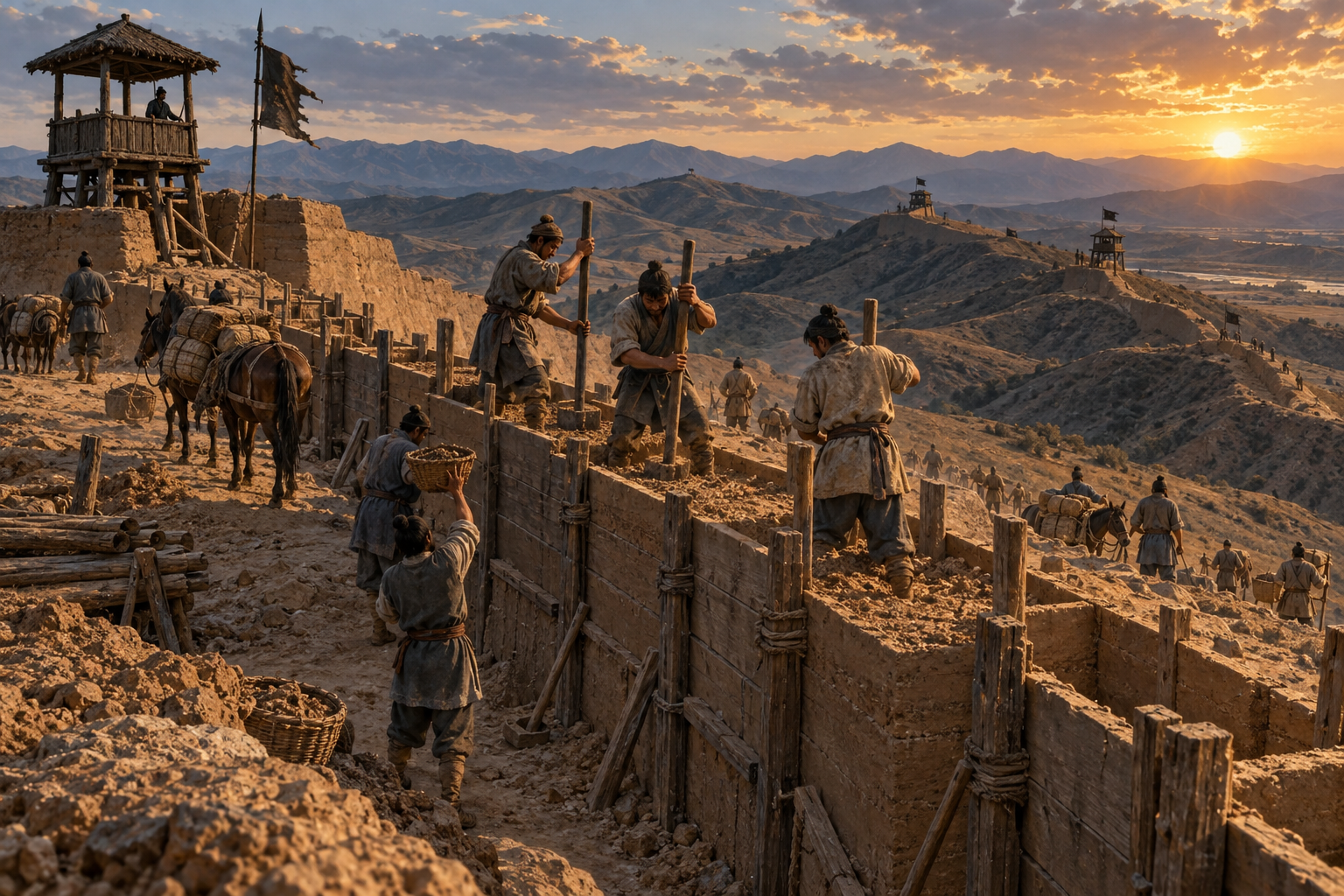
“Qin used earth; Ming used brick” is memorable but too simple. Materials depend on location, resources, building phases and repair. Earth or brick alone cannot assign a single date to a whole section. Establish documented dating first, then examine materials.
Record three observations: visible layers at exposed surfaces, the relation between wall and slope, and apparent repair areas. Do not climb fragile remains or disturb fabric to inspect them. If interpretation is missing, note that dating needs checking rather than call every earthen ridge Qin.
Who kept a wall useful?
A wall does not defend itself. Consider passes, garrison positions and the transmission of information rather than only length. Heritage descriptions identify components of a system, but do not justify transferring every later facility or signalling rule to Qin.
Labor raises a similar problem. A project required people; that does not establish every worker’s identity, number or fate. Signal rules and transmission speeds need evidence from the relevant period; the scale of a project alone cannot establish them. Organization and human cost both deserve investigation without an unverified dramatic total.
Take these questions to a site
Choose an officially accessible site and check its interpretation, access and conservation requirements. On arrival, read the name and dating before examining fabric and terrain; then ask how remains have been repaired and presented. Respect conservation requirements and stay within areas officially open to visitors.
Next read Meng Jiangnü. Engineering and storytelling can both prompt questions about labor and separation, but a legend cannot establish why a particular wall collapsed. A standing wall cannot prove its characters’ marriage either. The shared name brings historical and emotional layers together without merging them.
Qin: an order, a wall and a story
Read Qin through administration, engineering and folklore: how offices worked, how walls belong to different periods, and how later stories express separation.
- After Qin unification: how does an order become government? →
Use a measure and county records to examine everyday government.
- Qin and Ming walls: one name, different historical sitesYou are here
Distinguish construction periods rather than date a wall by material alone.
- Meng Jiangnü and the Great Wall: how a story of separation changes →
Hear the tale and separate texts, local versions and real sites.
Follow the connections