Who Was Fu Hao? Shang Commander, Inscriptions and Tomb
Fu Hao was a consort of the Shang king Wu Ding, associated with military and ritual activity. Explore her name in inscriptions and the finds from her tomb.
When did Fu Hao live, and what did she do?
Fu Hao lived during the reign of Wu Ding in the late Shang and was one of his consorts. Her name appears in oracle-bone texts and bronze inscriptions, connecting her with royal ritual and military activity rather than only with later storytelling.
Her identity need not be reduced to a choice between royal consort and commander. Kinship, ceremonial duties and political standing overlapped in Shang elite life. Fu Hao provides a particular person through whom to explore those relationships.
How do questions on bones become historical clues?
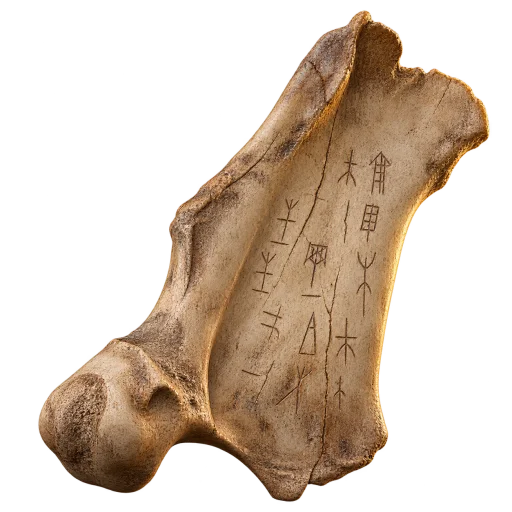
Oracle-bone inscriptions preserve questions and records associated with divination. Fu Hao’s name places her within the Shang court’s surviving records: whom was the court concerned with, what activity was being considered, and what outcome was sought?
Begin with a name, an action and the subject of the question. Even a short text can connect a person with a particular activity. Divination about a campaign reveals a military concern; whether its outcome is recorded depends on the individual inscription.
Unlike a later extended biography, these texts offer brief historical fragments. Reading them alongside bronzes bearing Fu Hao’s name brings written records and archaeological finds into conversation.
What did the 1976 tomb discovery add?
Fu Hao’s tomb was excavated at Yinxu in Anyang in 1976. Ritual bronzes, weapons, jades and objects bearing her name allowed researchers to consider inscriptions, material culture and burial context together.
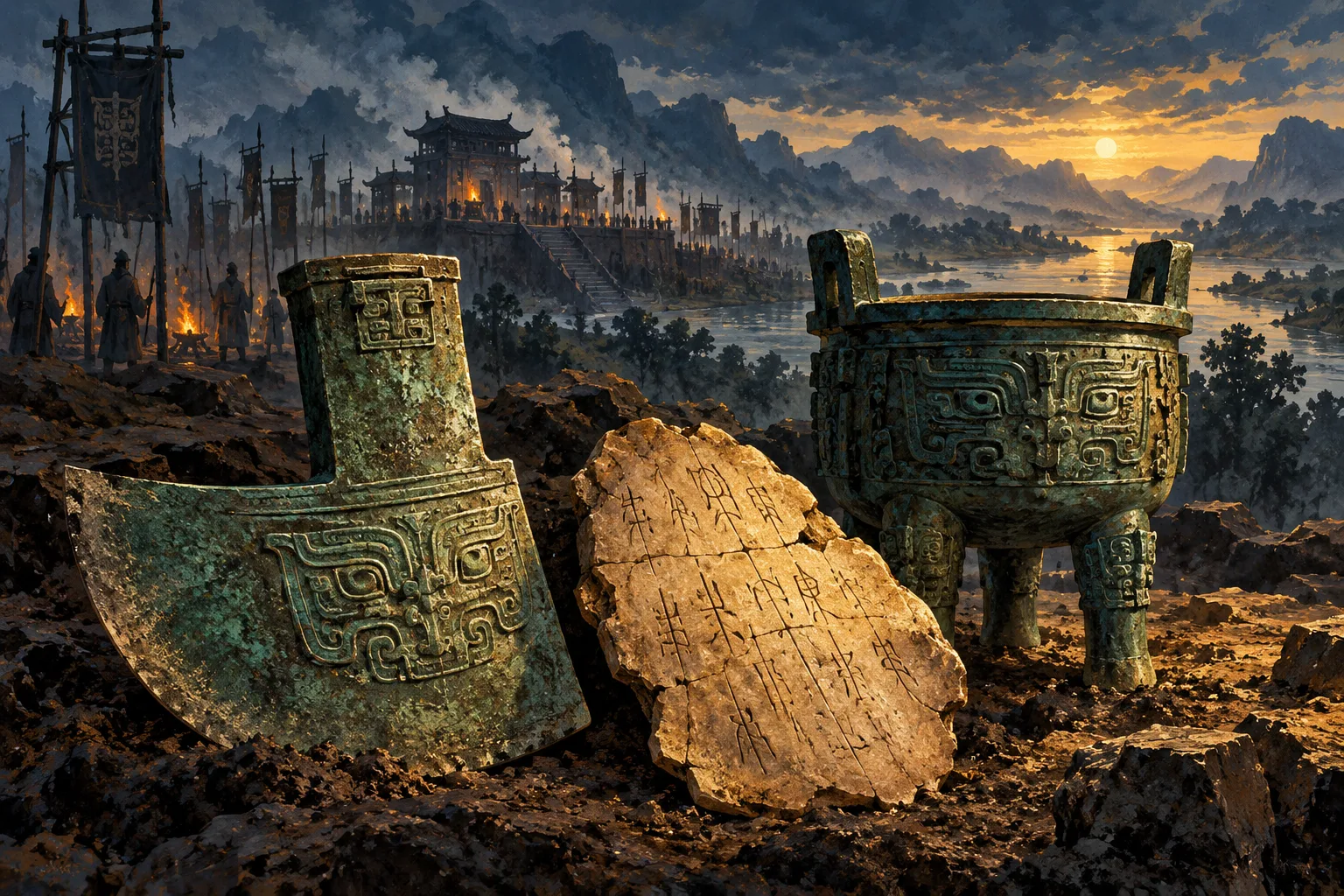
Bronze yue axes are associated with authority and military power, but a weapon cannot by itself establish the details of every campaign. A name on a vessel links it with a person; it does not alone prove that the person handled that particular object in daily life.
Burial goods are a selected assemblage, not a complete recording of a lifetime. Their relationships, positions and inscriptions can explain more than treating each object as an isolated treasure.
What can you notice on the owl-shaped vessel?
The owl-shaped zun combines an animal form with a vessel. Begin with its silhouette: two feet and a lowered tail provide support. Then examine its construction: a separate lid closes the container within the bird’s body. Finally, look for the name Fu Hao inside; the inscription carries different information from the exterior ornament.
These three steps—form, function and writing—work for other bronzes too. They turn “beautiful Shang art” into specific observations: how an object stands, how it works and how it preserves a name.
Read the vessel alongside oracle-bone texts, and Fu Hao becomes more than a name on a chronology. Her story connects warfare, ritual, craftsmanship and writing.
Follow the connections