Yinxu oracle bones: how royal questions became historical evidence
Read warfare, harvests and royal families through divination records. Yinxu brings Shang people beyond later legend, while the inscriptions retain their own perspective and silences.
A capital changes the kinds of evidence available
For Xia, researchers compare later texts with archaeological remains. At late-Shang Yinxu, they can also use inscriptions made during the period itself. Palatial and ancestral-temple foundations, royal tombs, workshops and inscribed bones around the Huan River at Anyang together outline a political and ritual center.
The transmitted account of Pan Geng moving the capital is important to the memory of Shang capitals. The sequence and extent of particular settlements still depend on excavation. Centuries of Shang activity cannot be compressed into a single exposed building foundation. Yinxu illuminates the late Shang especially clearly, not one city unchanged throughout the whole dynasty.
Why was writing placed on bones?
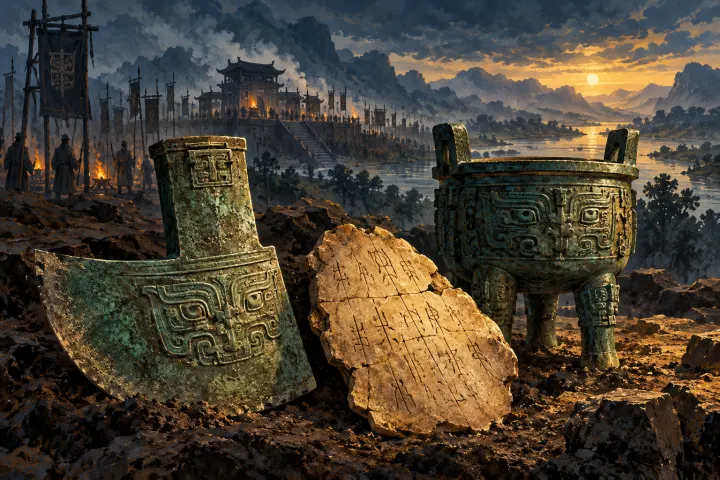
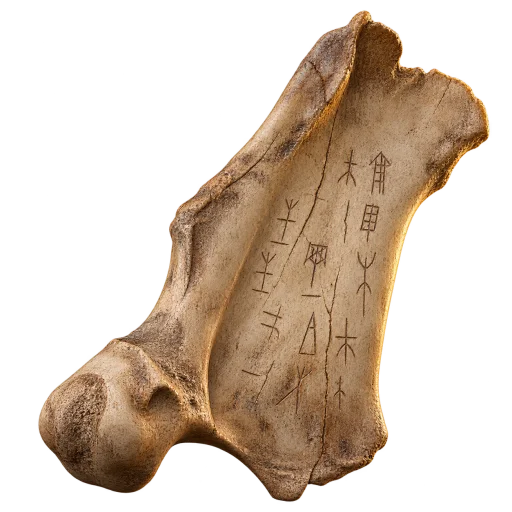
Shang divination used materials such as turtle shells and animal bones. Heating produced cracks that were interpreted; some pieces also received inscriptions naming a date, diviner and issue, sometimes followed by a judgment or later outcome. Not every surviving fragment preserves this full sequence, and not every crack has readable writing beside it.
These records served royal decisions and ritual practices rather than a future history textbook. Their practical questions make them revealing: would it rain, would a harvest succeed, should an expedition proceed, might an illness improve? Returning an inscription to this use makes it more intelligible than treating the characters as decoration alone.
Questions reveal the priorities of power
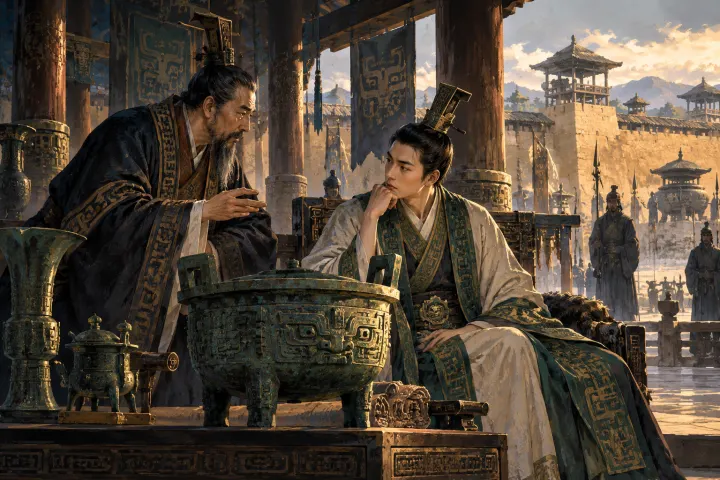
Who was entitled to ask, who appeared in a record and which ancestors received offerings all illuminate the royal world. Farming, warfare, ritual and family were connected concerns. The ruler mobilized people and resources while explaining outcomes through relationships with ancestors and other powers.
Yet royal priorities are not a complete picture of ordinary life. Many workers remain unnamed, and preservation is highly uneven. Oracle bones bring us closer to contemporary language, but they also impose limits. An activity absent from surviving royal questions did not necessarily fail to exist.
Fu Hao: a name and a tomb in conversation
Fu Hao is a striking case of an ancient person becoming more visible. Inscriptions record activities associated with her, while her excavated tomb preserves a rich material assemblage. Placing the written references beside archaeological evidence offers more than a later summary could provide.
The two kinds of evidence still do different work. A finely made object cannot reveal her private thoughts on a particular day, and a divination entry is not a complete biography. Ask which details support one another and which remain unknown. Fu Hao then becomes more than a label such as “legendary woman general”: her place within royal kinship, ritual and the organization of resources also comes into view.
A developed script is not the moment writing began
Oracle-bone inscriptions could express complex information and belong to a script tradition continuous with later Chinese writing. They are not merely isolated pictures. But “major surviving early written evidence” does not mean “the day writing was invented.”
Preservation, possible use of perishable materials and the uncertain status of earlier marks all affect the picture. Comparing forms, usage and excavated context is more useful than assigning every sign a simple origin story. Much of the fascination lies in how repeated study of a small fragment can gradually recover a word, an event or a relationship.
From Shang questions to Zhou explanations
Bronzes and oracle bones together show the close relationship between production, ritual and Shang politics. After the Zhou replaced the Shang ruling house, the new rulers explained why victory and authority had passed to them. Inscriptions such as that on the Da Yu ding cast such explanations into bronze, offering a revealing contrast with royal divination.
A chronological route can move from Shang questions about what might happen to Zhou explanations of why the past had unfolded as it did. Both voices are connected to power, but they do not narrate in the same way. The transition changed not only the ruling house but also how that house presented its history.
From settlements to inscriptions
Follow settlements, water management, cities and writing to understand what different kinds of evidence reveal.
- Yangshao and Banpo: how did everyday life become village life? →
Begin with homes, food and everyday craft work.
- Liangzhu and early cities: organizing life before the dynasties →
Connect large projects with social organisation.
- Taosi and Shimao: why did major centers rise across the Yellow River region? →
Compare early centres in different regions.
- Erlitou and Xia: what can a city without royal names tell us? →
Distinguish archaeological evidence from a dynastic identification.
- Yinxu oracle bones: how royal questions became historical evidenceYou are here
Introduce contemporary written records.
- How Western Zhou connected its realm: appointments, ritual and Heaven →
Continue into ritual, land and political relationships.
Follow the connections