
Taikang loses his rule
A hundred days of hunting, a kingdom lost: Chinese political story’s first warning about neglected duty.
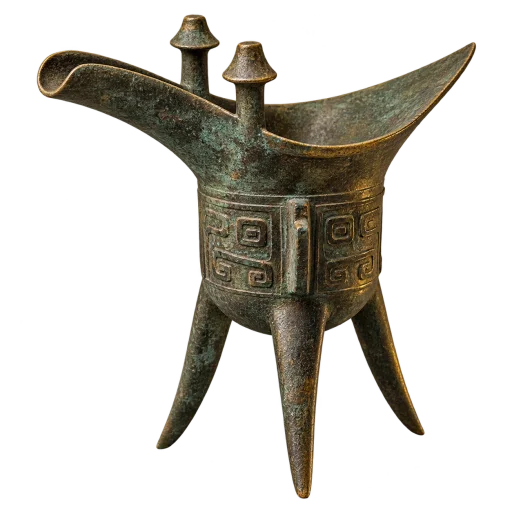
The heir with everything
Qi had secured his seat through the battle of Gan, and in his last years turned to pleasure. His son Taikang inherited a dynasty in which hereditary rule had only just been established.
Taikang had no interest whatever in governing. The histories give him pitifully little, summarizing his passion in one phrase: the hunt. He rode out with his retainer to hunt, a hundred days at a time, caring nothing for what happened in the capital north of the Yellow River.
Yi of Youqun, waiting on the road home
The danger arrived without surprise. The chief of the eastern Yi clan of Youqun — the master archer Yi, the very one from the legend of shooting down nine suns, the two figures stitched together in transmission — had long marked this unwary dynasty. When Taikang turned home sated with sport, Yi’s army already held the north bank of the Yellow River, sealing the road home.
Taikang could not return. He became an exile; the histories call it Taikang losing the state.
Five brothers by the Luo
The sources for all this are pitifully thin: the Xia annals of the Shiji give Taikang only a few words. The best-known later version tells that his five brothers, attending their mother at the bend where the Luo meets the Yellow River, waited for him in vain and in grief composed the Song of the Five Sons — its gist: our ancestor Yu left a charge — dissipation of women within, dissipation of the hunt without; either one alone can lose a kingdom, and now we have both.
The song still stings today. But be clear: the Song of the Five Sons appears in no reliable early source; the version in the received Shangshu is a later imitation — a “lost-kingdom reflection” written into the Xia by much later men.
Four characters grow into a warning
“Taikang loses the state”: those four characters are the entire skeleton the sources left. Around them, later tellers grew the complete body — the hundred-day hunt, Yi barring the river, the five brothers’ lament.
In the Xia sequence this story performs a structural duty: the dynasty founded (Yu), succession settled (Qi) — next comes crisis, and Taikang is the crisis. Its true historical value is not in the details (which cannot be verified) but in being the first systematic statement in Chinese political narrative that power can be inherited, but the people’s hearts cannot. That lesson was quoted for the next two thousand years.
Follow the connections