The abdication of 1912
The abdication edict, the favorable terms, the little court, and the 1924 expulsion order: from one man’s home to a museum of everyone.
The empire’s last months
On 10 October 1911 the Wuchang uprising broke out and the provinces declared independence one after another. The court called Yuan Shikai out to form a cabinet and crush the revolution — but Yuan negotiated secretly with the revolutionaries: the emperor’s abdication in exchange for the provisional presidency of the Republic of China.
The talks’ core was the Articles of Favorable Treatment: the imperial title retained without abolition, the emperor treated with the courtesies due a foreign monarch; residence in the Inner Court of the Forbidden City (north of the Qianqing Gate), with the Summer Palace still his; an annual stipend of four million taels from the Republic; private property protected.
On 12 February 1912 (the twenty-fifth day of the twelfth month, Xuantong 3), Empress Dowager Longyu, in the name of the six-year-old Xuantong Emperor Puyi, issued the abdication edict. Drafted by Zhang Jian and others through repeated revision, its key sentence ran: “the emperor leads in offering the right of rule to the whole nation, establishing a constitutional republic” — rule not seized but voluntarily surrendered. This “legal fiction” gave the Republic its claim to the Qing’s legitimacy and averted great civil war.
Two thousand one hundred thirty-two years of monarchy closed here.
The “little court” inside the Forbidden City
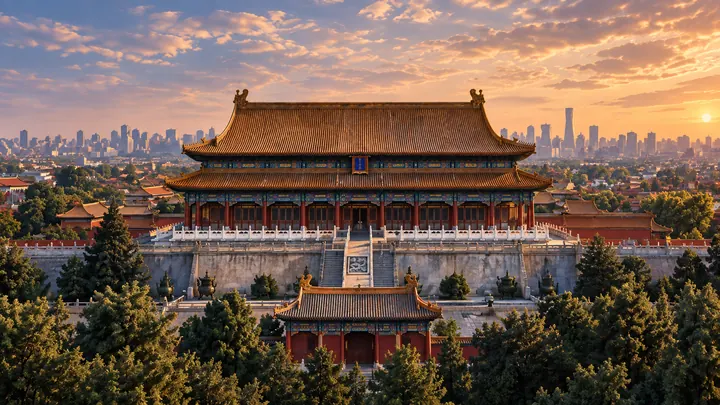
After abdication Puyi kept living in the Inner Court with his title and full regalia intact: the Household Department and Clan Court ran as ever, the dowager consorts took their bows, and the loyalists knelt as before. Outside the wall, the Republic; inside, the “Xuantong eighth year” — two time systems coexisting along one palace wall.
In 1917 Zhang Xun marched his queue army into Beijing and staged Puyi’s restoration for twelve days before it collapsed — a farce that spent the house’s remaining credit. Puyi lived a strange life indoors: English lessons (with Reginald Johnston teaching), bicycling through the halls (thresholds sawn off for the wheels), spectacles on his nose.
His imperial wedding in 1922 (Wanrong as empress) even drew congratulations from the Republic’s presidency under the Articles. But the finances grew tighter and tighter: the Household Department bled with corruption, stipends fell into arrears, and the palace began selling and pawning treasures — the great fire of the Jianfu Palace in 1923 (arson suspected, to cover theft) destroyed vast holdings.
1924: out of the palace
In the tenth month of 1924 Feng Yuxiang launched the Beijing coup, then revised the Articles of Favorable Treatment: the imperial title abolished, Puyi to live in Beijing as a private citizen with an annual household allowance of ten thousand yuan; and ordered to move out of the Forbidden City that very day.
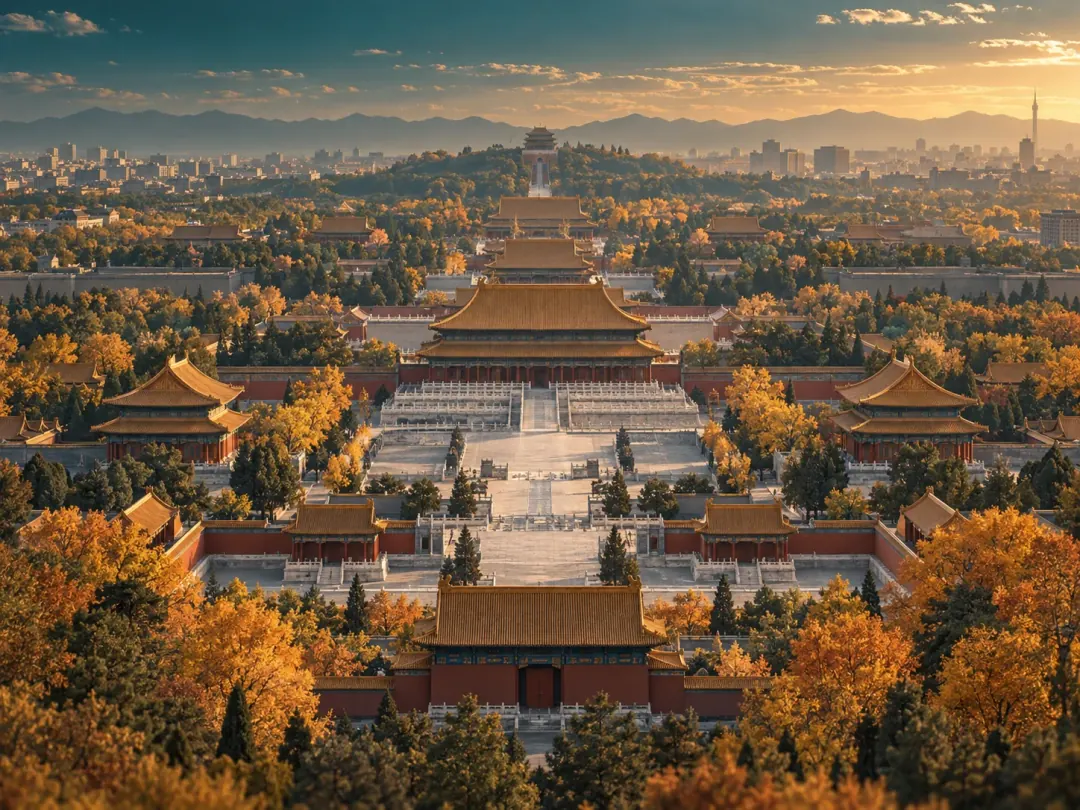
On the fifth of November Lu Zhonglin entered with troops and police and gave Puyi three hours to leave. Puyi departed in haste — never again to live in the Forbidden City as “emperor.” The palace holdings were inventoried by the Committee for the Disposition of Qing Property — and on 10 October 1925 the Palace Museum opened, the Forbidden City admitting the public.
From the end of the monarchy (1912) to the founding of the Palace Museum (1925): thirteen years. A six-hundred-year seat of power, a house of emperors, turned into the cultural heritage of all — a speed of transformation rare in the world’s palace histories.
The meaning, and the afterwash
Abdication was the result of negotiation, not defeat: the Qing traded a dignified exit for favorable treatment; the Republic traded favorable treatment for legal continuity and a peaceful transition. The edict’s sentence — “joining the complete territories of Manchu, Han, Mongol, Hui and Tibetan peoples into one great Republic of China” — became one of the legal formulations of the five-nation republic, with deep consequences.
But the afterwash surged too: Puyi, under Japanese sponsorship, became “chief executive” of the puppet Manchukuo in 1932, and the Articles and the abdication edict were consumed again and again; Feng Yuxiang’s expulsion of Puyi was also legally contested (Hu Shi and others protested the Republic’s unilateral breach).
Looking back at 1912–1925: a two-millennium institution took its final bow peacefully, and a palace turned from “an emperor’s home” into “the nation’s museum” — the price being the house’s lost privileges, and an ancient state’s hard turning toward modernity. Here the Forbidden City’s story turns its page: from one man’s home to everyone’s museum.
Government and change in the Qing
Connect the court, public finance, regional armies and institutional crisis.
- Kangxi and the three feudatories →
Begin with consolidation under Kangxi.
- Yongzheng’s thirteen years: taxes, memorials and imperial succession →
Examine changes to revenue, information and succession.
- The Four Treasuries: preservation and purge →
Explore cultural compilation and power under Qianlong.
- Zeng Guofan and the late Qing: regional armies, war and industrial change →
Connect regional armies to the aftermath of civil war.
- The abdication of 1912You are here
Finish with the imperial abdication of 1912.
Follow the connections