Yongzheng’s thirteen years: taxes, memorials and imperial succession
Between Kangxi and Qianlong, Yongzheng reshaped revenue, communication and succession. How did decisions inside the palace reach distant counties?
More than a change of ruler
Kangxi died in 1722 and Yinzhen succeeded him. The reign title Yongzheng began the following year. These dates describe different things: accession and the start of a new reign era. Yongzheng ruled until 1735, forming an important link between Kangxi’s long reign and the Qianlong period.
Palace rumours tend to direct attention towards how a ruler obtained the throne. Understanding this reign also requires asking what happened afterwards. Provincial accounts, the reliability of officials’ reports and the execution of orders were practical problems, not merely reflections of imperial personality. Much of Yongzheng’s significance lies in attempts to change those working arrangements.
Folding head-tax obligations into land taxation
The reform commonly called tanding rumu folded existing head-tax obligations into land taxation. Under Yongzheng it changed the relationship between population and landed property in the allocation of tax. It did not abolish taxation, and implementation was not instantaneous or identical everywhere.
That distinction matters. A household with little or no land stood differently from a substantial landholder, while local registration and collection still shaped the result. Reducing one category of burden is not the same as immediately improving every household’s life. The reform is best understood as a change in fiscal rules rather than as a slogan announcing universal prosperity.
Bringing surcharges into public accounts
Silver taxation involved costs of processing, transport and administration. Additional collections known as huoxian could also become opaque sources of income. Yongzheng’s reforms sought to bring these surcharges into more explicit public accounting, allocating funds for official allowances and administrative expenses.
The associated integrity-nourishing allowances, yanglianyin, were not a mechanism that could automatically abolish corruption by increasing pay. They acknowledged that government cost money and attempted to change how that money was obtained. Policy intentions, formal accounts and local practice could still diverge. This tension explains more than either a portrait of tireless personal virtue or a claim that the entire reform was simply another tax.
Reports and the Grand Council
How an official described an event shaped what the emperor believed had happened. Palace memorials let authorised officials report directly; imperial comments were written in vermilion. Yongzheng also required the return of annotated documents to the palace. Surviving memorials reveal administrative exchanges, but a report remains a selection made by an official, not a complete picture of local life.
Military business in the northwest helped produce the institutions that developed into the Grand Council in the late 1720s. Scholars differ over the exact founding point, so a gradual institutional history should not be reduced to a single day. Faster, more confidential communication also concentrated important decisions around the emperor and a close circle of advisers.
A different procedure for succession
Contests over the succession late in Kangxi’s reign provided a powerful warning. Yongzheng introduced a system of secret designation, keeping the chosen successor’s identity in sealed form. The space behind the Zhengda Guangming plaque in the Palace of Heavenly Purity became its best-known physical setting. Compared with publicly naming a crown prince long in advance, the arrangement sought to limit premature struggles around the heir.
Secrecy did not remove political risk or make other court actors irrelevant. It changed the procedure for designating and confirming a successor. Hongli succeeded Yongzheng as the Qianlong Emperor. Connecting the palace setting with the procedure explains more than treating the famous plaque as a prop in a court legend.
Reading the palace as a working government
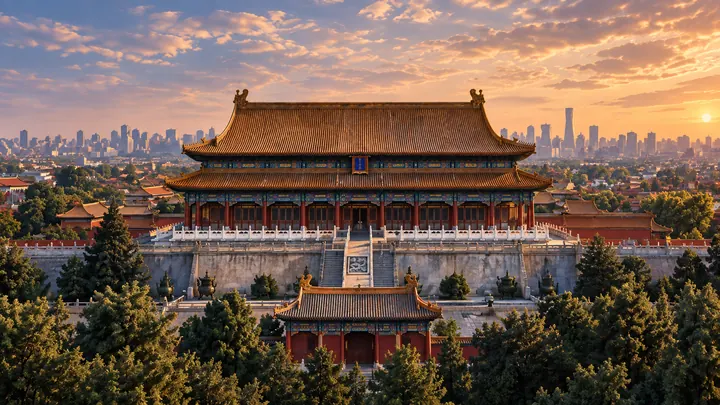
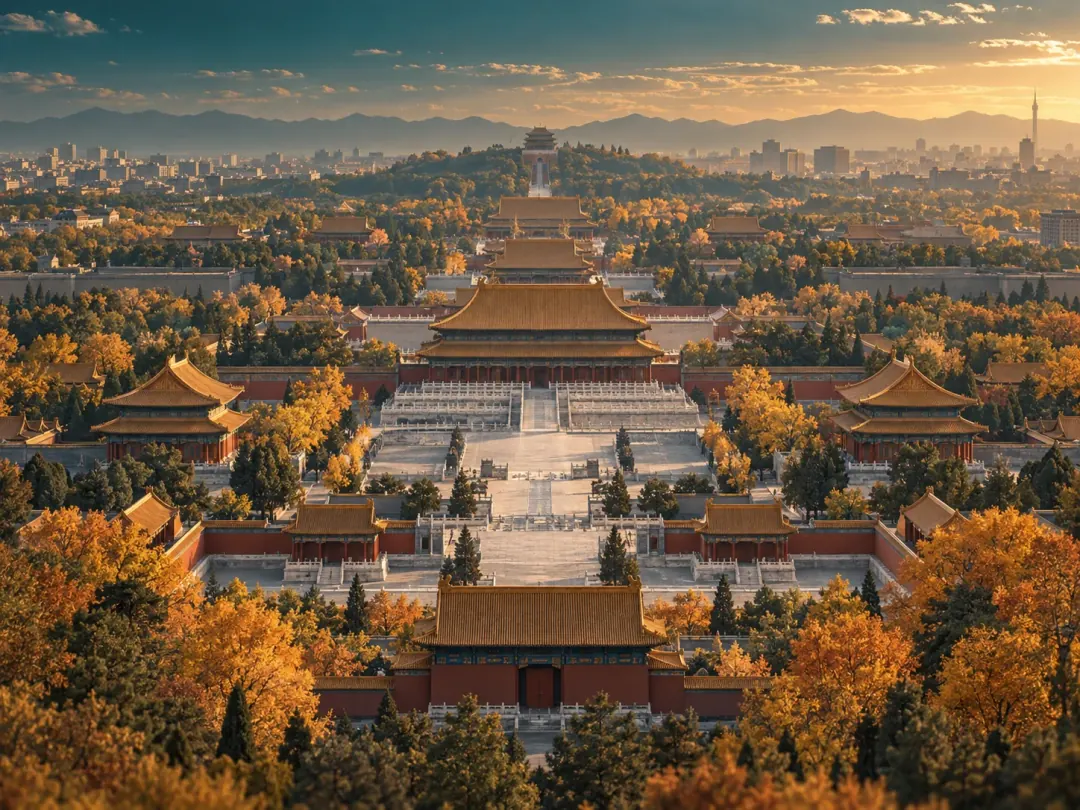
In Beijing’s Forbidden City, the ceremonial setting of the Hall of Supreme Harmony can be compared with the everyday working environment of the Hall of Mental Cultivation. Government operated through accounts, memorials, audiences and repeated decisions as well as through spectacular ritual. Yongzheng drew these activities more closely around the emperor, increasing capacity in some areas while strengthening personal control.
The question continues into Qianlong’s cultural projects and the crises of the late Qing: how could institutions handle an expanding volume of territory, business and information? Yongzheng’s thirteen years are not an empty interval between two longer reigns. They offer a particularly clear view of that problem.
Government and change in the Qing
Connect the court, public finance, regional armies and institutional crisis.
- Kangxi and the three feudatories →
Begin with consolidation under Kangxi.
- Yongzheng’s thirteen years: taxes, memorials and imperial successionYou are here
Examine changes to revenue, information and succession.
- The Four Treasuries: preservation and purge →
Explore cultural compilation and power under Qianlong.
- Zeng Guofan and the late Qing: regional armies, war and industrial change →
Connect regional armies to the aftermath of civil war.
- The abdication of 1912 →
Finish with the imperial abdication of 1912.
Follow the connections