Doing business in Song China: paper money, books and ships
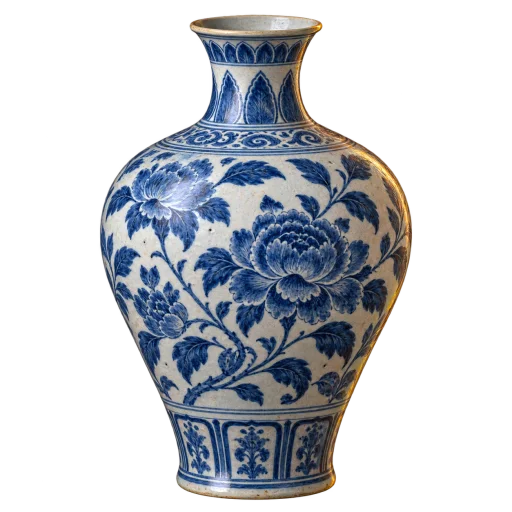
Why accept a paper note, how did a book reach more readers, and how could a ceramic vessel travel overseas? Follow the connections behind Song commerce.

Before the crowded street came the supply chain
The appeal of a Song city lay not only in busy shops but in the connections behind them. Grain entered waterways from farming districts, timber and fuel reached workshops, and ceramics passed through firing, packing and loading before arriving at a market. Prices had to absorb materials, labour, transport and losses. Urban activity did not arise independently of the places supplying it.
Northern Song Kaifeng and Southern Song Lin’an operated in different political circumstances, but both relied on extensive hinterlands and transport networks. Growing food, craft and service markets gave residents more things to purchase, while exposing households to changes in prices and deliveries. Following a commodity backward reveals more about urban life than simply describing the Song as commercially prosperous.
From iron coins to jiaozi: convenience required trust
Heavy iron coins used in parts of Sichuan were inconvenient for large transactions and long journeys. Paper instruments developed by merchants became the basis of jiaozi. The paper itself was worth far less than its stated value. Acceptance depended on redemption, the issuer’s reliability and confidence that another trader would take it in turn. The problem shifted from carrying weight to maintaining trust.
During the 1020s, government took over jiaozi issuance, bringing private instruments into an official framework. Southern Song huizi later served particular regions, but one paper currency did not replace all other money throughout the realm. Copper and iron coins and other forms of payment continued. Excessive issuance, redemption difficulties and fiscal pressure could undermine value. Innovation in money was also a continuing problem of credibility.
Printing changed without one technology replacing everything
Printing made the reproduction of text a repeatable production process. A woodblock carried a whole page of words and images, which could be inked and printed again if the block was preserved. Official publishers, private workshops and local education expanded the circulation of classical texts, practical knowledge and other reading under the Song.
Bi Sheng’s eleventh-century experiments with clay movable type introduced reusable individual characters into typesetting. They did not immediately displace woodblocks. The number of Chinese characters, sorting and setting work, print runs and the value of keeping blocks all influenced the choice of technique. A history of technology is therefore more than a list of first inventions. It also asks why particular methods remained useful under specific production conditions.
Ships linked cities with a wider world
Coastal ports connected inland production with Asian maritime exchange. Quanzhou’s docks, bridges, kiln sites and religious buildings reveal a port as more than a place for ships to anchor. It required goods, roads, storage, administration and merchants from different backgrounds. Cargo could pass through several intermediaries. A Chinese coin found overseas does not by itself establish a direct voyage by a Chinese vessel to that location.
Shipbuilding techniques and the maritime use of the compass helped navigators manage risk, but winds, seasons, currents and accumulated route knowledge remained essential. Authorities supervised overseas trade through institutions such as maritime trade offices, balancing revenue, security and commercial interests. Seafaring was thus a story of technology, cooperation and regulation as well as uncertain journeys.
Busy markets did not mean universal prosperity
Along the River at Qingming and written descriptions of urban life can make Song cities seem irresistible. Yet attractive scenes do not represent every household. Refined consumption coexisted with precarious employment. Rising food prices, illness or fire could rapidly alter a family’s position. Dense buildings and everyday use of flame also made water supply, fire precautions and street management important concerns.
Governments and local communities organized relief and prevention, but their reach and effectiveness varied with place, period and resources. The existence of an assistance measure does not demonstrate dependable protection for everyone. Nor should difficulties be brushed aside as though a city were one endless festival. Prosperity and vulnerability could coexist, bringing the history closer to the varied lives of its inhabitants.
Connecting a note, a book and a ship
Paper money reduced the need to move metal for some transactions, printing reproduced texts, and shipping carried goods farther. These were not isolated items in a catalogue of inventions. Each depended on skilled labour, organization and demand, and each could be disrupted by warfare, public finance or transport problems. Port prosperity also relied on farms and workshops far inland.
Moving from Lin’an’s urban life to Song–Yuan Quanzhou and then Yuan transport networks reveals both continuity and change. This does not require calling the Song an already modern society. The more revealing question is how people worked within their circumstances to solve recognizable problems: making transactions trustworthy, circulating information and reaching distant places that remained only partly predictable.
Money, books and networks
Move from Song markets to Yuan transport, then Ming taxation and intellectual exchange.
- Doing business in Song China: paper money, books and shipsYou are here
Explore Song life through money, printing and maritime trade.
- Connecting the Yuan: provinces, relay stations and multilingual documents →
Follow orders and supplies across regions.
- Zhang Juzheng and the Single Whip reforms: why Ming taxes moved towards silver →
See how market silver entered fiscal administration.
- Ricci and Xu Guangqi: a world map, six books of geometry and late-Ming exchange →
Explore collaboration across languages and knowledge traditions.
Follow the connections