West Lake is more than a postcard
Poetry, causeways, gardens and ways of seeing shaped the landscape.
A lens for this story
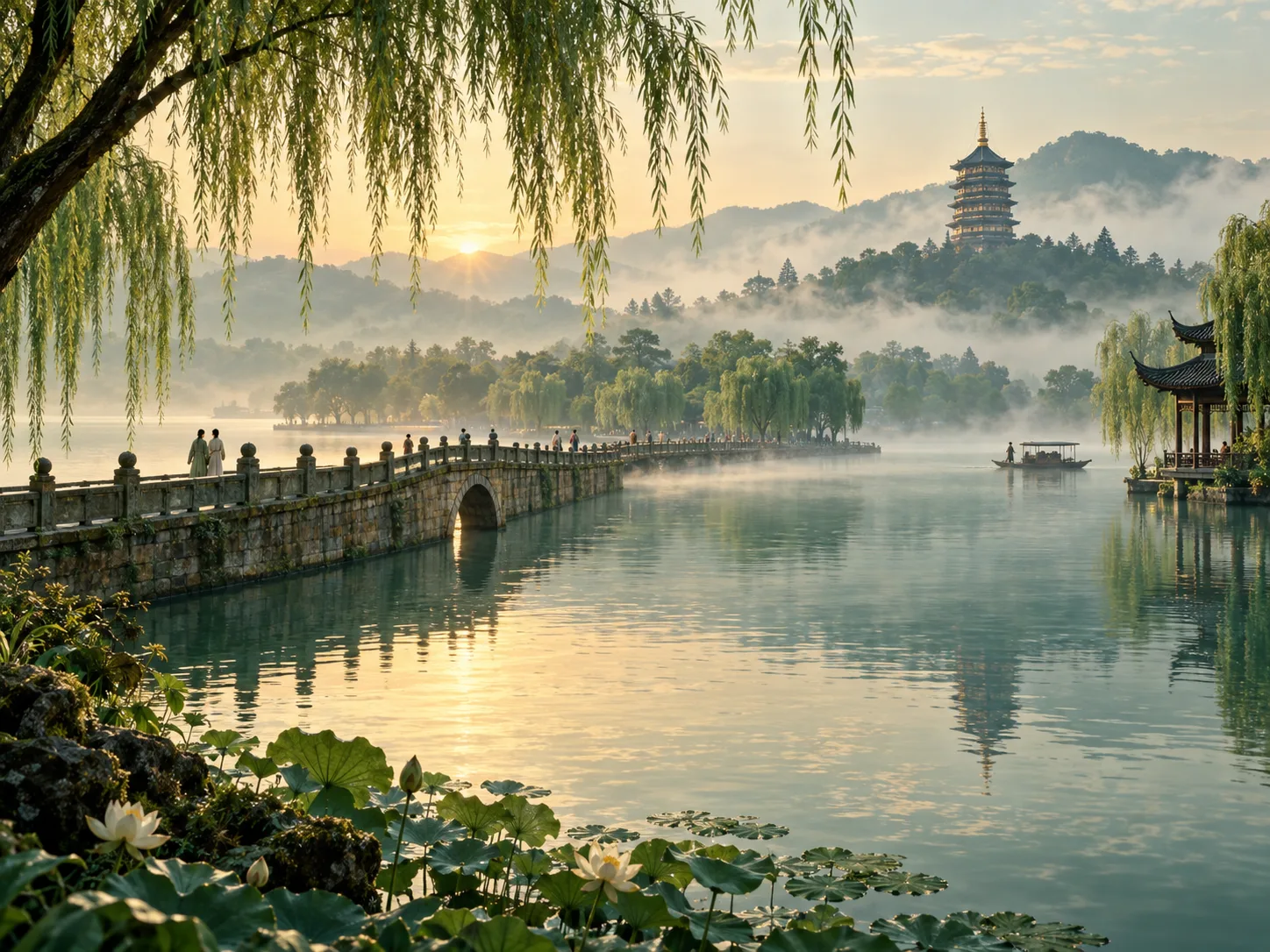
After taking a photograph, look again: which lines belong to the hills and water, and which come from causeways, bridges and islands? Read the view as a landscape shaped over time.
- Separate terrain, human intervention and poetic names, then see how they combine to frame a view.
- A building’s foundation, surviving fabric and legendary setting need not belong to the same “ancient” moment.
Why a landscape needs care
West Lake can look like an untouched natural setting. Yet causeways, islands, bridges, temples and gardens reveal a landscape shaped by people.
UNESCO connects repeated dredging between the ninth and twelfth centuries with the lake’s causeways and islands. Look for the transformation: water management also created ways to cross the lake and places from which to see it. Beauty depends not only on what stands beside the water, but on where a viewer can stand.
How causeways and islands change a view
From the shore, a causeway and an island, the lake reads differently. These features connect places while changing the distance and relationship between viewer, hills, water and buildings.
Do not assign a structure to a famous poet from its name alone. Separate commemorative associations, written accounts of construction and later repairs. A cultural connection and a demonstrable building history are different kinds of knowledge.
The Ten Scenes: names as ways of seeing
Names such as Spring Dawn at Su Causeway and Lingering Snow on Broken Bridge connect a place with a season or viewing condition. Ask what a name directs you to notice.
UNESCO traces the Ten Scenes tradition to the Southern Song and discusses its continuation. A name is more than a location label: it invites attention to light, plants, water and distant hills. The cultural memory persists, while each viewer discovers a different scene.
A checklist for visiting
At West Lake, ask three questions: what is a surviving historical trace, such as the original Leifeng Pagoda ruins and excavated objects? What is later reconstruction, such as the new tower completed in 2002? What meaning comes from poetry or legend, such as the meeting of Bai Suzhen and Xu Xian? Read the dated site labels before assigning what you see to a period.
The 2011 World Heritage inscription recognizes the cultural landscape as a whole. With this checklist, a view becomes a way to read the city’s layers of time.
Follow the connections