When Was the Forbidden City Built? Yongle’s Beijing
Planning began in 1406, major construction in 1417, and completion followed in 1420. Separate the building project from later repairs and rebuilding.
From planning to capital: five key dates
In 1406 the Yongle Emperor decided to build Beijing’s palaces. Material preparations began in 1407, major construction followed in 1417, and the palaces were completed in 1420. Beijing became the Ming capital in 1421. These five dates trace the project from preparation to the capital’s relocation.
The years between the decision and completion included different stages of supply and construction. Relocation then made the new palace part of the empire’s political life. This is why the questions “When did building begin?” and “When did Beijing become the capital?” have different answers.
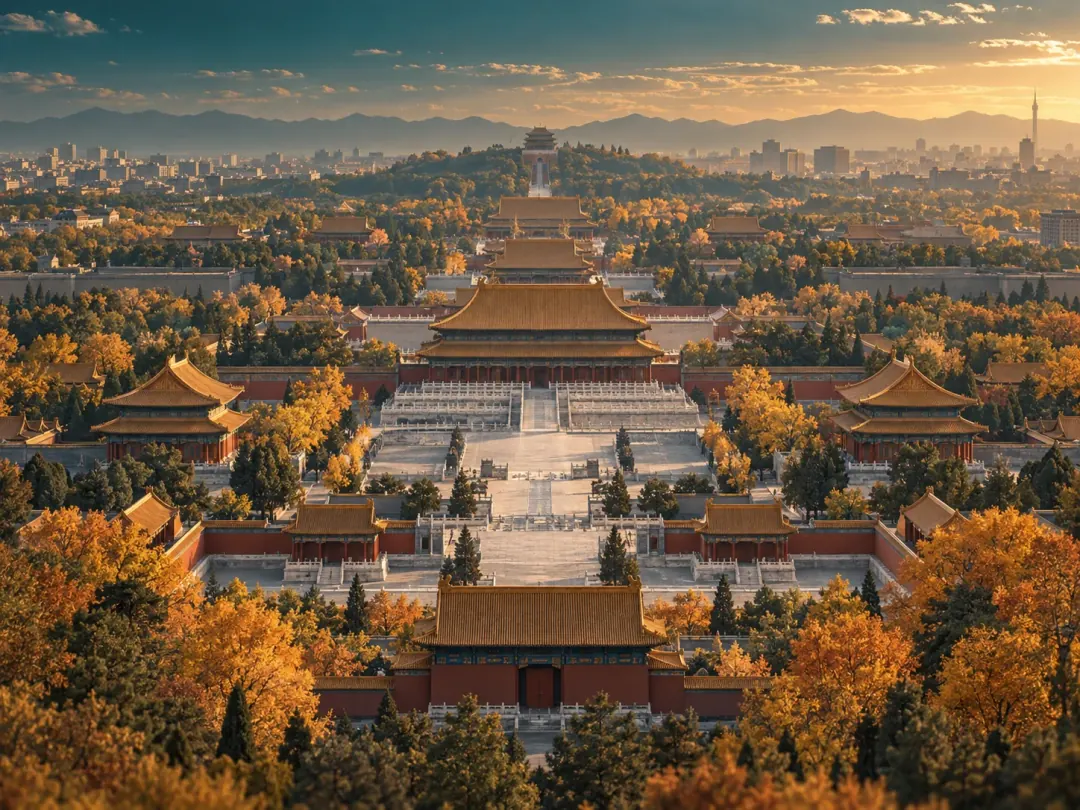
The project inherited an earlier capital setting while transforming Beijing’s urban space. Following Yuan Dadu, the Ming palace and today’s Forbidden City connects several layers of the same city’s history.
Why do transport and craftspeople matter?
The scale of a palace depends on timber, stone, brick, tile and many crafts working together. Sourcing, processing, transport and assembly connect quarries, craftspeople and the building site. A hall can be read through its form, but also through the journeys of its materials.
Dashiwo in Beijing’s Fangshan district is an important place for understanding the supply of palace building stone. A stone component connects the palace with its surroundings and with the work of extraction, shaping and transport.
Compare a stone platform with the timber structure above it. Supporting materials, connections between components and carved surfaces reveal different skills. Moving from the whole hall to a single component turns a construction date into something you can examine closely.
Is today’s Hall of Supreme Harmony the 1420 building?
The foundation date of the palace complex is not the date of every building now standing. The Hall of Supreme Harmony suffered fires and rebuilding. The Palace Museum’s construction history describes work beginning in 1695 and finishing two years later, establishing its present form.
A place could retain an important ceremonial role while its building fabric changed. Conversely, this hall’s rebuilding dates should not be applied to every structure in the Forbidden City.
At a hall, keep three histories together: the position within the complex, the date of the standing building and traces of later repair. The answer need not be either entirely Ming or entirely unrelated to the Ming.
How can dates guide what you notice?
Begin with the sequence of spaces: how do gates, courts and halls organize entry and sightlines? Then examine materials and structure: what do timber, platforms and roofs contribute? Finally, use site interpretation to distinguish foundations, rebuilding and conservation.
You do not have to cover every court in one day. Comparing two spaces with different purposes can reveal more than collecting names. Check current venue notices for entrances, reservations, open areas and exhibitions.
After the palace, continue to Beijing’s Central Axis and the Ming Great Wall. One places the palace within the city’s order; the other shifts the scale to frontier defense. A capital depended on much more than what happened inside its palace walls.
Beijing: from Yuan capital to Ming palace and frontier
Follow Dadu’s walls and waterways into the Central Axis, the Ming palace and the Great Wall. This is a reading sequence, not a one-day itinerary.
- Dadu, China: the Yuan capital in today’s Beijing →
Locate Dadu through its names, extent and remains.
- Guo Shoujing and the Tonghui River →
Explore the capital’s water supply and transport.
- What Is Beijing’s Central Axis? History and Places to See →
Recognize successive building phases along the city axis.
- When Was the Forbidden City Built? Yongle’s BeijingYou are here
Understand why the Ming palace is not the Yuan palace.
- Why Was the Ming Great Wall Built? Towers, Passes and Length →
Move from the capital to northern frontier defenses.
Follow the connections