The Ming founding in 1368: from taking capitals to governing an empire
Zhu Yuanzhang proclaimed the Ming in Nanjing before his armies took Dadu. Founding a dynasty also meant deciding who controlled soldiers, taxes and local officials.
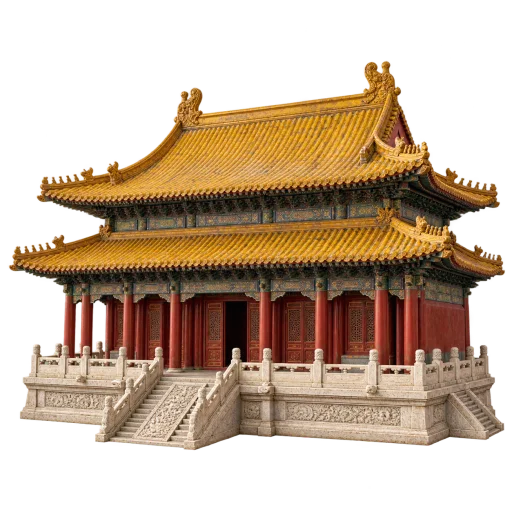
A proclamation in Nanjing
The Ming began not in Beijing but in present-day Nanjing. In 1368 Zhu Yuanzhang proclaimed the Great Ming at Yingtian, adopting Hongwu as his reign title. His rise belonged to a prolonged struggle among forces competing for cities, people and supplies at the end of the Yuan. A base in the lower Yangtze helped make his military success possible. Proclaiming an emperor announced a new order; it did not mean that fighting had ended.
A simple rags-to-riches biography misses the larger question. How could resources gathered for war become a durable government? The new capital was the centre of that project, not its completion.
Taking Dadu was another turning point
Later that year Ming troops entered Dadu, the Yuan capital, and the Yuan court withdrew north. This connects the founding to present-day Beijing, but the Ming political centre remained in Nanjing. Establishing a court in the south and changing the military balance in the north were related events, not a single ceremony.
The end of Yuan rule in the central Chinese heartland did not instantly erase its surviving forces. Warfare and territorial consolidation continued. A dynasty’s foundation therefore has several clocks: the proclamation of sovereignty, effective control over territory, and the recovery of everyday production. Those processes need not finish together.
Making households visible to the state
Years of conflict had moved people and disrupted records of land and obligations. To collect grain, allocate labour and maintain armies, the new government needed to know where households lived, what they held and what services they owed. Hongwu-era registration turned those questions into administrative records.
The Yellow Register system established in 1381 recorded households, their members, property and related information, in connection with local lijia organisation. These were not population surveys in the modern sense: they helped determine taxation, service and status. Registration could make assessment more systematic while also binding residents to continuing obligations. A more legible population did not automatically mean a freer one.
Reorganising central power in 1380
In 1380 Zhu Yuanzhang abolished the chancellorship and the central Secretariat, placing the Six Ministries directly under the emperor. The useful question is not simply which title disappeared, but how a decision now travelled through government. The change reshaped the coordination of central business.
Concentration also increased the ruler’s workload. Subsequent experiments with advisers and palace grand secretaries show that complicated administration still required assistance. These arrangements should not be confused with the more developed Grand Secretariat of later Ming reigns. Abolishing one powerful office neither eliminated bureaucracy nor made an emperor capable of governing without it.
Recovery and coercion belonged to the same reign
Registration and administrative reform helped a state function after prolonged war. Yet Hongwu government was not a story of recovery alone. Surveillance, severe punishment and restrictions on subjects formed part of the same political structure.
Assessing the foundation means asking more than how many cities were captured. Who carried the costs of the new arrangements? The court sought to prevent officials and commanders from becoming independent centres of power, while households faced demands for revenue and service. Reading institutional purpose alongside its practical burdens reveals why order could offer stability and impose pressure at the same time.
From Nanjing to the later Beijing capital
Keep 1368 in mind when looking at the Forbidden City in Beijing. Its construction belongs to the later Yongle project, not to a palace already serving as the Ming capital at the foundation. Ming remains in Nanjing and the Yuan–Ming–Qing urban layers of Beijing represent connected but distinct stages.
The next questions lead towards the succession conflict known as the Jingnan campaign, Yongle’s development of Beijing and Zheng He’s voyages. The founder left a more centralised state, together with tensions over succession and the role of imperial princes. His successors inherited both the tools of government and problems embedded in their design.
Song and Yuan: changing courts and capitals
Connect overlapping regimes, moving courts and the cities they left behind.
- How the Song dynasty began: 960 was only the beginning →
A new Song dynasty did not instantly end regional division.
- From the Jingkang crisis to Lin’an: why the Song court settled in Hangzhou →
Follow the crisis of 1127 into the emergence of Lin’an.
- The Song–Yuan transition: why 1271, 1276 and 1279 all matter →
Separate the turning points of 1271, 1276 and 1279.
- Dadu, China: the Yuan capital in today’s Beijing →
Turn north to the urban legacy of the Yuan capital.
- The Ming founding in 1368: from taking capitals to governing an empireYou are here
Continue beyond 1368 into the construction of Ming government.
Follow the connections