When was Ming founded, and where were its capitals?
The Ming dynasty is conventionally dated 1368–1644. Zhu Yuanzhang founded it with his capital at Nanjing. Under the Yongle emperor, palace construction transformed Beijing, which became the capital in 1421.
Founding a dynasty, completing a palace and relocating a capital are separate events. Keeping Nanjing and Beijing together makes the sequence clear: 1368 is not the completion date of the Forbidden City, and 1421 is not the beginning of Ming rule.
What did the Forbidden City and Ming Great Wall do?
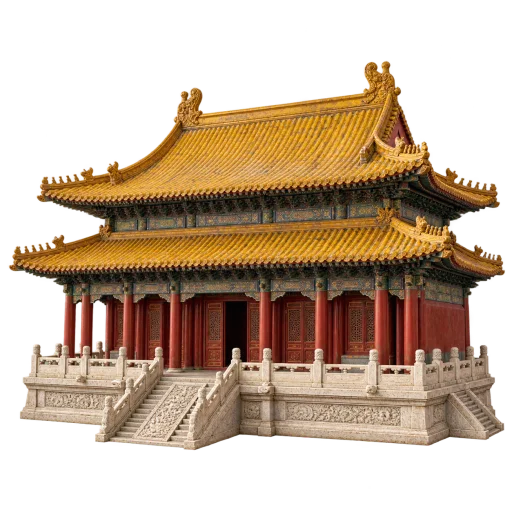
The palace organized imperial residence, audiences and ceremony. Walls, fortified passes and towers helped organize frontier defense. Both depended on materials, transport and maintenance, but supported different activities.
Compare a palace gate with a frontier pass: who moved through it, who controlled entry, and how did the structure make authority visible? Platforms, wall lines and terrain turn monumental architecture into a set of practical decisions.
Did maritime trade continue after Zheng He?
Zheng He’s expeditions were court-sponsored maritime ventures. Their end did not bring all overseas commerce to a halt. Diplomatic missions, court projects and merchants’ continuing activities were connected but distinct.
Shift attention from a fleet to an export ceramic: why was a voyage commissioned, who bought the object, and how did it move through ports and markets? Objects reveal connections that outlast a particular state expedition.
What can Ming blue-and-white porcelain reveal?
Blue-and-white porcelain uses cobalt decoration beneath a transparent glaze. It predates the Ming, but Ming production at Jingdezhen left abundant evidence of both court use and overseas markets.
Look at shape, decoration and function in turn. A large dish and a small cup invite different uses; related motifs can enter different settings. Reading an object this way connects craftsmanship with consumption and exchange.
Why does the Ming timeline usually end in 1644?
In 1644 Li Zicheng’s forces entered Beijing and the Chongzhen emperor died. Qing forces subsequently entered through the passes and took Beijing. This makes 1644 a central turning point and the conventional end date of the Ming.
Southern Ming courts continued afterward, so not every regional transition was complete. Following palace spaces, waterways and cities into the Qing connects political change with the continued life of places.