
Why did the Qin dynasty fall? From the Dazexiang uprising to surrender
Qin unified the rival states in 221 BCE, yet its last ruler surrendered in 207 BCE. Follow labour demands, succession, regional rebellion and the choices of Qin’s own commanders.
Conquest was not the end of governing
Qin completed its conquest of the rival states in 221 BCE. Roads, written orders and appointed officials could now serve one emperor across a much larger territory. Governing that territory still required turning demands into grain, transport and labour supplied by particular households. Frontier service, campaigns and construction did not disappear with victory. Surviving texts do not provide a modern statistical account of how many people worked on every project at once. The essential distinction is simpler: defeating a kingdom and maintaining cooperation in its former districts were different tasks. Establishing a commandery did not automatically erase older loyalties or make continuing mobilization easy to sustain.
After the First Emperor died, who controlled the news?
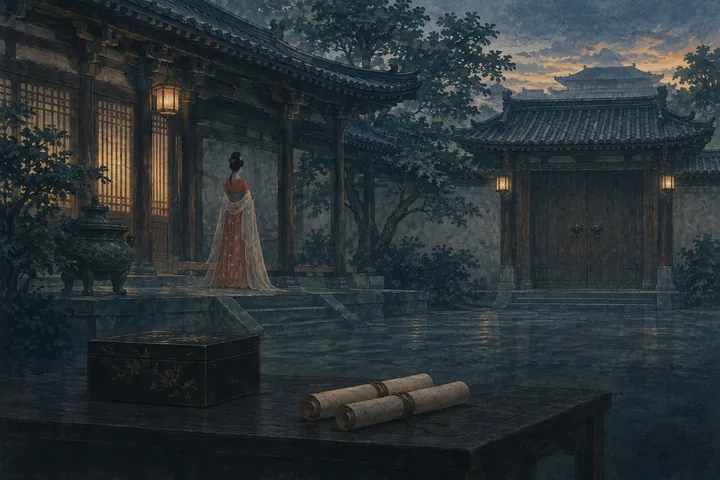
The First Emperor died while travelling in 210 BCE. The Shiji links Huhai’s succession to Zhao Gao and Li Si, altered succession instructions and the death of Fusu. This is a later historical account, not a complete surviving palace archive. Huhai’s accession and the destructive court struggles that followed nevertheless belong to the crisis. Succession affected more than the identity of the ruler. Officials needed to know whether reporting failure was survivable, and commanders whether a setback left room for recovery. When bringing unwelcome news became dangerous, the court’s picture of the empire could diverge sharply from conditions in the districts.
Why the rain at Dazexiang is more than a legal puzzle
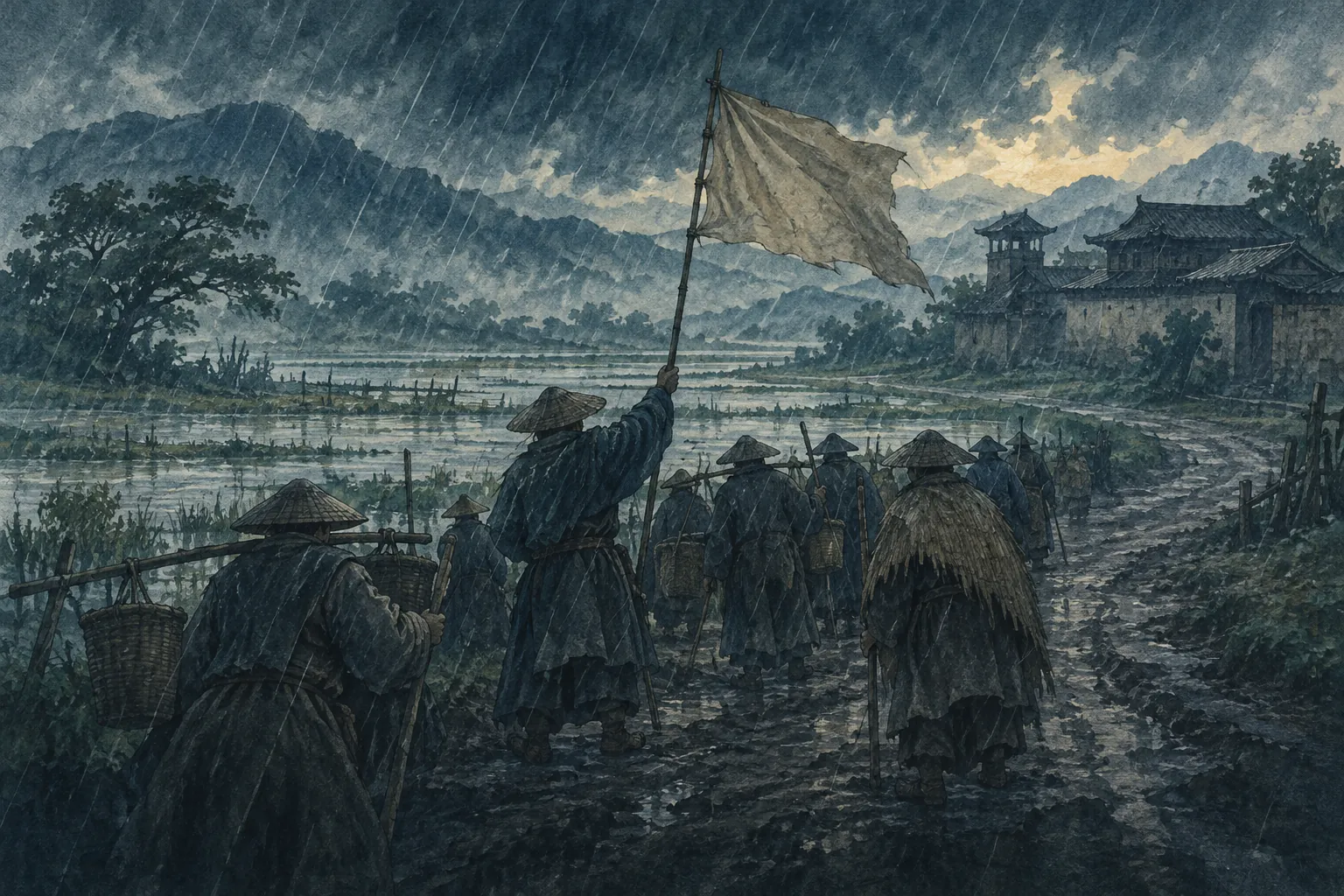
Chen Sheng and Wu Guang rebelled in 209 BCE. The Shiji frames their decision through rain, blocked roads and fear of punishment for missing a deadline. That narrative reveals how conscripts’ predicament was represented; it should not be treated as a complete statement of every Qin rule on late arrival. Excavated legal texts make distinctions among types of service and circumstances that a famous phrase cannot capture. The rebels’ use of the name Chu mattered too. Earlier states supplied recognizable political identities, not merely nostalgic decoration. Chen’s movement was eventually defeated, but other groups could continue fighting Qin for purposes that were not identical to his own.
Qin’s armies did not suddenly become helpless
Zhang Han raised forces and defeated several rebel armies. Qin’s fall was not a story in which every government unit dissolved as soon as resistance began. The state retained considerable military capacity, and outcomes remained uncertain. Fighting around Julu and Xiang Yu’s intervention changed that balance. At the same time, a commander’s relationship with the court could become as dangerous as the opposing army. The Shiji describes Zhang seeking instructions while facing reprimand and Zhao Gao’s distrust. His eventual surrender to Xiang Yu shows a breakdown in cooperation between the centre and a force created to defend it. Military pressure and political insecurity reinforced one another.
When Ziying surrendered, Han did not yet exist
Liu Bang entered the Guanzhong region and accepted Ziying’s surrender in 207 BCE. The end of Qin’s imperial government did not immediately produce a country governed by the Han dynasty. Xiang Yu subsequently entered the region, distributed territories among rulers and fought Liu Bang for years. Han was established in 202 BCE. Separating those events prevents two questions from collapsing into one: why Qin could no longer govern, and why Liu eventually prevailed. Conventional dynasty tables often end Qin in 206 BCE; calendrical conventions and the chosen political endpoint matter when comparing that label with the dating of Ziying’s surrender.
What kind of cooperation had broken down?
Mobilization, former-state loyalties, succession struggles and commanders’ choices interacted. None alone explains why unrest became a sustained war across so many regions. Nor did continuing battlefield victories prove that Qin’s governing relationships remained secure. Read the founding of Han next by asking what survived as well as what changed. Administrative districts and written government did not vanish with Qin; territorial settlements, regional rulers and the burdens of recovery required new arrangements. This makes the fall more than a moral tale about punishing a cruel sovereign. It becomes a way to understand how an empire lost cooperation, and how another political settlement gradually replaced it.
Follow the connections
Beyond this story
Before the uprising at Dazexiang, the court faced a succession handled out of public view. Distinguishing Shaqiu from the revolt keeps two crises from collapsing into one.
Shaqiu: who carried the order after the emperor died? →