
No verifiable single chronology
Legend
Legend
Early legends
Pangu, Nüwa and other origin stories evolved over time. They are legends, not dated historical events.
From early legends to Qing: compare dynasty dates, understand overlapping states and follow the stories behind each era.
CHINESE HISTORY · QUICK REFERENCE
The familiar sequence is Xia, Shang, Zhou, Qin, Han, Sui, Tang, Song, Yuan, Ming and Qing. It is a useful starting point, not an unbroken succession. The table also includes divided periods such as the Three Kingdoms and Five Dynasties, with legendary traditions listed separately.
| Era | Dates | What to look for |
|---|---|---|
| Prehistory and early settlements | c. 10,000–1800 BCE | Explore settlement, farming, crafts and early cities through archaeological evidence from different regions. This span is not a dynasty or a chronology of legendary rulers. |
| Early legends | No verifiable single chronology | Pangu, Nüwa and other origin stories evolved over time. They are legends, not dated historical events. |
| Yao, Shun and Yu | Legendary age | Stories of succession and flood control shaped later political ideals, but their people and dates are not independently established. |
| Xia | c. 2100–1600 BCE | The traditional dynastic sequence begins with Xia. Whether Erlitou remains correspond to it remains debated. |
| Shang | c. 1600–1046 BCE | Late Shang oracle-bone inscriptions and bronzes provide direct written and material evidence. |
| Western Zhou | 1046–771 BCE | Zhou political networks, ritual practices and bronze inscriptions shaped later ideas of order. |
| Spring and Autumn | 770–476 BCE | The Zhou court’s authority shifted as regional states and intellectual traditions developed. Period boundaries vary by historian. |
| Warring States | 475–221 BCE | Understand the Warring States, conventionally 475–221 BCE: seven major rivals, reforms, Sun Bin’s role in Qi and Qin’s unification. |
| Qin | 221–206 BCE | Qin unified a large territory; the First Emperor’s mausoleum is a major surviving site. |
| Han | 206 BCE–220 CE | Han government, economic exchange and culture shaped later history. Western and Eastern Han were separated by the Xin interregnum, with Chang’an and Luoyang as their respective capitals. |
| Three Kingdoms | 220–280 CE | Meet Wei, Shu Han and Wu in 220–280 CE. Separate Red Cliffs from state formation, follow Jin’s reunification, and compare history with the novel. |
| Jin and Northern–Southern Dynasties | 265–589 CE (overlapping states) | This was not one continuous dynasty. Northern Wei carving at Longmen near Luoyang reveals one cultural strand. |
| Sui | 581–618 CE | Sui reunited north and south and shaped institutions and routes inherited by Tang. |
| Tang | 618–907 CE | Explore Tang China’s capitals, poetry, sancai ceramics and Buddhist printing, from 618 to 907 and the changes after the An Lushan rebellion. |
| Five Dynasties and Ten Kingdoms | 907–960 CE (some states to 979) | Multiple regional regimes followed Tang; the transition was not a neat single line. |
| Song (alongside Liao and Jin) | 960–1279 CE | Northern and Southern Song overlap in time with Liao and Jin. Southern Song Lin’an relates to today’s Hangzhou. |
| Yuan | 1271–1368 CE | Yuan capital planning laid foundations for the later Beijing Central Axis. |
| Ming | 1368–1644 CE | Explore Ming China’s Nanjing and Beijing capitals, palace and Great Wall, Zheng He’s voyages, porcelain trade and the transition of 1644. |
| Qing | 1644–1912 CE (rule over China proper) | Qing continued and changed Beijing’s political landscape. Here 1644 marks its rule over China proper, not its earliest state founding. |
No eras match. Try a dynasty name or choose “Show all”.
Different states could exist at the same time. Western Jin began in 265, while Wu survived until 280, so their dates overlap. Sui was founded in 581 and reunited north and south in 589. “Jin and Northern–Southern Dynasties” is a grouped period, not a single dynasty.
Early dates are often approximate, and conventions differ between timelines. BCE means before the Common Era; CE means Common Era. There is no year zero.
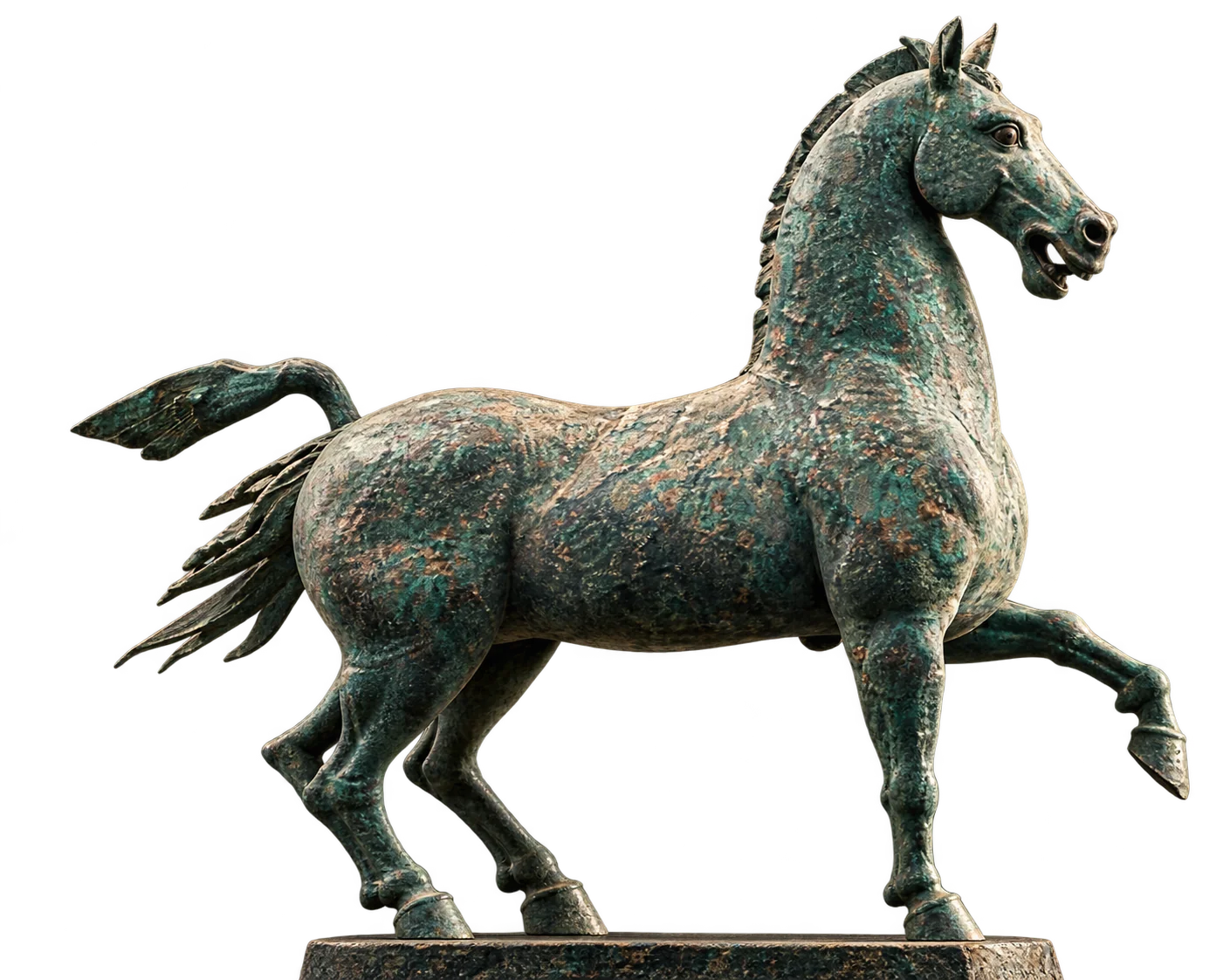
Han government, economic exchange and culture shaped later history. Western and Eastern Han were separated by the Xin interregnum, with Chang’an and Luoyang as their respective capitals.
Read this eraDrag or use the arrow buttons to explore, then select “Read this era.” Node spacing is not proportional to historical duration.
Pangu, Nüwa and other origin stories evolved over time. They are legends, not dated historical events.
Stories of succession and flood control shaped later political ideals, but their people and dates are not independently established.
Explore settlement, farming, crafts and early cities through archaeological evidence from different regions. This span is not a dynasty or a chronology of legendary rulers.
The traditional dynastic sequence begins with Xia. Whether Erlitou remains correspond to it remains debated.
Late Shang oracle-bone inscriptions and bronzes provide direct written and material evidence.
Late Shang · Oracle bones preserve written evidence
Oracle-bone inscriptions give direct evidence beyond later tradition.
Zhou political networks, ritual practices and bronze inscriptions shaped later ideas of order.
The Zhou court’s authority shifted as regional states and intellectual traditions developed. Period boundaries vary by historian.
Understand the Warring States, conventionally 475–221 BCE: seven major rivals, reforms, Sun Bin’s role in Qi and Qin’s unification.
Qin unified a large territory; the First Emperor’s mausoleum is a major surviving site.
221 BCE · Qin unifies a large territory
A common marker for the imperial period; the First Emperor’s mausoleum is a major related site.
Han government, economic exchange and culture shaped later history. Western and Eastern Han were separated by the Xin interregnum, with Chang’an and Luoyang as their respective capitals.
Meet Wei, Shu Han and Wu in 220–280 CE. Separate Red Cliffs from state formation, follow Jin’s reunification, and compare history with the novel.
This was not one continuous dynasty. Northern Wei carving at Longmen near Luoyang reveals one cultural strand.
Sui reunited north and south and shaped institutions and routes inherited by Tang.
Explore Tang China’s capitals, poetry, sancai ceramics and Buddhist printing, from 618 to 907 and the changes after the An Lushan rebellion.
618 CE · Tang dynasty begins
Chang’an became a major political and cultural center.
Multiple regional regimes followed Tang; the transition was not a neat single line.
Northern and Southern Song overlap in time with Liao and Jin. Southern Song Lin’an relates to today’s Hangzhou.
Southern Song period · Lin’an becomes the Southern Song capital
Modern Hangzhou’s historical narrative connects Lin’an and West Lake.
Yuan capital planning laid foundations for the later Beijing Central Axis.
Explore Ming China’s Nanjing and Beijing capitals, palace and Great Wall, Zheng He’s voyages, porcelain trade and the transition of 1644.
Ming period · Ming Beijing shapes the axis
The visible axis also contains Yuan, Qing and later layers.
Qing continued and changed Beijing’s political landscape. Here 1644 marks its rule over China proper, not its earliest state founding.